
Three years of ₹1,100/day. One fall costs ₹3.2 lakh. No safety net.
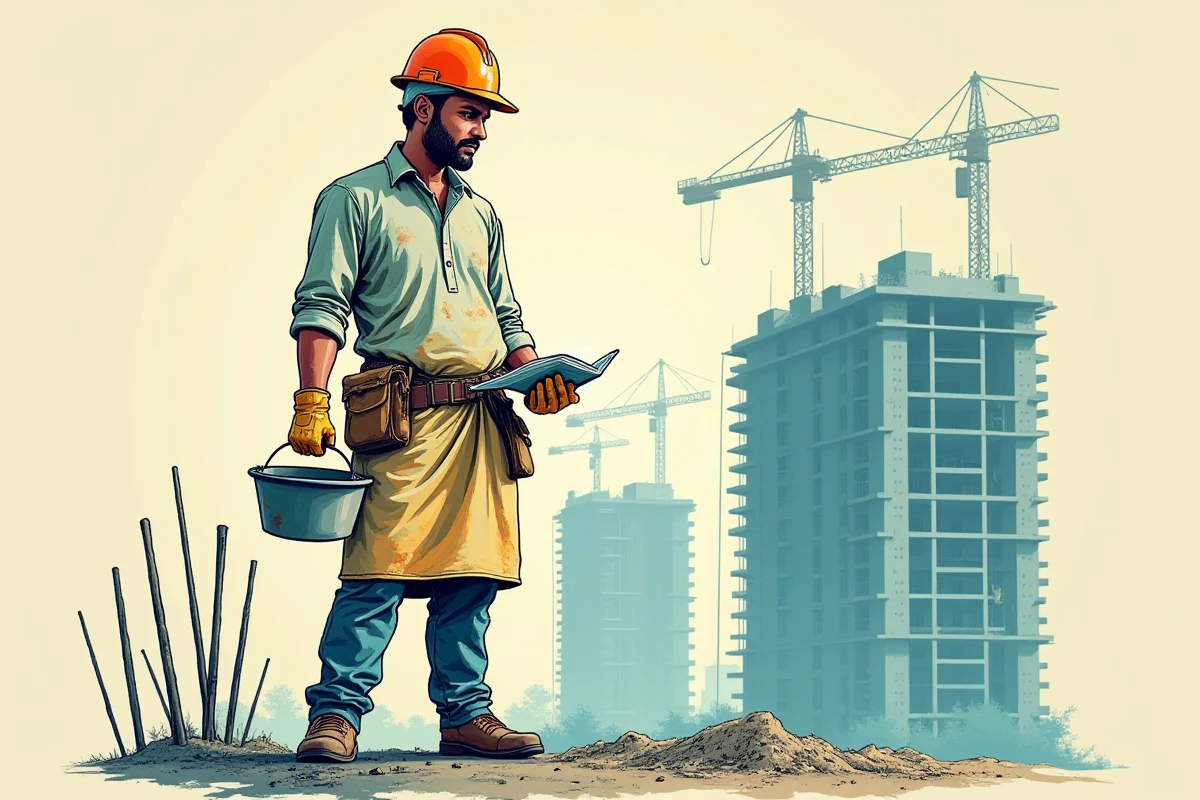
⛏ Ajay, 34, left Belagavi's farm at twenty, earned ₹700 then ₹1,100/day as a mason in Bengaluru (cash, no deductions). He laid bricks on four apartment complexes in three years. When coworker Ravi fell three storeys, the contractor said "not on-site" and Ravi faced ₹3.2 lakh in hospital debt alone. Ajay realized: If I fall tomorrow, I become Ravi.
🚨 The problem
Fifty-five million construction workers in India exist in legal limbo. 65–72% are unregistered with state BOCW boards. Registration is free and takes 20 minutes. But most don't know BOCW exists. When accidents happen, contractors deny liability, and workers face debt. In Bengaluru, 65,000 registered of 200,000+ workers; contractors and gig platforms have no incentive to tell workers about BOCW.
🚀 How GabFORGE helped
An agent in Kannada walked Ajay through every step:
- 🔍 Confirmed eligibility. BOCW covers him from day one of registration — ₹5 lakh disability protection.
- 📋 Listed required documents. Five items, explained plainly (Aadhar, bank account, rental agreement, photos, address proof).
- 🏢 Named the nearest office. Northern Taluk BOCW, Whitefield, open 9–5 Mon–Fri; phone numbers, bus routes.
✅ Registered Friday afternoon; SMS approval 5 days later; card downloaded as PDF. e-SHRAM that same evening (SMS in 1 hour).
🇮🇳 Why this matters
Ravi is now filing a retroactive claim — BOCW board investigating if accident was on-site; if yes, reimbursing ₹2L+ even though he wasn't registered. Ajay has shown five flatmates his card; two already registered. The gap between "skilled labourer" and "invisible worker" is closing one person at a time.
The long version has Ravi in the hospital waiting room, the Aadhaar folder where Ajay kept the receipt, and the afternoon when word spread through the construction site that the BOCW scheme actually worked.