
The Gangtok daughter and the CATCH scheme card her father's diabetic foot tested
Tenzin Chettri is twenty-nine years old and works as a bookkeeper at a small hotel in Gangtok that caters to trekkers. She has worked there for four years. She lives in Lal Bazaar, in the two-room flat her father has occupied since 1993, with a balcony overlooking a lane where a vegetable vendor sets up every morning. Her mother died in 2017. She has one younger brother, Sonam, who works for the Tourism Department in Itanagar and sends ₹8,000 a month.
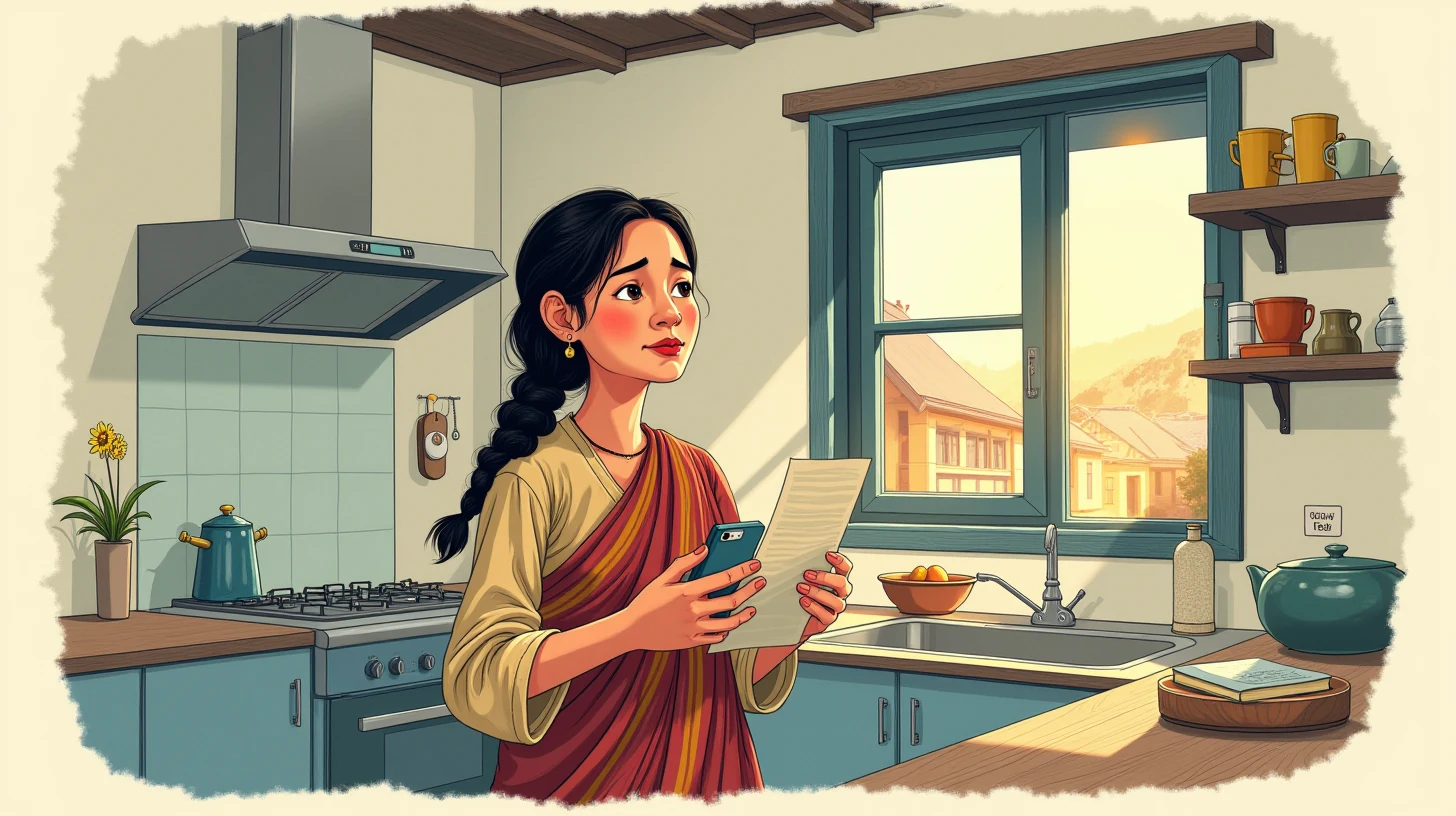
Her father is Dorji Chettri, sixty-one years old, a retired carpenter from the Public Works Department with a pension of ₹14,200 a month. He has been diabetic since 2006. In November 2025, a small blister appeared on his left foot. By mid-January it had become a shallow ulcer with a darkened edge. By early February, it had deepened and the skin around it was warm and swollen.
Dr. Asha Rai at STNM Hospital examined him on February 4th and said the ulcer needed debridement — surgical cleaning to remove infected tissue — to prevent the infection from spreading into the bone. The admission would cost ₹18,000 to ₹24,000. Tenzin's salary after rent was ₹16,000 a month; her brother's ₹8,000 covered the rest. The arithmetic worked barely.
Tenzin had heard from a neighbour that the Sikkim CATCH scheme covered inpatient stays for residents. She went to the CATCH office carrying her father's land record — a 1978 document in his late father's name. The officer said the 2023 portal system would not accept documents older than 2015. When she asked what proof would work, he said to check the portal herself.
🗓️ The database that rejected the past
The Sikkim CATCH scheme, established in 2006, covers inpatient ward stays for state residents. The original documentation accepted broad residency proofs: voter IDs, ration cards, land records, and any government-issued state document — a generous list because Sikkim's oldest settled families had documentation predating modern bureaucracy. In 2023, the Health Department upgraded to digital portal verification. The new database contained only recent records. Land records from the 1970s and 1980s — exactly the kind held by Gangtok's long-settled families — had never been digitised. The portal would not recognise them, even though they were legitimate proof of residency.
Tenzin tried the portal link from the official website and got an error page. She called the helpline and waited forty minutes. The officer suggested submitting in person. On February 8th, she returned with the land record, her Aadhar copy, and a medical letter. The officer said he would verify against the portal, but it was not responding that day. He asked her to come back in three days. On February 11th, the portal rejected the land record: "Document issuance date outside acceptable range." The officer said the range was set at government level. He mentioned PMJAY — Pradhan Mantri Jan Arogya Yojana — as a fallback for poor families, but was not sure her father qualified because his pension was above the official poverty line. He said she would need to log into the PMJAY portal and search her father's name herself.
- 🩺
November 2025 — first blister
A small blister appears on Dorji's left foot. He is diabetic since 2006. Tenzin treats it at home with dressings bought at the Lal Bazaar pharmacy.
- ⏰
January 2026 — ulcer deepens
The blister becomes a shallow ulcer with a darkened, warm edge. Dr. Asha Rai at STNM examines him on February 4th and says debridement is needed within the week.
- 🛑
February 8–11 — CATCH rejection
Tenzin submits the 1978 land record to the CATCH office. Portal error: 'Document issuance date outside acceptable range.' PMJAY portal also fails — Dorji's name returns no results.
- 🚑
February 15 — emergency admission
Dorji develops fever and chills at 2 AM. Cellulitis spreading. Dr. Pema Wangmo admits him as an emergency, deferring residency paperwork. Debridement scheduled for noon.
- ₹
February 15 — PMJAY found
The hospital PMJAY booth searches the beneficiary database directly. Dorji is listed — added three years ago during pension review. Full cost of ₹19,800 covered. Tenzin pays zero.
Dr. Rai had said surgery was needed within the week.
⚠️ The moment the system failed
That evening, Tenzin tried the PMJAY portal using her father's name and Aadhar. He was not in the database. She tried different spellings — Dorji, Dorje, Darji — with no result. When she tried entering herself as the primary applicant, the system said she needed to have been identified as a poor household in the SECC 2011 census, which she had not. The portal offered no help text, no customer support, no way to understand why.
She asked the CATCH office the next morning about appealing the rejection. The officer said an appeal process existed but required a document dated after 2015. He suggested getting her father to the hospital anyway — most hospitals admit emergencies and sort paperwork later.
On Saturday morning, February 15th, Tenzin's father woke at two in the morning with fever and chills. The ulcer had become visibly infected overnight — the surrounding skin was red and hot, and he was burning with fever. She called STNM emergency and was told to bring him immediately. She dressed him and flagged a shared taxi.
They arrived at three in the morning. The emergency doctor examined the foot and said the infection had crossed into deeper tissue layers — cellulitis, spreading fast. The admission clerk asked for residency proof. Tenzin gave him the land record. The clerk said the system would not accept it. The doctor — Dr. Pema Wangmo — interrupted: "Admit him. We will sort the paperwork in the morning. This is an emergency."
Tenzin sat in the waiting room for three hours. She opened the Notes app on her phone and began writing down everything that had happened — every date, every name, every rejection message — the way you do when you are twenty-nine and your father's infection is spreading and the system that is supposed to help you has rejected him twice.
By morning, her father had been given three rounds of IV antibiotics. Debridement was scheduled for noon. Tenzin found Wi-Fi in the hospital corridor. She typed into her Notes app: "Father not in PMJAY database. Land record rejected by CATCH portal. Age 61, pension ₹14,200/month. Where to go next?"
"मैले portal-लाई trust गर्न छोडेकी थिएँ — तर कागजपत्र सबै मसँग थिए। बुबाको नाम कहाँ छ भन्ने थाहा थिएन।"— I had stopped trusting the portal — but all the papers were with me. I just did not know where my father's name was.
She had a tablet. She did not have the manual.
🌗 The moment the agent understood
She knew her brother could photograph documents and ask his phone questions about them. While her father was being prepped for surgery, she photographed the land record, her Aadhar card, and her handwritten notes. She typed in Nepali: "Aba ke garne? Catch scheme le mero buba-ko land record manena. PMJAY portal-ma mero buba-ko naam cha na. Hospital-le surgery garna khoje, aani mero buba-ko infection hunchha. Yesma kya help huna sakcha?" — What do I do now? CATCH won't accept my father's land record. My father is not in the PMJAY database. The hospital wants to do surgery and his infection is spreading. Can you help?
The agent replied in Nepali:
"टेन्जिन-मा, पहिलो कुरा — त्यो land record १९७८-को छ, CATCH portal २०२३-मा upgrade भयो। Portal-ले पुरानो documents accept गर्दैन। दोस्रो कुरा: bis.pmjay.gov.in-मा बुबाको नाम mobile र Aadhar ले check गर। तेस्रो कुरा: emergency admission-को time, hospital-ले insurance documentation defer गर्न सक्छ। Dr. Pema-लाई direct सोध्नू: 'STNM-मा emergency admission छ जहाँ residency proof पछि submit गर्न सकिन्छ?' Government hospitals-मा flex हुन्छ।"
(Tenzin-ma, first — that land record is 1978, the CATCH portal upgraded in 2023. The portal will not accept old documents. Second — check bis.pmjay.gov.in directly with your father's mobile and Aadhar. Third — during emergency admission, the hospital can defer insurance documentation. Ask Dr. Pema directly: does STNM have an emergency admission category where residency proof can be submitted later? Government hospitals are flexible here.)
Tenzin read it three times and took the advice in order.
🧭 The pathways that existed
She walked to the PMJAY booth inside the STNM hospital. She gave them her father's Aadhar and asked them to search the PMJAY database directly using their portal access rather than the public website. They found him. Dorji Chettri was in the PMJAY beneficiary list — he had been added three years ago when his pension was reviewed, and he had simply never known. PMJAY covered ₹5 lakh per year. The debridement, ward stay, and antibiotics all fell under coverage. The hospital could bill directly. Tenzin would pay nothing.
She also asked Dr. Pema about the emergency admission category. Dr. Pema said STNM had a provision for deferring residency documentation during emergency admissions — this applied to CATCH claims too. The hospital would admit patients, complete the procedure, and ask for documentation within thirty days. If it could not be provided, they would shift the claim to PMJAY, which only required Aadhar.
Tenzin never visited the welfare office. The debridement happened at noon on Saturday. Her father spent two nights in the ward and came home Monday morning with dressing, antibiotics, and a follow-up appointment for Friday. The PMJAY claim covered the full cost — ₹19,800. Tenzin paid zero rupees.
What the agent did, sitting in that hospital corridor on a Saturday morning while her father was being prepped for surgery, was understand why the portal rejected the land record — not because the document was bad, but because the database was incomplete. It knew that hospital staff could access the PMJAY database directly in ways the public website could not. It knew the emergency admission category existed and that government hospitals use it for urgent admissions with incomplete paperwork. These things are written in the documentation. The agent read the documentation, read the portal's rejection message, read the land record, and surfaced the path forward in plain Nepali, in a hospital corridor, at a moment when Tenzin could not have spent hours reading government policy.
What it does
- 🔍Read the 1978 land record and the portal rejection message, explained why the document was refused — database cutoff, not document invalidity.
- 🗂️Identified that hospital PMJAY booths access the beneficiary database directly, in ways the public website does not.
- 📋Explained the emergency admission category at government hospitals — that documentation can be deferred and claims shifted to PMJAY if residency proof cannot be provided.
What it does not do
- 🔒Never entered Tenzin's or Dorji's Aadhar credentials, PMJAY login, or any portal password.
- ✅Never submitted the CATCH claim, PMJAY claim, or any document on Tenzin's behalf.
- 🏥Never made the admission decision — Dr. Pema Wangmo admitted Dorji, and the PMJAY booth staff ran the database search.
Being a caregiving child means carrying five loads at once: managing appointments, insurance paperwork, the household, finances, and the emotional reality — sitting in a waiting room watching your father disappear behind a curtain, knowing his infection is spreading, while you are supposed to understand a 2023 database that does not contain 1970s documents.
An agent that speaks Nepali, reads the 1978 land record and the 2023 portal documentation, understands emergency admission categories, and surfaces the path at the moment you need it — this does not perform the debridement. It does not control infection. What it does is take the insurance layer off the top so you can be in the waiting room in the way you need to be: present, not drowning in a system that rejected your document because the database was incomplete.
Tenzin said a week later: "Ek weekend ma mero life badlai gayo" — one weekend changed my whole life. Her father walked up the stairs on his own by Tuesday. The ulcer healed. He has follow-ups with Dr. Rai every fortnight. Tenzin is not waking at two in the morning anymore.
🌱 Why this matters
Across the northeast of India, roughly four lakh people receive regular care for chronic wounds and infections related to diabetes. Their caregivers — daughters, sons, spouses — navigate overlapping insurance schemes built at different times, using different databases, with different definitions of acceptable documentation.
The schemes are real. CATCH is real. PMJAY is real. The emergency admission category is real. They were built, with public money, precisely for families like Dorji's — families with a retired parent on a modest pension, hit by sudden medical crisis, unable to navigate between a 1978 land record and a 2023 digital portal while their father's infection spreads.
The gap between the scheme existing and the family accessing it is, in most cases, a gap between what is written in policy and what is known in the waiting room. An agent that reads the land record and the portal error and surfaces the PMJAY fallback and emergency admission category — this is not impressive technology. It is the equivalent of having a cousin who works at the district health office and has an afternoon free. For the twenty-nine-year-old bookkeeper with a father whose infection is spreading, that cousin is usually unavailable.
If you are caring for a parent with a chronic illness anywhere in India, the product is free at gabforge.in. We have scheme documentation for every state, know the databases being queried by the portals, and know which documents will be rejected and why. We will read the 1978 land record with you, in Nepali, in a hospital corridor at two in the morning, and tell you which counter to go to next.