
The Gurgaon son and the Chirayu Haryana extension at the wrong hospital
Rajesh sat in the Medanta Gurgaon waiting room in the first week of April 2024, a thick folder of X-rays and blood reports in his lap. His father, Ashok Kumar, was seventy-three years old, had worked as a draughtsman in the Gurgaon municipal corporation for thirty-seven years, and now needed a hip replacement. The orthopaedic surgeon had been clear: without the procedure within six weeks, the arthritis would calcify further, and his father would lose functional mobility.
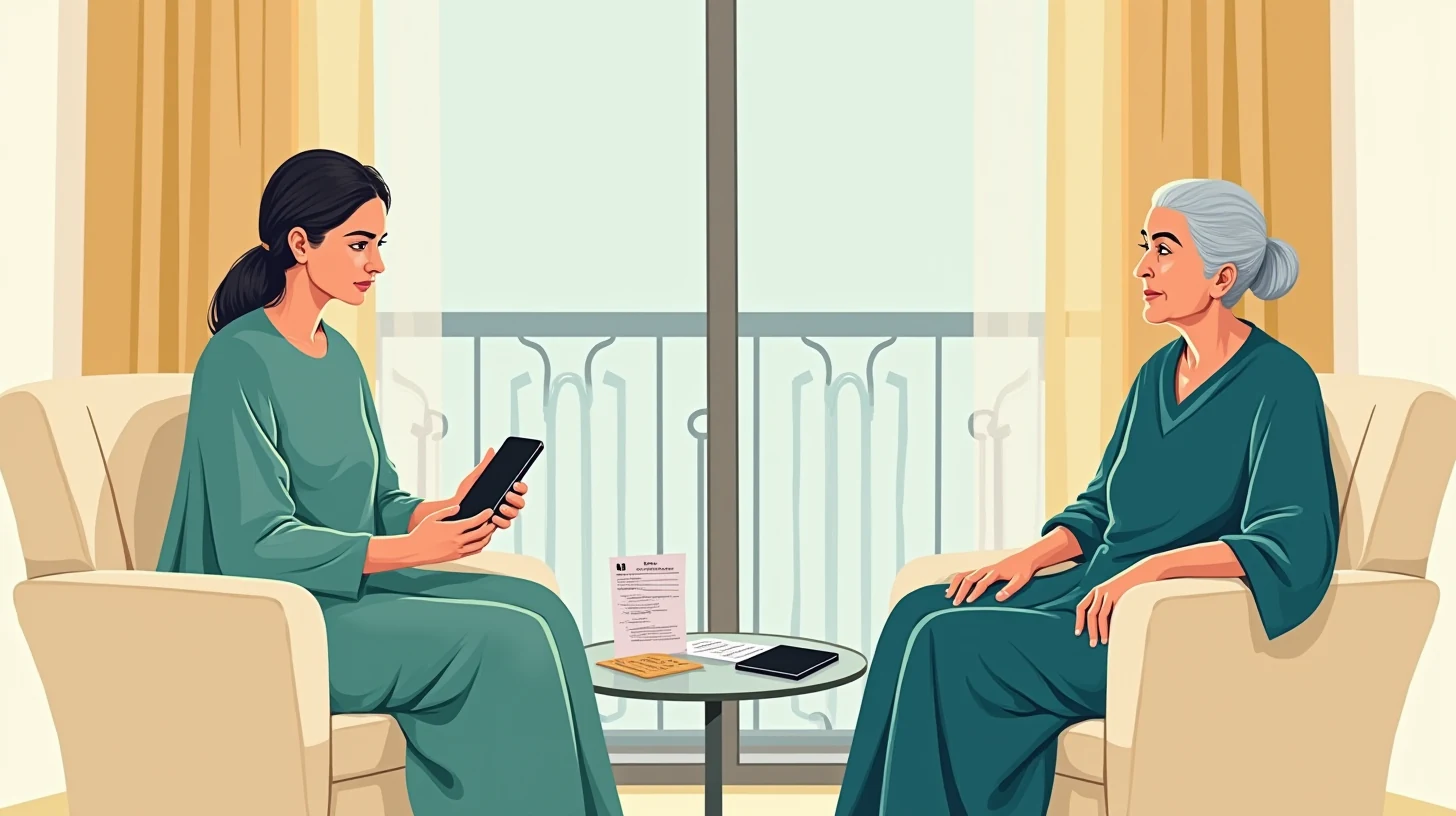
The surgeon's estimate was ₹3.2 lakh. Out of pocket.
Rajesh made forty-two thousand rupees a month as a junior operations manager at a logistics company in Sector 12. His wife, Meera, was a primary-school teacher in Gurgaon's South City zone. They had two children in school and a five-year-old monthly instalment left on their Maruti Swift. The phrase "₹3.2 lakh" didn't land as a number. It landed as the end of something—a decision point disguised as a medical recommendation.
But Ashok Kumar had worked in Haryana for his entire career. He had a pension. He'd registered on the Chirayu Haryana website three months earlier, thinking the scheme would cover exactly this. The card was in his wallet, printed on state-blue plastic.
The problem was three hours east of Gurgaon.
The scheme's empanelled centres for hip arthroplasty were in Rohtak, Faridabad, and Karnal. Not one in Gurgaon. Not one in the National Capital Region beyond Faridabad, which sat at the far edge of the scheme's administrative boundary. Medanta—a private hospital where the Gurgaon middle class sought care—was not on the list.
The Civil Surgeon's office in Sector 7, a ten-minute auto-rickshaw ride from their home, would have the answer. But Rajesh had never heard of Civil Surgeons. He didn't know they could override empanelment lists. He didn't know that "referral for emergency procedure at non-empanelled centre" was even a category that existed in the Chirayu Haryana rule book.
And so he did what millions of caregivers in his position do: he began calculating how much he could borrow from his father-in-law, how many months to negotiate with the Medanta billing department, whether a second personal loan would clear by summer.
🗓️ The annual ritual that nobody knows about
In Haryana, every winter, the state health ministry sends a quiet bulletin to the network of Civil Surgeons: "Renew the empanelment list for your district." The list reflects which hospitals—government and some private chains like Apollo and Medanta in select locations—have signed contracts with the scheme to provide surgical procedures under Chirayu Haryana for no upfront cost to eligible patients.
The state budgets for this. The scheme is funded. But the empanelled list is static, published once, and rarely changes mid-year.
What almost nobody in the public knows—and what no private hospital will volunteer to explain—is that the Civil Surgeon, as the primary health administrator for each district, has discretion to grant "special referrals" for non-empanelled centres in emergency situations. The rule exists in administrative manuals. It's taught in civil service exams. It is not taught anywhere else.
Ashok Kumar's hip replacement was an "emergency procedure"—the surgeon's own notes said so—but because the timeline was six weeks rather than six hours, it didn't feel like an emergency. It felt like planning. And in the space between emergency and planning, the Chirayu Haryana scheme assumed families would either travel to Rohtak or Faridabad or pay private rates.
Rajesh, like most people navigating his first major health crisis, assumed the scheme worked the way it was marketed: you register, you get the card, you go to your local hospital, you're covered. The gap between assumption and reality is where the debt usually starts.
⚠️ The referral that never came
By mid-April, Rajesh had visited the Medanta billing office twice. The first time, they asked if he had insurance. He showed them the Chirayu Haryana card. The billing manager, a woman named Priya in a pressed blue uniform, shook her head without looking up from her screen.
"We're not empanelled for this procedure under Chirayu," she said. "We're empanelled for OPD—outpatient—only. For surgery, you need to go to Rohtak or Faridabad. Or pay private."
Rajesh asked: "Can we request an exception?"
"You can try the Civil Surgeon," she said. "But they rarely approve it. Private is more straightforward."
He left the office and called his father. Ashok Kumar, who had worked for a government department and understood bureaucracy the way a fisherman understands water, said: "Call the Civil Surgeon yourself. Don't wait for the hospital."
On April 18th, Rajesh called the office of the Civil Surgeon, District Gurgaon, Block 3. He was transferred to a clerk named Vikram Singh, who asked three questions: the patient's age, the procedure code, and the hospital. Then he said: "Come to Room 204 with your discharge summary, your Chirayu card, and your income certificate. Bring two photocopies of each."
Rajesh brought them on April 22nd. By then, five weeks remained before the orthopaedist said the calcification risk would become irreversible.
Room 204 was small, facing the courtyard. The Civil Surgeon, Dr. Harpreet Singh, was a thin man with reading glasses on a cord and a stack of files. He spent four minutes reading Ashok Kumar's case, asked why Medanta was the preferred choice (Rajesh: his father's orthopaedist was there), nodded once, and signed a single-page form:
"Special Referral for Non-Empanelled Centre — Emergency Procedure. Patient: Ashok Kumar. Procedure: Right hip total arthroplasty (code: 93370). Referred Centre: Medanta Gurgaon. Valid for 90 days from this date."
That was April 22nd, 2024.
He said: "Take this back to Medanta billing. They will submit it to the Chirayu Haryana cell in Panchkula. The cell will approve it within seven working days. You pay nothing upfront. They bill the scheme directly."
Rajesh walked out of the civil surgeon's office shaking. He had expected a fight. He had expected a form in triplicate. He had expected to borrow money.
- 🏥
April 8 — Hospital estimate
Medanta Gurgaon quotes ₹3.2 lakh for hip arthroplasty. Ashok Kumar holds Chirayu Haryana card. Medanta billing says 'Not empanelled for surgery.'
- 📋
April 18 — First call to Civil Surgeon
Rajesh reaches the Civil Surgeon's office. Clerk Vikram Singh schedules an appointment and asks for discharge summary, Chirayu card, income certificate (two copies each).
- ⚖️
April 22 — Special referral signed
Civil Surgeon Dr. Harpreet Singh signs the emergency-procedure referral for Medanta. Valid for 90 days. Zero upfront cost for the family.
- 📨
April 25 — Scheme approval
Medanta submits referral to Chirayu Haryana cell in Panchkula. Cell approves within seven working days. Hospital begins pre-operative workup.
- ₹
May 8 — Procedure completed, zero balance
Hip replacement completed at Medanta. Scheme covers full cost. Ashok Kumar stays three nights for recovery. Family's out-of-pocket cost: ₹0.
🌗 The agent arrives with a question
Rajesh didn't use the agent immediately. He used it on April 27th, after the Medanta billing department called to confirm the Chirayu cell's approval had come through, but before the hospital booked the surgical date. By then, the panic had already lifted. But he had two new worries: had the scheme covered everything, or were there additional costs hidden in the fine print? And if something went wrong in recovery, would Chirayu cover it?
He sat at the kitchen table with his phone, opened the browser, and typed the question directly into the agent: "Does Chirayu Haryana cover post-operative physiotherapy for hip replacement in Gurgaon?"
The agent surfaced the Chirayu Haryana benefit document, which listed "inpatient surgical procedure" but left physiotherapy ambiguous. The agent flagged this: "The main policy covers the procedure only. Post-operative physiotherapy requires a separate claim or out-of-pocket payment in most cases. You should call the scheme helpline to confirm coverage for your father's specific case."
Rajesh made that call. The scheme helpline told him what the agent had suspected: post-op physiotherapy was not covered under the main benefit. But because his father was over sixty-five, he was eligible for a geriatric-care add-on that covered four weeks of physiotherapy at registered centres.
He didn't ask the agent to make this call. The agent had surfaced the question and the boundary. Rajesh had acted.
"मुझे पता नहीं था कि यह सब इतना पास था। पचास किलोमीटर दूर जाने को तैयार था।"— I didn't know all of this was so close to us. I was ready to travel fifty kilometres.
🧭 Why the system hides its own workarounds
The Chirayu Haryana scheme is well-designed. The empanelment strategy—contracting with a state-wide network of hospitals—is fiscally sound and reduces fraud. The benefit caps are clear. The card itself is efficient.
But it carries an assumption baked into every government healthcare scheme in India: that families have time, literacy, and networks. That they know to ask. That they know who to ask.
The Civil Surgeon referral for non-empanelled centres exists. It's in the administrative code. It exists precisely because the state understands that emergencies don't respect empanelment lists. But the pathway is invisible to the people who need it most.
Rajesh is a college-educated operations manager. His father had a pension and stable housing. They had a phone, a working vehicle, the ability to take time off work. And even with all of that, the referral pathway would have remained unknown if his father—who had lived inside the Haryana government system—hadn't said: "Call the Civil Surgeon yourself."
For a family with less institutional knowledge, less time, less literacy—and there are millions of them—that referral becomes a second loan.
What the agent does, in this moment, is not to replace the Civil Surgeon or the hospital or the scheme. It is to surface the boundary. To say: "This is what the scheme covers here. This is what you'll need to ask about there." To map the question so the family can walk into the Civil Surgeon's office knowing what they're asking for.
What it does
- 🔍Identify the empanelment list and flag the gap between Medanta and the scheme's network.
- 🗂️Surface the Civil Surgeon referral pathway from the administrative code.
- 📞Confirm the coverage boundary for post-operative care and point to the scheme helpline.
What it does not do
- 🔒Never submits the referral request on Rajesh's behalf. Rajesh calls the Civil Surgeon.
- 💳Never commits to any cost or eligibility decision. All approvals are the scheme's.
- ✅Never decides which hospital is 'best.' The orthopaedist and family choose.
"Civil Surgeon ke paas special referral ka provision hota hai agar hospital ka na empanel ho aur case emergency ho. Aap appointment le sakte ho online ya direct call karke."
(The Civil Surgeon has discretion for a special referral if the hospital isn't on the empanelment list and the case is urgent. You can book an appointment online or call directly.)
Rajesh learned this from the agent the second time, not the first. The first time, he learned it from his father. But the learning path mattered less than the landing: by the time he called Dr. Harpreet Singh, he knew what he was asking for.
🌱 The quiet knowledge
Ashok Kumar's surgery happened on May 8th. He spent three nights in a private hospital bed, covered entirely by the scheme. He came home on May 11th and began physiotherapy on May 13th, the geriatric add-on paying for the first four weeks. By mid-June, he was walking the apartment hallway without a walker, and by August, he was back to his evening walks in the park near Block A.
Rajesh never would have considered borrowing the ₹3.2 lakh if he'd known the referral was possible. The agent didn't create the referral—it was always there, in the administrative manual, waiting for someone to ask. But the agent made asking feel like a reasonable thing to do, made the boundary visible, and made the next step clear.
This is what it means to work in a system where knowledge is fragmented: the knowledge itself is almost never the problem. The problem is access—the distance between knowing the referral exists and knowing that you can ask for it.
Rajesh thinks now about the families who call Medanta after he did, who hear "not empanelled for surgery," and who don't have a father who worked in government. Who don't know to call the Civil Surgeon. Who calculate the loan instead of the referral. There are thousands of them, maybe tens of thousands, in Gurgaon alone. Each one is a surgery that happens in the private system—at full cost—because the state system's own workaround was invisible.
The scheme didn't change. The rules didn't change. But Rajesh's story changed because he asked the right question in the right place. And sometimes, that's all a family needs: not a solution, but a map to the solution they didn't know existed.
For Haryana residents: You can reach your district Civil Surgeon's office directly to inquire about referral for non-empanelled centres in emergency procedures. Have your Chirayu Haryana card, a copy of your discharge summary or orthopaedic report, and your income certificate ready.
Chirayu Ayushman Haryana: https://chirayuayushmanharyana.in
PMJAY (Pradhan Mantri Jan Arogya Yojana): https://pmjay.gov.in