
The Hyderabad daughter and the Aarogyasri renewal for her mother's open-heart surgery
Priya Mehta is thirty-four, a technical writer for a software company in Hytech City, remote three days a week. She lives in Banjara Hills with her mother Neera, sixty-seven, and her nephew Ravi, thirteen — her brother's son, left in her care three years ago when her brother took a contract in Singapore. Her mother had been a Kuchipudi dancer until her knees failed in the 1990s. She raised Priya quietly, kept the house in precise order, and now managed the books of a small textile shop in Shilparamam.
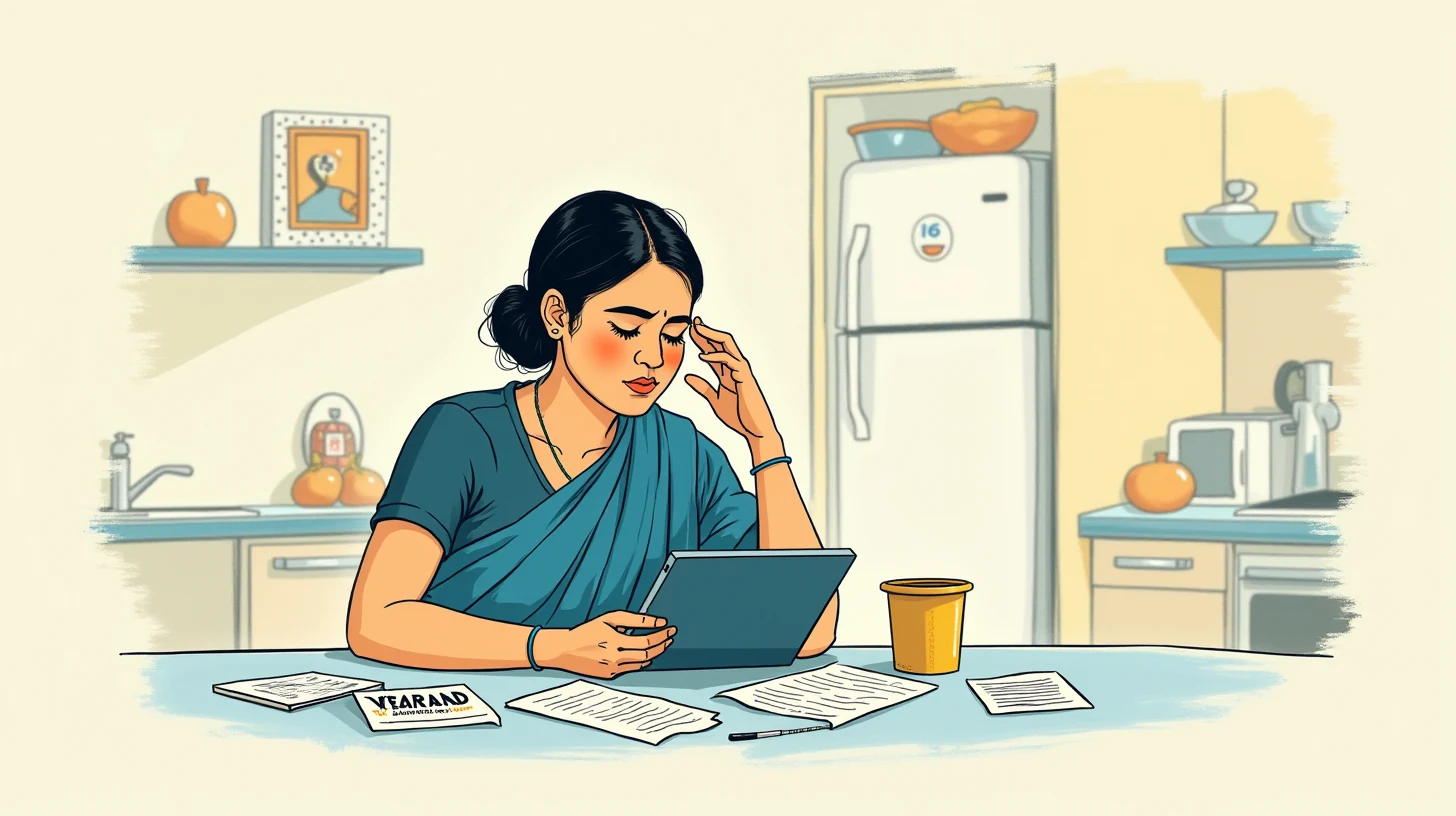
In March 2026, a cardiologist at Star Hospitals told Neera that her mitral valve was failing progressively. The valve, which had been degenerating for years, now required replacement — either mechanical (lifetime blood thinners) or bioprosthetic (fifteen to twenty years' durability). The surgery was not emergency, but could not wait more than a few months. At Star, it would cost ₹3.5 lakh. At NIMS, Hyderabad's government tertiary centre, under Aarogyasri coverage, it would cost nothing.
Neera's Aarogyasri card expired on May 14th. The renewal process opened on the 15th. NIMS had scheduled the cardiac surgery for May 16th.
The window was forty-eight hours. The Telangana health portal had been intermittently down since the 2024 data migration.
🗓️ The annual ritual and the single point of failure
The Dr. YSR Aarogyasri Health Care Trust covers white-ration-card families — households earning below ₹1.5 lakh annually, ₹2 lakh for SC/ST. Once enrolled, cardholders have cashless access at empanelled hospitals across Hyderabad with a ₹25 lakh ceiling per year. Complex procedures — cardiac surgery, nephrology, oncology — are all covered. The card renews on the 15th of every month. It is simple in theory: go to a Mee Seva centre with card, ration card, and proof of address. The officer verifies against the state database, prints a new card, and within hours, the old card is deactivated and the new one is live.
Priya had done this two years earlier. It had taken forty-five minutes.
But in May 2026, the Telangana portal — which consolidated Aarogyasri, PMJAY, and other schemes after the 2024 migration — was unstable. Integration had worked, mostly. But the renewal portal experienced periodic outages. Mee Seva centres worked around them. Priya had heard complaints: come back if the system is down. It happened roughly once every five days.
The problem: NIMS required a valid card in the system at least twenty-four hours before admission. If the card was not live by 4 PM on the 15th, the surgery would be postponed. The cardiologist had been explicit about this.
⚠️ The portal crash on the 14th
Priya had planned to renew on May 13th. She blocked her calendar, gathered documents — card, ration card, utility bill, Aadhaar copy — and went to the Banjara Hills Mee Seva centre at 9:30 AM. The counter was locked. A notice read: "System under maintenance, May 13th evening to May 14th morning. Mee Seva services will resume tomorrow."
She could renew on the 14th. Her card was valid until 11:59 PM that day. As long as the new card was live by 4 PM on the 15th, surgery would proceed.
On the morning of the 14th, Priya returned. The line was already twenty people deep. She took token number 47. After forty minutes, she was called to a counter.
"Aarogyasri renewal?" the officer asked.
"Yes, my mother's. The card expires today."
The officer typed. The screen froze. No crash — a disconnect. The server had gone away.
"System is down again," the officer said flatly. "Come back in two hours. The outages usually don't last long in the morning."
Priya felt something cold settle in her chest. It was 9:47 AM. The system came back at 10:30, crashed at 11:15. At 1 PM, still down.
🌗 The agent on the terrace
Priya had heard of the tool from Vikram, a colleague, who mentioned it casually: "It reads documents in Telugu. It knows Indian government schemes." She had dismissed it. Now, that afternoon, waiting in a Mee Seva line that was not moving, she installed it.
She sat on the terrace of her apartment building, afternoon light strong, traffic distant below. Her mother was napping inside. Ravi was at school. Priya had told her company she was unavailable for a 2 PM meeting.
She typed in Telugu: My mother needs heart surgery on the 16th at NIMS. The Aarogyasri renewal opens the 15th. The Mee Seva portal is down. What do I do if the card is not renewed by 4 PM on the 15th?
The agent asked quickly: Is NIMS your final hospital, or did you see a cardiologist at Star?
Star, Priya replied. The cardiologist referred her to NIMS.
The agent said — in Telugu, conversational, making her feel less alone — that two separate things were happening, requiring different solutions.
First: the immediate renewal. If the portal was still down at 4 PM on the 15th, there was a protocol. Call the Aarogyasri helpline — the number was on the card's back. Report the attempted renewal and the outage. The helpline would flag the card in a manual queue. NIMS would check both the digital system and the manual list. If the mother's name was there, surgery would not be postponed.
Second: backup via PM-JAY, the national scheme. PM-JAY has no income threshold — eligibility is based on SECC-2011 data. If the mother was in SECC-2011 (likely, with a ration card), she might already qualify. The agent could check. Aadhaar number?
Priya shared it. The agent — seconds later — confirmed: yes, Neera Mehta is listed in SECC-2011. Probable PM-JAY eligibility.
"Amma, 48 ghantala lo do schemes secure avvadachu. Mee Aarogyasri manual queue lo flag cheyadam. PM-JAY activate cheyadam. Rendu ki action kavaali evaripaina, portal kavaali le."
(Mother, within 48 hours, two schemes can be secured. Your Aarogyasri will be flagged in the manual queue. PM-JAY will be activated. Both need your action now, neither needs the portal to be working.)
Priya took notes.
🧭 Why singular systems fail, and what backup means
The Aarogyasri system in Telangana — consolidated after the 2024 migration — is genuinely impressive. Fifty years of different schemes, different databases merged into one. The integration was complex. Execution was competent. But competence is not resilience.
They kept one digital entry point: the portal. Mee Seva centres retrained to work digital-only. No more paper forms, no variation. One standard system.
But a single system has a single point of failure. Portal down means everything breaks. Mee Seva cannot renew. Helpline cannot see real-time data. Hospitals check a database that is not updating. Patients are left in limbo.
The old system had redundancy: if the digital counter was broken, there was a paper form. A supervisor stamped it and sent it to processing. Slower — three to five days instead of forty-five minutes — but it did not break.
This story repeats across Indian government digitization: built for the happy path. When functioning, they are models of efficiency. When they fail, they do not fail gracefully. A system ninety-nine per cent reliable sounds good until it processes thirty thousand transactions daily. One per cent failure means three hundred people daily have no solution.
Priya's mother is one of those three hundred.
What makes the difference between taking a ₹3.5 lakh loan and getting surgery covered is not Priya being smarter. It is having access to a tool that knows both systems — knows the manual queue exists, that PM-JAY has different criteria, that NIMS checks both databases.
- 🛑
May 13, 9:30 AM — Centre Closed
Scheduled maintenance notice posted. System offline until May 14th morning.
- 📨
May 14, 9 AM–1 PM — Portal Crashes Twice
Counter officer begins processing. Screen disconnects. Portal back at 10:30, crashes at 11:15. Still down at 1 PM.
- 📱
May 14, 2 PM — Agent Confirms Dual Path
Priya downloads tool, verifies mother's PM-JAY eligibility via Aadhaar. Agent advises manual queue for Aarogyasri, activation call for PM-JAY.
- ⚖️
May 15, 10 AM — Manual Queue Flagged
Priya calls Aarogyasri helpline. Reports outage. Name entered in manual queue for hospital verification.
- 🏥
May 16, 6 AM — NIMS Admission Check
Hospital checks digital system and manual list. Name found. Coverage confirmed. Surgery proceeds.
What it does
- 🔍Identifies multiple pathways (Aarogyasri manual queue, PM-JAY backup, PMJAY activation protocol) when the primary system fails.
- 🗂️Verifies mother's eligibility against SECC-2011 and confirms PM-JAY coverage without requiring portal access.
- 📞Provides exact helpline numbers, specific action steps, and timing protocols for manual renewal flagging.
What it does not do
- 🔒Never stores credentials, never submits forms on Priya's behalf, never enters the Mee Seva system directly.
- 💳Never makes financial decisions; only surfaced that manual queue and backup scheme existed.
- ✅Never speeds up bureaucracy. The system still takes time. The agent only clarifies what paths actually exist.
🌱 The morning of the surgery
The Aarogyasri helpline answered on the third ring. Priya gave her mother's card number, name, Aadhaar, and the brief fact: "Attempted renewal May 14th. Portal down. Surgery May 16th at NIMS." Keyboard clacked. "Card flagged for manual verification. NIMS will see this. Do not worry."
PM-JAY card required a visit to the district health office near Secunderabad. Priya went at 8 AM on the 15th with documents. The officer — a woman who seemed to have seen this situation before — generated a temporary PM-JAY verification letter on the spot. "This is enough. NIMS will accept it. Physical card comes in seven to ten days. But this letter is valid at every hospital."
On the morning of the 16th, Neera woke at 5 AM, quiet the way people are quiet before anaesthesia — not anxious, simply elsewhere. Priya made tea. Ravi had placed jasmine flowers in the morning puja corner.
They left for NIMS at 6:30 AM.
At admission, the counter officer typed Neera's name. It came back: Aarogyasri card, status valid (processed overnight after the Mee Seva portal stabilized at 11 PM on the 15th), coverage ₹25 lakh, amount remaining ₹24.8 lakh. The surgery required no prior authorisation. A referral from private cardiologist to government hospital is automatically covered.
At 8:00 AM, Neera was taken to pre-operative. At 9:15 AM, she was in the operating theatre.
Dr. Arjun Reddy, seventeen years performing this operation, placed a bioprosthetic valve. The heart restarted successfully. At 1 PM, Neera was moved to cardiac ICU.
She woke, intubated, at 2:30 PM. Her eyes found Priya's. No fear. Just recognition. Priya held her hand and waited.
Three days later, regular ward. A week later, discharged. Discharge summary: "Mitral-valve replacement, bioprosthetic valve, successful. Fully covered under Aarogyasri." Total cost to the family: zero.
The Aarogyasri and PM-JAY cards now lay in a folder on Priya's desk — both valid, both redundant after surgery was done, but also a kind of reassurance. Two systems. If one broke, the other held.
There is a clause in every health scheme — buried on page 18 of a forty-seven-page PDF — that says what happens when the system fails. It is not advertised because it is meant for edge cases, for the rare day when the server is down. But the clause is there. So is the backup scheme, the manual queue, the secondary pathway.
If you are in Telangana and your parent's health window is closing while the portal is down — whether Aarogyasri, PM-JAY, or any scheme — the tool is free at gabforge.in. It reads the rules in Telugu and English. It knows the manual queues. It will find the path that exists even when the primary system is broken. Not faster. The bureaucracy will not move faster for having a reader. But clearer: you will not be told one path exists when three actually do. We will read the document with you, in Telugu, late at night if that is when clarity comes. We will not sell this information. We will simply sit with the PDF and find where your parent's care actually fits.
"సిస్టమ్ కిందబడినప్పుడు, నిష్క్రమణ ఉందా? ఆ ప్రశ్న నాకు ఎప్పుడూ ఆ సిస్టమ్ను నిర్మించిన వారు చేయలేదు."— When the system breaks down, is there a way out? That question was never asked by the people who built the system.