
The Jaipur daughter and the RGHS file her father's diabetic ulcer kept reopening
Neha Sharma is thirty-four, works in automobile parts manufacturing in Mahendra Garh, and lives in Bani Park with her husband Ajay and their two children — Isha, ten, and Rohan, seven. Her father, Mr. Rajendra Singh Sharma, seventy-two, is a retired accounts officer who served twenty-nine years in the Rajasthan State Government's Directorate of Higher Education. He had maintained his RGHS health card renewal without gap for his entire retirement. He had carried a diabetic foot ulcer for fifteen years as a managed complication — something he checked daily, dressed with care, walked around carefully. Until October 2025, when it reopened with a greenish discharge and a smell that even fresh dressing could not mask.
The primary health centre referred him to SMS Hospital — Sawai Man Singh Medical College Hospital, the main government referral centre in Jaipur. The first admission in October was routine: three days of wound debridement, IV antibiotics, pressure-relieving orthotic boot fitting, discharge on the ninth. The wound closed by late November. Neha thought the crisis had passed.
In mid-January, Rajendra stepped in a hole while walking to the market. The wound reopened. Another two-day admission, another round of debridement, antibiotics, healing by late February. He walked more carefully now. He stayed inside the lane.
In early April, a friction injury from a new sock seam opened the wound a third time. This admission lasted four days because the infection had gone deeper — an MRI was ordered, imaging took time, a specialist consultation had to be arranged within the hospital queue. During this third admission, something appeared on the discharge paper that Neha did not recognize: a red stamp that read: "RGHS Case Under Audit — Further admissions require pre-approval from RGHS Central Review Office. Consolidated billing flagged for cost-review protocol."
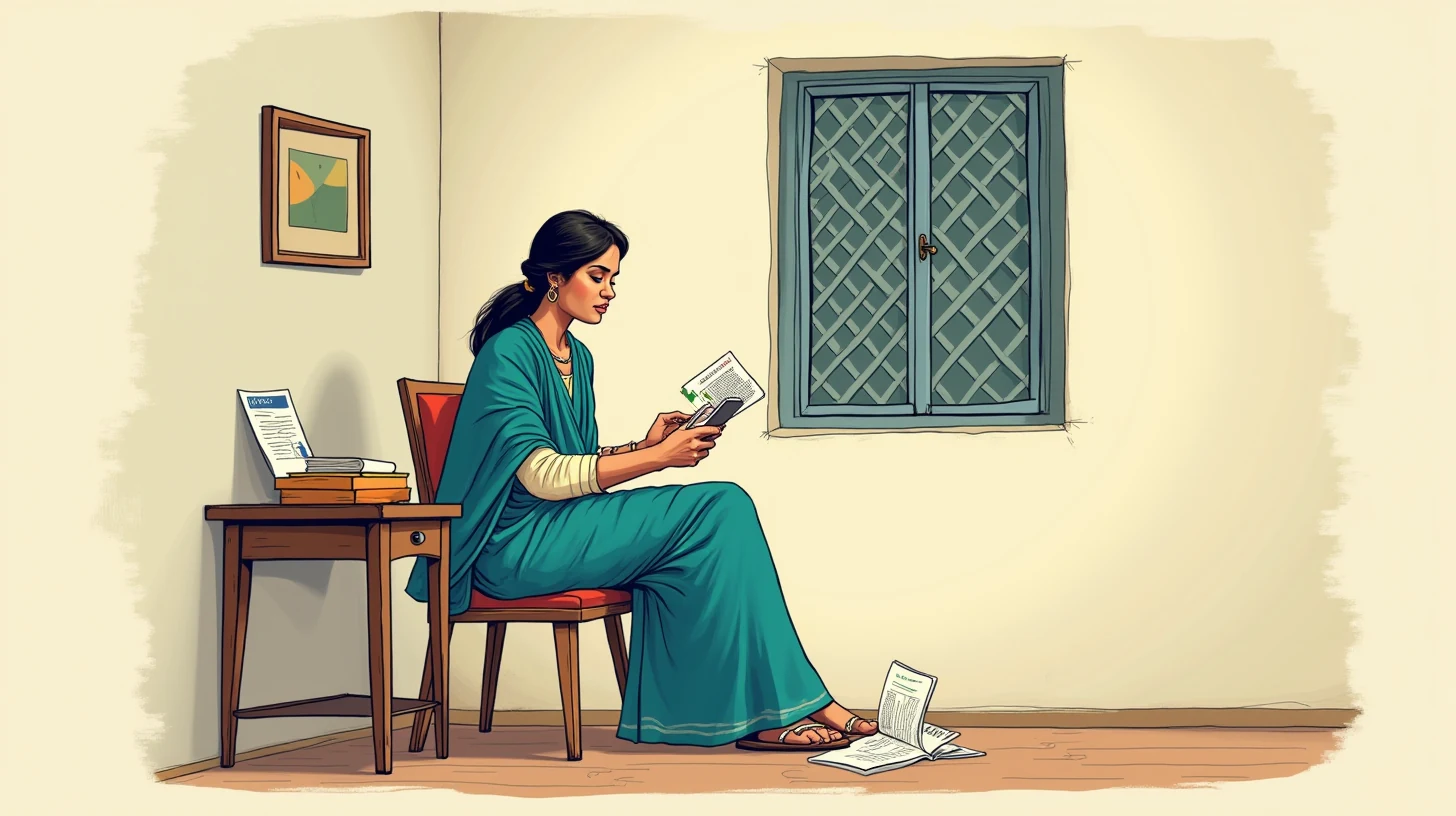
Neha photographed it. She read it three times. She understood only that her father's medical bills had moved into a category requiring permission she did not know how to obtain, and that the next admission — she knew now there would be one — was held up by a bureaucratic hold that no hospital clerk could explain quickly.
This is what changed when her cousin Hari, who worked in the tax department and had been using an AI agent in Hindi, suggested she try it on reading the hospital documents.
🗓️ The annual ritual: how RGHS covers government retirees, and what "consolidated" means
The Rajasthan Government Health Scheme covers all state government employees, retirees, and their dependents under a cashless model — the government reimburses hospitals directly. For Rajendra, RGHS had been straightforward for twenty-eight years: show the card, the hospital bills RGHS, no payment from him.
But RGHS consolidates multiple admissions within twelve months and flags cases for "cost-review protocol" once they cross an unspecified threshold. The audit is routine: a human reviewer at RGHS headquarters reads the discharge summaries and confirms they match the bills. But that person works with a queue, and the turn-around time is not fixed. During an audit, hospitals cannot admit a patient without pre-approval from the central office — a process that can take days.
⚠️ The audit hold: what nearly happened in April
On the twenty-third of April, Rajendra's wound began to show signs of infection again. Neha called SMS Hospital: "My father needs admission. He has the RGHS card."
The casualty officer asked: "Have you received any RGHS notification about a case under audit?"
Neha had. The red-stamped paper was on the television shelf.
"Then you need RGHS pre-approval first. The system will not assign a bed without it."
It was past six p.m. The RGHS office was closed. Neha called the helpline (181) and waited eighteen minutes. The officer explained: "Three to five business days."
It was Thursday. Five business days would be Wednesday.
The hospital, when she called back, said: "If it is an emergency — sepsis, critical blood sugar — we would admit him anyway. But you would pay ₹25,000 deposit upfront."
Rajendra's infection paused with careful home dressing and antibiotics from the primary health centre. Neha called RGHS on Friday: still reviewing. Monday: still reviewing. Tuesday the twenty-ninth: approval came through. "Case approved for continued access, up to two further admissions."
The knowledge that the next admission might trigger the same queue was its own infection — one that lived in Neha's mind.
🌗 The agent arrives: what her cousin suggested, and what it did
Hari Singh, Neha's second cousin, worked in the Office of the State Tax Commissioner. He had been using a Hindi-speaking AI agent for his own work for eight months — reading Income Tax Department notifications, summarising GST updates, translating compliance documents. In May, at a family lunch in Bani Park, when Neha mentioned in passing that her father's medical admissions seemed to trigger invisible bureaucratic holds that no one could explain, Hari listened carefully and said: "Neha, let me install this on your phone. Try it."
He came on a Saturday and installed the agent on her Redmi smartphone. He showed her, in Hindi, what it could do: read hospital discharge papers by photograph and explain the medical jargon in plain language. Flag any RGHS-specific language that might trigger an audit. Keep a running timeline of admissions and billing codes so she could see exactly when she might be approaching the consolidated-billing threshold. Draft written requests to RGHS in the proper administrative Hindi that the office expected.
Neha was sceptical. She had seen many things promised before. But Hari had already gone to the trouble, and on Sunday she photographed the April discharge paper. She watched the screen as the agent processed the image and replied, in Hindi, in a voice she described to Ajay as "very clear, like a clerk who actually knows how the system works":
"बिटिया, मैंने यह पढ़ लिया। आपके पापा को तीन महीने में चार बार भर्ती किया गया है। RGHS को लगता है कि इतनी बार भर्ती करवाना सामान्य नहीं है, इसलिए उन्होंने एक ऑडिट शुरू किया है। यह ऑडिट का मतलब यह नहीं कि आपके पापा ने कुछ गलत किया। यह सिर्फ एक जाँच है — क्या ये भर्तियाँ सच में जरूरी थीं? वह दस्तावेज जो आपने दिखाया है, वह कहता है कि 'दो और भर्तियों तक' अनुमति दी गई है।"
(Daughter, I have read this. Your father was admitted four times in three months. RGHS thinks that is unusual, so they started an audit. This does not mean your father did something wrong. It is just a check — were these admissions truly necessary? This document says you are approved for up to two further admissions.)
By Monday, Neha had photographed every discharge from the past eight months. The agent read them in sequence and flagged something she had not noticed: each admission had been billed separately for "specialty consultation — foot-care clinic." In the January admission, the code appeared. In April, the same code appeared twice in a single stay. The agent said gently: "This could be why they are reviewing. Not because four admissions is too many, but because the same service code was billed twice when it could have been bundled into one consultation."
Neha called the hospital billing office. They confirmed the code could have been "more efficiently bundled." She called Hari. Together they drafted an email to the RGHS audit office, attaching the consolidated bill and noting carefully that the specialty consultations were all related to her father's single foot-care case and should not be counted as multiple separate procedures.
🧭 Why we built it: who else is managing this, and why ordinary advice fails them
There are, in Jaipur alone, somewhere between twelve and eighteen thousand families with an RGHS-covered retiree managing a chronic condition. A diabetic ulcer that reopens is not an unusual case. Nor is the consolidated-billing threshold itself — it is the mechanism RGHS uses to contain costs. What is invisible is the moment when a caregiver discovers that the hold is not about money, but about an audit queue that can take anywhere from three days to two weeks, depending on the office backlog.
The system works, most of the time, for retirees whose admissions are infrequent and whose families have time to sit on hold with government offices. It fails quietly for families where the adult child is working full-time, the parent's condition is chronically unpredictable, and the hold-up between discharge and the next pre-approval becomes the constraint that shapes the entire care plan.
When Rajendra's second admission came in January, Neha did not know she was at the beginning of a pattern. When the third admission in April triggered the red stamp, she did not have words to describe it to anyone. The hospital casualty officer knew about pre-approvals but could not explain why they mattered. The RGHS helpline knew about the audit queue but could not give a timeline. Her family knew "some bureaucratic problem" was happening but could not advise her because they had never encountered this specific knot.
We built a Hindi-speaking agent that lives on the phone Neha uses for messages, reads hospital documents by photograph, explains them in her language, and keeps a running timeline of billing codes and consolidated thresholds. The agent does not call RGHS — Neha still makes those calls. It does not negotiate with the hospital — Ajay still handles the billing office. What it does is what a knowledgeable administrative colleague would do if she sat with Neha for ten minutes: read the discharge papers, identify which billing codes might trigger an audit, and tell her exactly what to say when she calls RGHS to flag that another admission might be coming.
What it does
- 🔍Reads discharge papers by photograph and flags RGHS billing codes that could trigger a cost-audit.
- 🗂️Maintains a running timeline of admissions, billing codes, and consolidated-billing thresholds — in Hindi.
- 📋Drafts written pre-approval requests in administrative Hindi, ready for Neha to review and send.
What it does not do
- 📞Does not call RGHS or SMS Hospital — Neha makes every call herself.
- ✅Does not submit documents or forms on her behalf — she confirms and sends everything.
- 🔒Does not access Rajendra's RGHS account or health records — it reads only what Neha photographs.
- 🏥
October 9 — First admission
Three days, wound debridement and IV antibiotics. ₹8,900 RGHS bill.
- 🩺
January 14 — Second admission
Two days after walking injury. ₹6,200 RGHS bill.
- ⚖️
April 2 — Third admission
Four days, MRI ordered. Discharge stamped: case under audit. Consolidated total ₹26,900. Further admissions now require RGHS pre-approval.
- 🛑
April 25 — Fourth infection avoided
Neha needed admission but waited six days for pre-approval. Managed outpatient instead.
"मैं नहीं जानती थी कि अस्पताल के बाद अस्पताल के बाद अस्पताल जाना मुसीबत बन सकता है। पहली बार मेरे पापा को भर्ती करवाया, तो कोई सवाल नहीं था। दूसरी बार भी ठीक था। लेकिन चौथी बार जब मुझे कहा गया कि अब आप कर सकते हो लेकिन पहले परमिशन लो — तो मुझे लगा कि मैं कुछ गलत कर रही हूँ। जबकि मैं तो बस अपने पापा को स्वस्थ रखने की कोशिश कर रही हूँ।"— I never knew that going back to the hospital again and again could become a problem. The first admission, no one questioned it. The second was fine too. But the fourth time, when they told me I could admit him but had to get permission first — I felt like I was doing something wrong. When all I was trying to do was keep my father healthy.
🌱 What remains: a quiet shift in what Neha carries alone
Within three weeks, the RGHS audit office replied: "No discrepancy was found." The case was closed. Within five months, Rajendra has not needed another admission. The wound has held. It has healed. The smell is gone. Neha no longer startles at drainage.
But the larger shift is quieter than these victories. Before the agent, Neha managed a crisis moment-to-moment — the Sunday panic when she saw signs of infection returning, the call to the hospital at six p.m. when offices were closing, the wait to hear whether a bed would be available or whether she would be standing in the casualty ward explaining, again, that yes, she knew about the audit, no, she did not have pre-approval yet. Now she manages the system in advance, week by week, with knowledge of what triggers a review and what does not. She checks the agent's timeline once a week. She knows when the consolidated window will reset on October eighth and when Rajendra will be, mathematically, in the clear.
This is not the same as solving RGHS's consolidated-billing audit. That mechanism will still exist, for Rajendra and for thousands of other retirees across Rajasthan whose chronic conditions require periodic hospitalization. The system is not going away.
What changes is what Neha carries alone. Before: confusion, the weight of words she did not have, the feeling that the bureaucracy was working against her even though she was doing everything right. Now: specific information — in Hindi, tied to timelines and billing codes she can actually track. The system is still there. But Neha no longer walks into it blind.
If you are managing a similar process for a parent — anywhere in Rajasthan, anywhere in India — the product is free at gabforge.in. We have native Hindi and Marwari, and we know every RGHS helpline, every ward office, and every consolidated-billing threshold. We will read the discharge papers with you. And we will be quiet.