
The Kohima son and the NHPT card his father's hip replacement could not unlock
Vikas Kumar was forty-two when his father fell in Kohima one November afternoon.
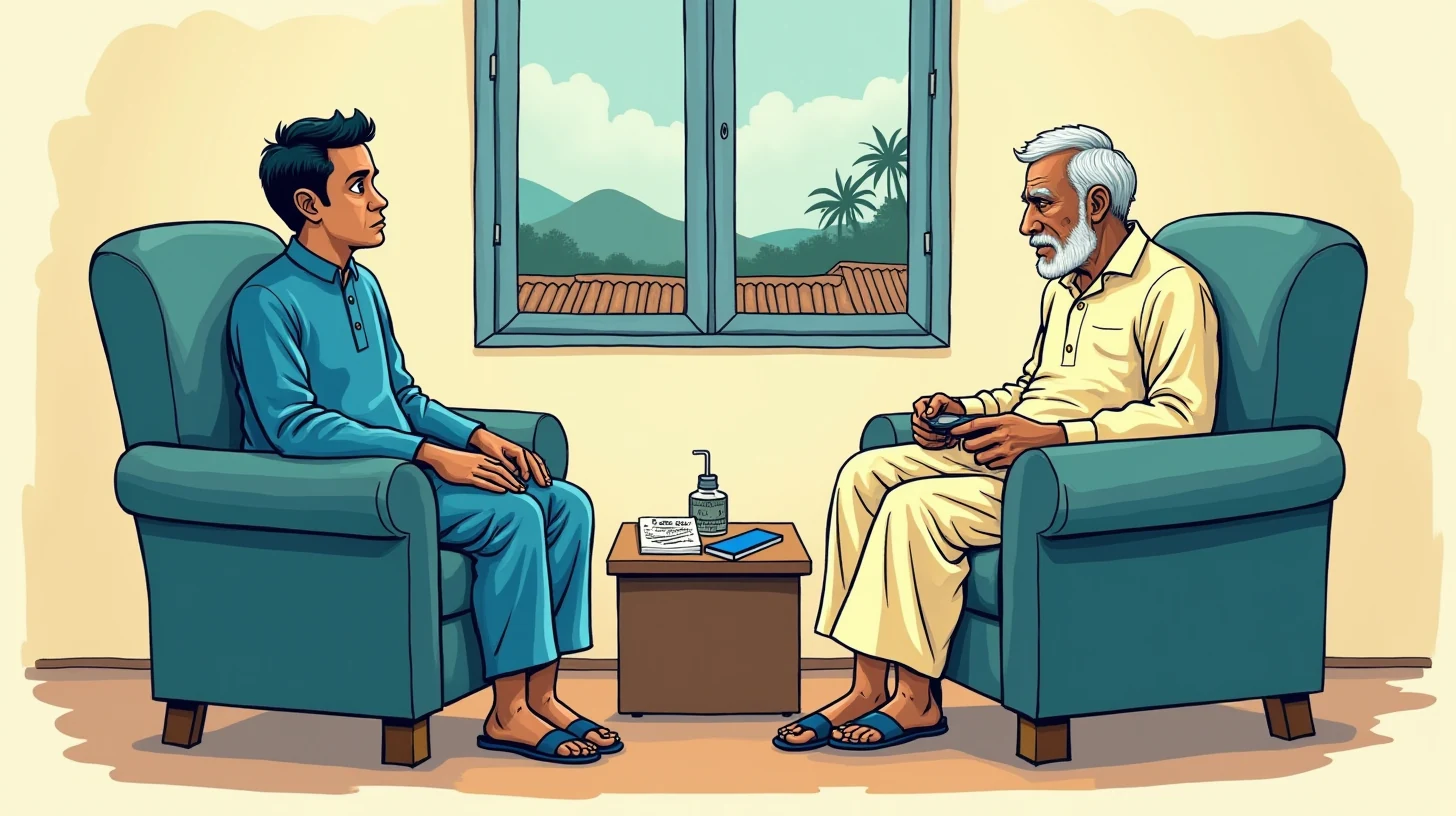
His father, Ashok Kumar, sixty-eight, had been moving from bedroom to kitchen when he misstepped on the worn wooden threshold. The fall was short, but the damage was complete: a break in the femoral neck. The surgeon at Kohima's district hospital used a word that felt new and terrifying—arthroplasty. A hip replacement.
Vikas sat in the waiting room, phone in one hand, cold tea in the other. The district hospital could do the surgery. But for a better outcome, they suggested Dimapur—three hours away. Three hours each way, and his father could barely walk.
Then Vikas found the Nagaland Health Protection Trust card in his father's wallet. Laminated, official, cream-colored. It promised ₹5 lakh coverage at empanelled hospitals. He held it like relief.
He did not yet know that a card and a cost were not the same thing.
🗓️ The scheme that existed, and the fine print that didn't
The Nagaland Health Protection Trust had run since 2017—a safety net for households earning less than ₹1.5 lakh per year. Ashok Kumar qualified. He was a retired schoolteacher. The card had been issued to him three years earlier at a health camp. He had never used it until now.
On paper: ₹5 lakh per family per year, no co-payment, 127 procedures covered. Hip replacement was on the list.
But when Vikas called the two empanelled hospitals in Kohima, both gave the same answer: they had performed hip replacements, yes, but not under NHPT. The procedure codes they used did not match the NHPT master list. The card would not clear.
One hospital administrator: "We can do it, but you pay first. Insurance takes weeks to reimburse, if they approve at all."
Vikas sat in a small office at the Civil Hospital, surrounded by filing cabinets and old paper, listening to a clerk explain why the card in his pocket might not be enough. The codes had to match exactly. There was no flexibility. That was the rule.
⚠️ The three-hour drive that was never supposed to happen
By the third week of November, Vikas had exhausted Kohima's options. His father was in pain. The fracture risked complications: muscle atrophy, blood clots, mobility loss. Surgery had to happen within four weeks. They were at week three.
Vikas hired an ambulance to Dimapur—three hours away, ₹3,200 one way. The NHPT card did not cover transport. They left at 5 a.m. His father was pale and shaking by the time they arrived at Neigrihms Hospital.
The surgery was scheduled for two days later. The hospital told Vikas: partial advance payment of ₹65,000 for the implant. Vikas had savings, but not enough without borrowing. He applied for a personal loan at 14% interest. Approved for ₹1 lakh.
Two days before surgery, the hospital called. NHPT had denied the claim. The procedure code—"total hip arthroplasty with cement augmentation"—was not in their master code set. The hospital would have to resubmit. No guarantee they would approve. If they did not, Vikas owed the full ₹2.8 lakh.
He sat in the waiting area, phone in hand, panic tightening in his chest. A hospital social worker mentioned another scheme in passing—PM-JAY, Pradhan Mantri Jan Arogya Yojana. A national scheme. Maybe his father qualified. But she was not sure.
It was this moment—collision between two unclear schemes—when Vikas decided to reach out for help beyond the system.
🌗 The agent and the second ledger
A neighbor who worked as a nurse had mentioned the agent weeks earlier—useful for digging up government scheme information. Vikas had dismissed it. Now, the day before his father's surgery, he opened his laptop and described the situation: retired schoolteacher, NHPT cardholder, hip replacement denied, surgery tomorrow.
The agent's response listed the NHPT procedure codes for orthopedic surgeries—information the Nagaland Health Department website did not publish easily. The specific code for hip arthroplasty existed, but only in the 2025 manual update. The hospital might be using older codes.
But the agent surfaced something else: Pradhan Mantri Jan Arogya Yojana. PM-JAY. The national scheme. No procedure-code ambiguity. Ashok Kumar, based on household income, appeared to qualify.
"The NHPT card may still work," the agent wrote. "But if it does not, PM-JAY is a second pathway. Your father is entitled to both. The hospital should help you apply for PM-JAY if NHPT takes too long."
Vikas called the PM-JAY office that afternoon. Faster than expected: his father's details were already in the system, cross-referenced with the state's 2023 poverty database. He was eligible. The PM-JAY officer: "Your father is covered under two schemes. Use whichever processes fastest."
The hospital resubmitted the NHPT claim with the 2025 codes and filed a parallel PM-JAY claim. Vikas verified both applications, line by line, with his father's documents: pension certificate, ration card, discharge papers.
Surgery happened December 1, 2024. Mid-grade cemented implant, ₹2.6 lakh. Total bill: ₹3.8 lakh (implant, surgery, anesthesia, nursing, physiotherapy). Six days in hospital.
NHPT cleared the full claim three weeks later. PM-JAY reimbursed immediately. No out-of-pocket cost beyond the ₹3,200 ambulance and loan interest.
Nagaland Health Protection Trust (NHPT)
₹5 lakh annualState-level scheme for households below ₹1.5 lakh annual income. Covers 127 procedures at 47 empanelled hospitals. Ashok Kumar qualified, but faced procedure code mismatches at local hospitals.
Pradhan Mantri Jan Arogya Yojana (PM-JAY)
₹5 lakh annualNational scheme covering all families below specific income thresholds. Portable across India. Vikas's father was eligible but did not know until the agent surfaced it during the NHPT denial.
Layered cover
₹10 lakh totalHaving both schemes active protected Ashok Kumar from procedure-code delays at either level. The hospital used whichever processed faster.
But Vikas did not feel relief yet. He felt confused. He sat by his father's hospital bed in Dimapur, watching him sleep off the anesthesia, and thought about the hours he had spent on the phone, the trips to the Kohima Civil Hospital, the clerk with the filing cabinets, the administrator who said the codes did not match. None of them had mentioned PM-JAY. None of them had suggested applying for a second scheme. They had all acted as if the NHPT card was the only option, and when it failed, there was nothing left but to pay out of pocket or find a private loan.
🧭 Why the system divided what should have been whole
NHPT is a state scheme. PM-JAY is a national scheme. They operate on parallel tracks with no integration. A hospital clerk in Kohima might not know PM-JAY rules. A PM-JAY officer might not have the updated NHPT codes. The eligibility exists in separate databases.
"Your father was covered by both schemes," the social worker told Vikas over tea. "But the system did not tell him. The system does not talk to itself."
"Moro papa ka insurance card toh ache wala tha, par koi nahi bataya kah moro papa ke do insurance ache. Jab ek na kaam kiya, main sochta tha sab khatam."— My father's insurance card was good, but no one told me he had two insurances. When one did not work, I thought everything was finished.
This fragmentation is common across India's health schemes. A person might qualify for multiple programs but receive help from only one. The schemes are not badly designed. They were not designed to speak to each other.
For Ashok Kumar, the first three weeks—the hospital calls, the code confusion, the decision to travel three hours—happened in a partial information landscape. He and his son knew about one door. The door they should have entered earlier required knowledge the system did not volunteer.
"Nagaland PM-JAY ke liye aapke papa automatic eligible hai. NHPT aur PM-JAY dono ek saath kaam kar sakte hain. Agar ek clear nahi karega, doosra kar degaa."
(Your father is automatically eligible for Nagaland PM-JAY. NHPT and PM-JAY can work together. If one does not approve, the other will.)
This insight should have been routine. It should have been on a hospital flyer, in the first conversation with the clerk. Instead, it arrived three weeks late, through an external tool, because Vikas had reached the breaking point.
For Vikas, the agent filled that gap. It did not decide or submit forms. It surfaced what the system should have three weeks earlier: "You are entitled to this. You did not know it."
🌱 The care that arrived in time
Ashok Kumar's recovery was slow but steady. Physiotherapy within two days of surgery. By week four, he walked twenty meters with a walker. By week eight, he moved around the house without assistance.
The scheme had worked. His father's surgery cost almost nothing out of pocket. The loan could be paid back slowly. His own life—work, clarity—could reconstitute itself.
But this outcome required something unexpected: reaching outside the official system.
In the months after, Vikas thought about the clerk, the administrator, the nodal officers. He did not blame them. They worked within systems they did not design. But he also knew his father's recovery had depended on luck—knowing about the agent, having a neighbor mention it, being able to search and persist until he found an answer.
That luck should not be required. But until systems speak to each other—until a clerk can see a patient qualifies for multiple schemes and volunteer that information—luck separates families that recover from those that drain their savings.
Ashok Kumar walks now. He tires quickly, but he walks. Vikas sometimes catches him on the terrace looking toward the Kohima hills, the weight of six months something he carries but no longer buckles under.
In the clarity that arrives when someone tells you: You are entitled to this. Look.