
The Kolkata daughter and the Swasthya Sathi card her mother's chemo paused for
Diya Chatterjee is thirty-four years old. She works as a credit analyst at a mid-sized private bank in Ballygunge, Kolkata — the kind of bank that occupies a seven-storey building on Ashutosh Chowdhury Avenue and whose principal business is commercial lending to manufacturing firms in Bengal and Assam. She earns a stable middle-class income. She lives in a three-room flat in Kasba with her husband, Amit, who works in IT infrastructure, and their two school-age children, Rohan and Tara. Her mother, Smt. Anjali Chatterjee, sixty-one years old, has lived alone in her own flat in Behala since Diya's father passed away eight years ago. Her mother is, by any reasonable measure, independent — she volunteers twice a week at a local women's health clinic, maintains a vegetable garden on her balcony, and has friends. What Anjali did not expect, and what no amount of independence prepares you for, is the morning in January when a mammography report came back with the word "malignancy", and suddenly independence meant sitting alone with pathology reports while your daughter tried to understand them over a phone call from her office during lunch break.
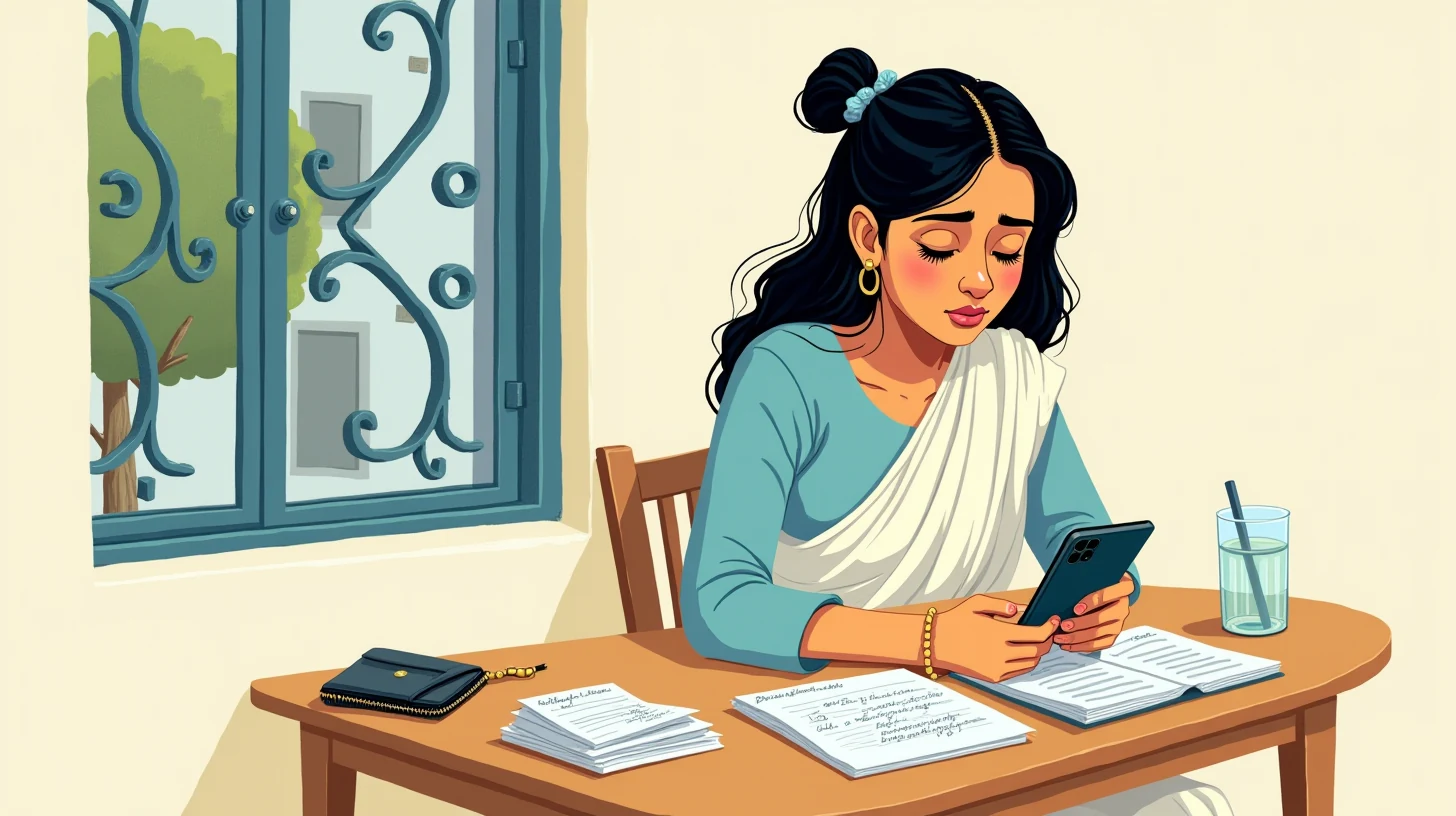
Anjali's diagnosis was stage IIB invasive ductal carcinoma. The treatment plan, laid out by her oncologist at Tata Medical Centre Rajarhat, was surgery followed by six cycles of adjuvant chemotherapy over eighteen weeks — a standard protocol, with a success rate her daughter had looked up at night and tried not to calculate. The surgery happened in late January. The six chemotherapy cycles were scheduled to begin in February, with cycle one in week four post-surgery. The entire treatment, including hospitalisation, imaging, and infusion cycles, would cost approximately ₹9.8 lakh. Anjali had no private health insurance. She had, however, been enrolled, for the past fifteen years, in the Swasthya Sathi card scheme — West Bengal's universal cashless health insurance programme, which covers families below the poverty line and above, up to ₹5 lakh per family per annum, with no waiting period for cancer treatment. The card, a blue-and-white plastic rectangle with her name and a twelve-digit ID number, had sat in her purse untouched for fifteen years. In February, it became the only thing that stood between her treatment and a debt spiral that would have taken Diya six years to clear.
The Swasthya Sathi card worked, for the first three cycles. Cycle one in mid-February. Cycle two in early March. Cycle three in late March. Each time, Anjali presented the card at the Tata Medical Centre IPD desk, her fingerprint was scanned by a biometric terminal, the terminal lit green, and the cashless treatment was authorised. The card had become, in Diya's vocabulary, "the thing that is saving Amma's life." Then, on a Tuesday in the second week of March, during cycle four, the terminal displayed an error: Biometric authentication failed — cardholder record requires reverification.
What followed, over the next four weeks, was a bureaucratic maze that no amount of Diya's professional competence in reading bank agreements could have predicted.
🗓️ The Swasthya Sathi card and the biometric requirement that outlives the original enrolment
The Swasthya Sathi card scheme, launched in 2016 by the West Bengal Department of Health & Family Welfare, is a state-level health insurance programme designed to provide cashless access to government and accredited private hospitals for families whose annual income is below ₹1.5 lakh (below-poverty-line) and above. The programme covers all members of a household registered under a single card. The coverage includes hospitalisation, surgery, diagnostics, and chemotherapy — treatments that would otherwise bankrupt a middle-income family in a city like Kolkata.
The card is registered at the Block Development Office, or BDO, which is the administrative lowest tier of the state bureaucracy. When Anjali enrolled in the scheme in 2011 — fifteen years before her cancer diagnosis, when the card seemed like a routine government document no more likely to matter than her ration card or her voter ID — the registration was made at the Asansol BDO office, where she and her husband had been living at the time. They moved to Kolkata in 1975, before Diya was born, to be closer to her husband's employer. The BDO office never received the paperwork to update the registration to the new address. The card, therefore, remained registered to the Asansol BDO, a city that is a hundred and thirty kilometres from where Anjali actually lived, and had lived for fifty-one years.
In 2018, the state health department introduced biometric authentication as a fraud-control measure. Cardholders would now be identified by fingerprint scan at the point of service — at the hospital's IPD desk, where the card was presented. The terminal would connect, in theory, to the state database to verify the fingerprint, and authorise or deny the transaction in real time. This system works, for the most part, in the hospitals of Kolkata and other large cities, where the terminals are networked, the backend systems are maintained, and the biometric records are current. It works less reliably when the cardholder's registration data — the fingerprints, the address, the family composition — is fifteen years old, stored at an office in another city, and has never been reconciled with the reality of where the person actually lives.
This is what Diya discovered when she sat with the hospital administrator, a patient man named Mr. Sen, who said the following: "The card shows green for payment history, but the biometric does not match the state server. This means the biometric record at Asansol BDO has degraded or is corrupted. We cannot process the claim. The cardholder must go to the Asansol BDO and request a reverification. Once the BDO resets the biometric, the card will work again."
Diya asked if the card could be reverified at a Kolkata office instead.
Mr. Sen said no. The rule, he explained, was explicit: reverification must happen at the BDO where the original enrolment was registered. This is a rule designed to prevent fraud, and it has the secondary effect of making life extremely difficult for anyone who has moved.
⚠️ The Tuesday when the card failed, and the deadline that was not stated but was felt
Cycle four was scheduled for the eighteenth of March. Anjali had tolerated the first three cycles reasonably well — nausea, fatigue, hair loss, the expected catalogue of side effects — but her oncologist had said that cycles four, five, and six were the dangerous ones, the ones where cumulative toxicity needed to be watched closely, the ones where missing a scheduled date could mean restarting the entire protocol. The card failure came on a Tuesday. The next cycle was scheduled for Tuesday, the first of April — fourteen days away. The hospital, Mr. Sen said, could not admit her without proof of payment clearance. They could hold her slot for two weeks. After that, the slot would be released and the protocol would need to be restarted from cycle one.
Diya sat in the hospital corridor with her mother and the blue-and-white card in her hand. She did the arithmetic. Two weeks meant she had fourteen days to travel to Asansol, find the BDO office, explain to a person in a government department that her mother's biometric was not working, and get the card reverified — a process that, the hospital had said, "could take a week or could take a month, depending on the queue."
Asansol was a hundred and thirty kilometres away. Diya worked in a bank, where taking time off was not forbidden but was visible — each absence went into the annual appraisal, each appraisal affected the next promotion. Anjali was sixty-one and had just had major surgery and was midway through chemotherapy — she could not make the trip alone. Diya's husband, Amit, had his own job. They had two children in school. The Wednesday after the card failed, Diya sat at her desk in Ballygunge and stared at her computer screen and did not open a single file.
The hospital gave them a document — a letter stating that the Swasthya Sathi card for Smt. Anjali Chatterjee could not be verified in their system, and that the cardholder must submit to reverification at the original enrolment BDO. Diya photographed this letter. She photographed the card itself. She photographed the biometric error message from the hospital terminal, which her mother had been asked to wait for so that Diya could have proof of what had happened. She put the photographs in her phone and stared at them the way you stare at a closed door when you are not entirely sure what is on the other side.
- 🛑
March 18 — Cycle four IPD desk, biometric fails
The hospital's biometric terminal cannot authenticate the fingerprint against the state database. The card is frozen mid-cycle. Hospital policy: no reverification, no payment clearance.
- 📋
March 18-19 — Diya gathers documents
Hospital letter confirming the failure, the card itself, photocopies of Anjali's Aadhaar and the original enrolment document from 2011, a print-out of the hospital's IPD error log.
- 🚗
March 20 — Diya travels to Asansol with her mother
A four-hour round trip drive plus six hours at the BDO office, where the clerk said the file would take "about a week" to process but could not guarantee it.
- ⏰
March 20-31 — No communication from BDO
Diya calls the office four times. Three times the phone is not answered. Once, a man says the file is "in queue" and to call back on Friday. On Friday, no one answers.
- 💊
March 31 — Hospital releases cycle four slot
The two-week window closes. Diya has no confirmation from BDO. The hospital's oncology administrator sends an email: the cycle-four slot has been released due to no payment clearance. The protocol will now need to restart if the card is not verified by April tenth.
- 🏛️
April 2 — Diya returns to Asansol BDO
A second trip, unannounced, to ask directly when the reverification would be ready. A clerk named Biswas says the biometric reset has been done and the card will work, but the paperwork is still processing.
- ✅
April 8 — Card reverified, authentication clears
Diya receives a call from BDO: the card is ready. She drives back to Asansol, collects it, and returns to Kolkata by evening.
- 💊
April 10 — Cycle four, seven days delayed
The hospital re-schedules cycle four for April tenth. The card authenticates without error. Chemotherapy resumes. The protocol is intact.
🌗 The agent arrives through the photograph of a letter, and what it does differently
It was Diya's colleague at the bank — a woman named Priya who worked in the consumer loans division — who mentioned it casually one afternoon in the office pantry. Priya had been looking at some contract language, something about regulatory approval timelines, and she had photographed the document and asked an AI agent, via her phone, to read it and summarise it in Bengali. The agent had done this in ninety seconds. Priya had said, offhand, "I don't know what I would do without it now. I use it for everything."
Diya asked what agent. Priya showed her. The agent lived on the phone, was free to use, could read photographs of government letters and bureaucratic documents, and had modes for Hindi and Bengali. Diya's first instinct was to laugh — an AI agent would not know where the Asansol BDO office was, or how to make a government office move faster. Her second instinct was desperation. She installed it that evening.
The next morning, on the eighteenth of March, while sitting with her mother in the Tata Medical Centre corridor, Diya photographed the hospital's letter about the biometric failure. She opened the agent. She typed, in Bengali, slowly: "এই চিঠিটা কী বলছে? আমার মায়ের সোয়াস্থ্য সাথী কার্ড খুলছে না। এটা কী মানে? আমরা কী করব?" (What is this letter saying? My mother's Swasthya Sathi card is not opening. What does this mean? What do we do?)
The agent read the letter and replied, in Bengali, in a voice Diya described later as "like someone was explaining it to me while I was making tea":
"এই পত্র বলছে যে আপনার মায়ের বায়োমেট্রিক ভেরিফিকেশন ব্যর্থ হয়েছে। এটা মানে তার ফিঙ্গারপ্রিন্ট রেকর্ড যা আসানসোল BDO তে আছে তা কম্পিউটারে আপডেট নেই বা খারাপ। তার কার্ড ঠিক আছে কিন্তু বায়োমেট্রিক স্ক্যান কাজ করছে না। হাসপাতাল আর কোনো চিকিৎসা দিতে পারবে না যতক্ষণ আপনারা আসানসোল BDO তে ফিরে যান এবং কার্ডটি পুনরায় যাচাই করান। সেখানে তার ফিঙ্গারপ্রিন্ট রিসেট করবে। তারপর কার্ড আবার কাজ করবে।"
(This letter says your mother's biometric verification has failed. That means her fingerprint record at the Asansol BDO is not updated in the computer or is corrupted. Her card is fine but the biometric scan is not working. The hospital cannot give any more treatment until you go back to the Asansol BDO and have the card reverified. They will reset her fingerprint there. After that, the card will work again.)
Diya had understood this much already. What came next was different. The agent continued:
"এখন শুনুন। এটা খুবই গুরুত্বপূর্ণ। তার পরবর্তী চিকিৎসা ১ এপ্রিলের। আপনার কাছে দুই সপ্তাহ আছে কার্ড ভেরিফাই করার জন্য। BDO অফিসে যান শীঘ্রই। এই সমস্ত কাগজপত্র নিয়ে যান: এই চিঠি, তার কার্ডের ফটো, তার আধার, এবং হাসপাতালের IPD ত্রুটি লগ - যেখানে এটা বায়োমেট্রিক ব্যর্থতা লেখা আছে। BDO'তে একজন ক্লার্ক জিজ্ঞাসা করুন - 'আমার মায়ের কার্ড রিভেরিফিকেশন করতে পারবেন?' এবং বলুন এটা জরুরী কারণ তার ক্যান্সার চিকিৎসা হাসপাতাল থামিয়েছে। যখন তারা বলবে হ্যাঁ, সব কাগজপত্র তাদের কাছে দিন এবং একটি রসিদ নিন। ক্যানসার রোগী প্রাধানতা পান BDO তে। তারা শীঘ্রই করবে।"
(Now listen. This is very important. Her next treatment is April first. You have two weeks to get the card verified. Go to the BDO office soon. Bring all these papers: this letter, a photo of her card, her Aadhaar, and the hospital's IPD error log — where it says biometric failure. Ask a clerk at BDO — 'Can you reverify my mother's card?' and tell them it is urgent because the hospital has stopped her cancer treatment. When they say yes, give them all the papers and get a receipt. Cancer patients get priority at the BDO. They will do it quickly.)
"কাগজগুলো সব ছিল। শুধু কোন কাগজ, কী বলতে হবে — সেটা জানতাম না।"— All the papers were there. I just did not know which ones, or what words to use.
Diya sat with this for a moment. The agent had not magically solved the problem. It had done something more practical: it had removed the fog. It had told her exactly what papers to bring, exactly what words to use, and — most importantly — it had given her a reason to say to a government office that would normally process her file at its leisure. She photographed the error message and the hospital letter again, this time to have them ready.
On March twentieth, Diya and her mother drove to Asansol. They brought the card, the hospital letter, the biometric error log, Anjali's Aadhaar, and the original 2011 enrolment document. At the BDO office — a concrete building in a side road that required asking three people for directions — they found the clerk, a woman named Lakshmi who had, in fact, been working there for fourteen years. When Diya said the words — cancer treatment, hospital stopped, urgent reverification — Lakshmi's demeanour changed. She took the papers, entered the request into the system, and said, "Biometric reset tomorrow. Card will be ready by Friday."
It was not ready by Friday. It was ready on April eighth, after another visit from Diya and what Diya later suspected was a follow-up phone call from someone who knew someone. But it was ready while the window was still open. Cycle four was rescheduled for April tenth. The card authenticated without error. The chemotherapy continued.
What it does
- 🔍Read government letters and explain exactly what action is required, in the cardholder's language
- 🗂️Identify which documents are needed for reverification and create a checklist to bring to the BDO
- 📞Suggest the exact words to use when explaining the urgency to a government clerk
- ⏰Track deadlines and alert when the treatment window is closing
What it does not do
- 🔒Never enters credentials or accesses the cardholder's personal data itself
- 💳Never submits paperwork or contacts the BDO on behalf of the cardholder
- ✅Never decides whether the urgency claim should be made — the daughter decides, the agent only helps her say it clearly
🧭 Why this matters: the biometric trap and the families caught in it
There are, in West Bengal, approximately forty-two million Swasthya Sathi cardholders. Of these, an estimated three to four million registered between 2011 and 2016 — before the biometric system was introduced. Many of them have moved since enrolment. Many of them will not discover the biometric problem until they face a major illness that requires hospitalisation.
The problem is a collision between two pieces of infrastructure: one designed for permanence (the BDO-based registration, which assumes people stay in one place), and one designed for efficiency (the biometric system, which assumes the stored fingerprints are current and accurate). For most cardholders, in most situations, the system works. But for anyone who has moved, anyone whose registration data has degraded, or anyone whose biometric did not scan properly during the original enrolment, the system becomes a trap that appears only when you need it most — during a medical emergency when time is measured in days and treatment windows are closing.
Anjali had not moved from Asansol by choice. She had moved because her husband's job required it, in 1975, when she was eight years old. She had lived in Kolkata for fifty-one years. She had paid property taxes in Kolkata for forty years. Her medical records were all in Kolkata. Her doctor was in Kolkata. Her daughter was in Kolkata. But her Swasthya Sathi registration, made in a single visit to an office in 1971, remained in Asansol, and that single piece of bureaucratic inertia meant that when she developed breast cancer, the treatment came with a deadline that had nothing to do with her prognosis and everything to do with the processing speed of a government office a hundred and thirty kilometres away.
The agent does not solve this problem structurally. There is no structural solution that an AI on a phone can provide. The BDO registration system should allow online reverification. The state health department should maintain current biometric records. The hospital should have a pathway for cardholders whose biometric fails. None of these changes are the agent's responsibility, and none of them can be built by a single person with a phone. What the agent does is navigate the existing structure efficiently enough that the cardholder — in this case, Diya — can make her case to the people with power, using their language, with the documents they need, in the time available to her.
🌱 After the card was reverified, and the quiet return to cycles
After cycle four, there were cycles five and six. Anjali tolerated them less well than the earlier cycles. By cycle five, her hair was gone, her blood counts were depressed, and the fatigue was the kind where standing to make tea required a nap. By cycle six, the chemotherapy port had begun to develop infection at the insertion site, and her oncologist had to delay the final cycle by three weeks to allow the infection to clear. But there was no treatment pause driven by bureaucracy. The card worked. The hospital processed the claims. The reimbursements went to Tata Medical Centre. Diya did not have to choose between her appraisal and her mother's treatment.
The last cycle was on the twenty-eighth of May. The port was removed on the second of June. Anjali began the waiting period — months of close surveillance, imaging, blood tests, the particular anxiety of post-cancer life where every fatigue might be recurrence and every cough might be metastasis. But she was alive, the protocol was complete, and none of it had been disrupted by a piece of plastic not recognising a fingerprint.
We built an agent that reads government letters. We gave it access to the health schemes of every state, the contact numbers of verification offices, the deadlines that matter. We gave it Bengali, and Hindi, and Tamil, and Telugu, and all the languages that government offices do not speak to elderly women who live alone. We asked it to do what a competent younger sibling would do — read the letter, explain it in your language, tell you which documents matter. This is not the same as fixing the BDO system. This is not the same as making the registration office move faster. But it is the difference, for a family, between a treatment that happened on time and a protocol that had to restart, between a daughter who could manage it and a daughter who had to choose between her job and her mother's survival.
Anjali will be monitored for the next five years. The card will continue to work, if the biometric holds. Diya still works at the bank in Ballygunge. She has told three people in her office about the agent, quietly, matter-of-fact. One of them has installed it. The other two have not. She does not push. But she knows, now, that when the next crisis arrives — and for families who live as Diya's family lives, there is always a next crisis — she will not face it alone in a hospital corridor with no idea what words to use to make a government move.
If you are managing a similar process for a parent — anywhere in West Bengal, anywhere in India — the product is free at gabforge.in. We read the letters with your mother. We know the BDO offices, the medical centres, and the verification timelines. And we speak her language.