
The Puducherry daughter and the JIPMER OPD slot her father's prostate refused to wait for
Anjali Rao is twenty-eight years old. She works in regulatory affairs at a pharmaceutical company in Puducherry and has worked there for four years. She lives in a colonial-era house in Blanc Street, near the French Quarter, a building her father has occupied since 1996: three bedrooms, a wide verandah with a ceiling fan. Her mother died of breast cancer in 2018. Her younger brother Arun works in software in Bangalore and sends ₹15,000 monthly; Anjali is the primary caregiver.
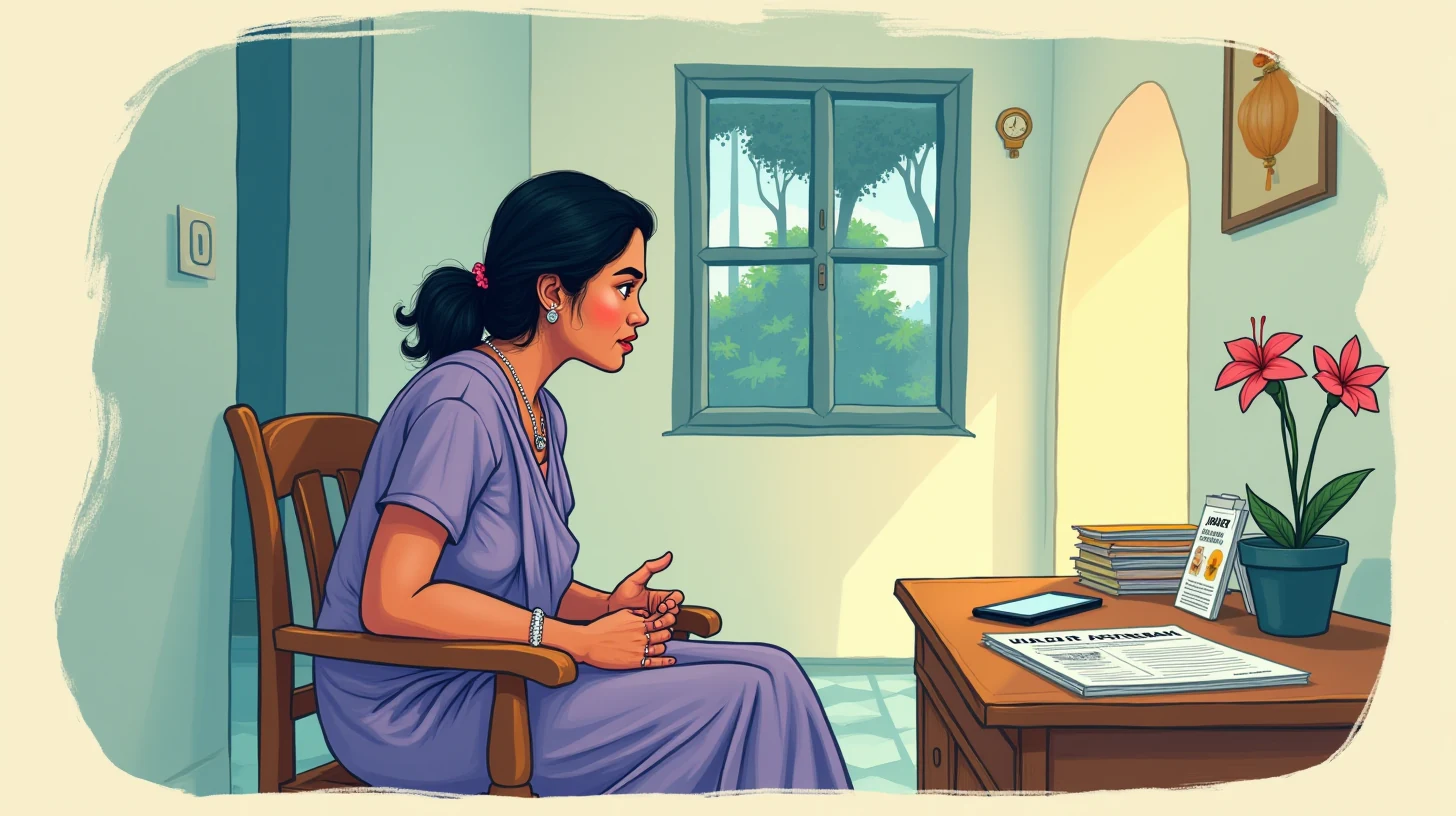
Her father is Ramesh Rao, sixty-two years old, retired from the Indian Telephone Industries Limited plant in Puducherry. He receives a pension of ₹21,000 a month. He has been hypertensive since 2008 and mildly diabetic since 2019. In early 2022, a routine blood test revealed elevated PSA levels and prostatic enlargement. The urologist suggested conservative management — increased fluids, reduced salt, six-monthly follow-ups. Ramesh followed it.
For three years, the plan held. PSA remained stable. Then, in late February 2026, he developed acute urinary retention. Anjali drove him to Puducherry Government Hospital. The ER doctor found his bladder distended with eight hundred millilitres of urine, placed an emergency foley catheter, and said he needed urgent urology assessment. JIPMER — Jawaharlal Institute of Postgraduate Medical Education and Research — was the closest specialist centre.
Monday morning, 5:50 AM: Anjali logged into JIPMER's patient portal. The urology OPD released slots at 6:00 AM sharp. All slots for fourteen days were already booked.
🗓️ The morning lottery
JIPMER's OPD operates on same-day booking: slots release at 6:00 AM sharp. Usually twelve to fifteen slots per day across three sessions. By 6:02 AM, they are gone.
Puducherry patients have learned this ritual: wake before dawn, prepare documents, set phone timers, refresh obsessively from 5:55 AM onward. When slots appear, click and pray the page loads before it vanishes. Puducherry has 800,000 residents. The major government hospitals — JIPMER, Government Puducherry Medical College, Government Arikamedu Hospital — share perhaps 250 OPD slots daily across all specialities. On any morning, roughly 7,000 patients compete for 12 to 15 urology slots. Success rate: roughly 12 percent.
The catheter Ramesh wore was not permanent — four weeks maximum before encrustation, infection risk, biofilm. That gave Anjali a deadline: get an appointment, get assessed, get treated before March 28.
- 🚑
Feb 28 evening — ER admission, catheter placement
Emergency foley catheter placed for acute retention. ER doctor notes probable BPH with obstruction. Discharge advice: arrange JIPMER urology consultation urgently.
- 📱
Mar 4, 5:50 AM — First portal refresh
Anjali logs into JIPMER patient portal. Next fourteen days are fully booked. She marks the alarm on her phone for tomorrow at 5:50 AM.
- ⏰
Mar 5–13 — Daily 6:00 AM ritual
Nine consecutive days of 5:50 AM wake-ups and portal refreshes. Slots appear and vanish within ninety seconds. No success.
- 🩺
Mar 14, 5:57 AM — Twelfth attempt holds
The portal refreshes. Two afternoon slots appear. Anjali clicks the 2:00 PM slot. The page loads, the slot confirms, the booking saves. The appointment is set for Mar 15.
⚠️ The deadline
On March 5, sitting in her office at lunch, Anjali asked the agent in Tamil: "Appakku indha condition-la appointment book panna kitaiyuma?" — Can my father get an appointment with this condition?
The agent replied: "JIPMER-il same-day slot system irukkum aana emergency cases-kku priority portal-il visible illai. Aana oru option irukkum: direct call pannunga hospital clinic-kku. Emergency assessment pathway irukkum BPH cases-kku." — JIPMER has same-day slots but emergency priority doesn't show on the portal. But there's another route: call the hospital clinic directly. They have an emergency assessment pathway for BPH cases.
Anjali had not thought of calling directly. The portal was the official channel. But she found the clinic number on her ER discharge pamphlet and called the next day.
A nurse answered. Anjali explained: emergency catheter, four-week lifespan, urgent assessment needed. The nurse said they had a fast-track emergency clinic. She gave Anjali a reference number and an appointment for March 11 — five days away. She would still need an OPD slot for formal consultation, but the emergency clinic could do initial imaging and determine treatment.
This was information the portal had not mentioned. The ER discharge had not mentioned it. But it was real, and it bought them a week.
🌗 The morning that held
March 14, 5:45 AM. Anjali's phone had alarms cascading: 5:50, 5:55, 6:00, 6:05, 6:10 — nine days of this ritual. At 5:57 AM, the portal message appeared: "Slots will be released at 06:00 AM."
At 6:00 AM, two urology slots appeared. Both March 15 afternoon — 1:00 PM and 2:00 PM. She clicked 2:00 PM. The page spun for a full second. Then: "Appointment confirmed. Date: 15 Mar 2026. Time: 2:00 PM. Location: Urology General OPD, JIPMER Puducherry. Reference: JIP-UG-098742."
She took a screenshot and read it three times. Then she showed her father. He was in bed, catheter bag secured, and he read it and closed his eyes.
She messaged her brother Arun: "Appointment set for tomorrow. 2 PM JIPMER." He replied with a thumbs-up and: "How are you holding up?" She did not answer immediately. She was functioning. There was a distinction between holding up and functioning.
What it does
- 📋Surfaced the emergency assessment pathway that the JIPMER website did not advertise and the ER discharge papers did not mention.
- ⏰Clarified the four-week catheter lifespan and the medical urgency driving the booking sequence.
- 🏥Identified alternate public hospital pathways (Government Puducherry Medical College) if JIPMER remained inaccessible.
What it does not do
- 🔒Never submitted a booking or refreshed a portal on Anjali's behalf; the click and the confirmation remained hers to own.
- ⏰Could not guarantee that any particular morning's refresh would succeed — the lottery outcome depended entirely on browser speed and system load.
- 📱Did not intervene with JIPMER staff to prioritise the case, even though it was medically urgent; that intervention remained Anjali's decision to make by phone.
🧭 Why the system is what it is
JIPMER processes roughly 800 outpatients daily across all departments. The urology team — four senior urologists, three residents, one specialist nurse — can safely assess 12–15 patients per session. That is 40–45 per day. No booking system can predict volume or accommodate surge. So they release slots at 6:00 AM and let persistence decide.
This is a scarcity system, not a convenience system. When specialist slots are genuinely limited, allocation defaults to luck-plus-persistence. The patient who wakes earliest and refreshes most reliably gets the slot.
This works if you are flexible — software engineer, gig worker, retired person. It fails if you are a construction labourer with a 6:30 AM shift, or a sole caregiver who has already missed two workdays. It fails if you do not have someone who can perform the daily ritual.
JIPMER has an emergency assessment pathway for acute cases. Anjali found it only by calling directly. The pathway exists. But it is not advertised on the portal, not mentioned in discharge papers, not known to anyone outside the hospital staff's personal network. The gap is not in resources but in visibility.
An agent that reads the ER note, understands the deadline, surfaces the clinic contact number, and says in Tamil "JIPMER has an emergency pathway for acute retention. The portal is for non-urgent cases. Call this number" — this does not bypass the system. It navigates the hidden part that already exists.
🌱 The resolution
March 15, 2:00 PM. Dr. Pradeep examined Ramesh and confirmed: benign prostatic hyperplasia with acute retention, obstructive component, no malignancy. Treatment: TURP — transurethral resection of the prostate. The procedure could be scheduled for March 18, just before the catheter reached its four-week lifespan.
The TURP took thirty-eight minutes under spinal anaesthesia. By evening, Dr. Pradeep removed the catheter. Ramesh voided 110 millilitres spontaneously — good for a first attempt. By the next morning, he was voiding normally. The obstruction was resolved.
He came home March 19. The catheter was gone. The four-week countdown ceased.
Anjali sat with him on the verandah that evening. The jasmine seller had finished her morning round. The street was quiet. He said, slowly, in Tamil: "Indha nalku naatkal-il en life oru nidra-illa irundheu. Ippothaan naan normal-aa iruppu." — For these four days, my life hadn't had a moment of sleep. Now I am normal again.
She did not tell him how close they had come to missing the deadline. The procedure was done. He was recovering. What had changed was not the system — JIPMER still releases slots at 6:00 AM, thousands still refresh and hope — but for Ramesh and Anjali, the acute phase was over. The deadline had been met. The surgery completed.
The agent had not done the surgery. It had surfaced the emergency pathway, clarified the deadline, pointed to the clinic number. The thing that changed his condition was a surgeon's hands and medical skill.
Anjali said later: "Naan samayam-ai manage pannirrukattaan. Pathway clear aagattum, contact number solraa appointment-kku ready aagittom. Aadinum doctor-ai parka." — I was managing my time. When the pathway became clear, when I had the contact number, we were ready for the appointment. But the actual treatment could only come from the doctor.
Puducherry has 1.2 million people. JIPMER sees 800 patients daily. On any morning, 7,000 try to book an appointment; 5,800 fail. Most do not know about the emergency pathway. Most do not know to call the clinic directly. They try again tomorrow, and the day after, until they give up or pay private fees.
The emergency assessment pathway at JIPMER exists. The catheter lifespan is known medical fact. The clinic contact number is public. But none of this appears on the portal or in discharge papers. The information lives inside the hospital's internal knowledge, unavailable to families navigating from outside.
An agent that reads the discharge note, understands the deadline, and synthesizes a pathway — this is small. It is like having a cousin in the urology department with forty-five minutes on a Friday to sit with you and say, "Here's how to do this." Most families do not have that cousin. The agent can be that cousin.
If you are managing a parent's health in Puducherry — or any Indian city where government hospitals carry a scarcity load — and you would like to understand which pathways exist but are invisible, which departments have emergency routes, which deadlines might be driving urgency, the product is free at gabforge.in. We have Tamil, Puducherry hospital contact databases, JIPMER portal architecture, the medical urgency protocols that exist but are not advertised. We will read your discharge note with you, in Tamil, and tell you which clinic to call.
"Indha nalku naatkal-il en jeevan oru nidra-illa irundheu."— These four days, my life hadn't had a moment of sleep.
"Ramesh-ai, JIPMER-il same-day slot system irukkum aana emergency cases-kku separate fast-track clinic irukkum. Ithu portal-il visible illai. JIPMER urology clinic-kku direct call pannunga, reference number kettukkonga. Emergency assessment clinic-kku appointment pannuvaangal. Ithaa first step."
(Ramesh, JIPMER has a same-day slot system, but for emergency cases there is a separate fast-track clinic. This is not visible on the portal. Call the JIPMER urology clinic directly and get a reference number. They will book you for the emergency assessment clinic. That is the first step.)