
Registering a weaving tradition as collective property
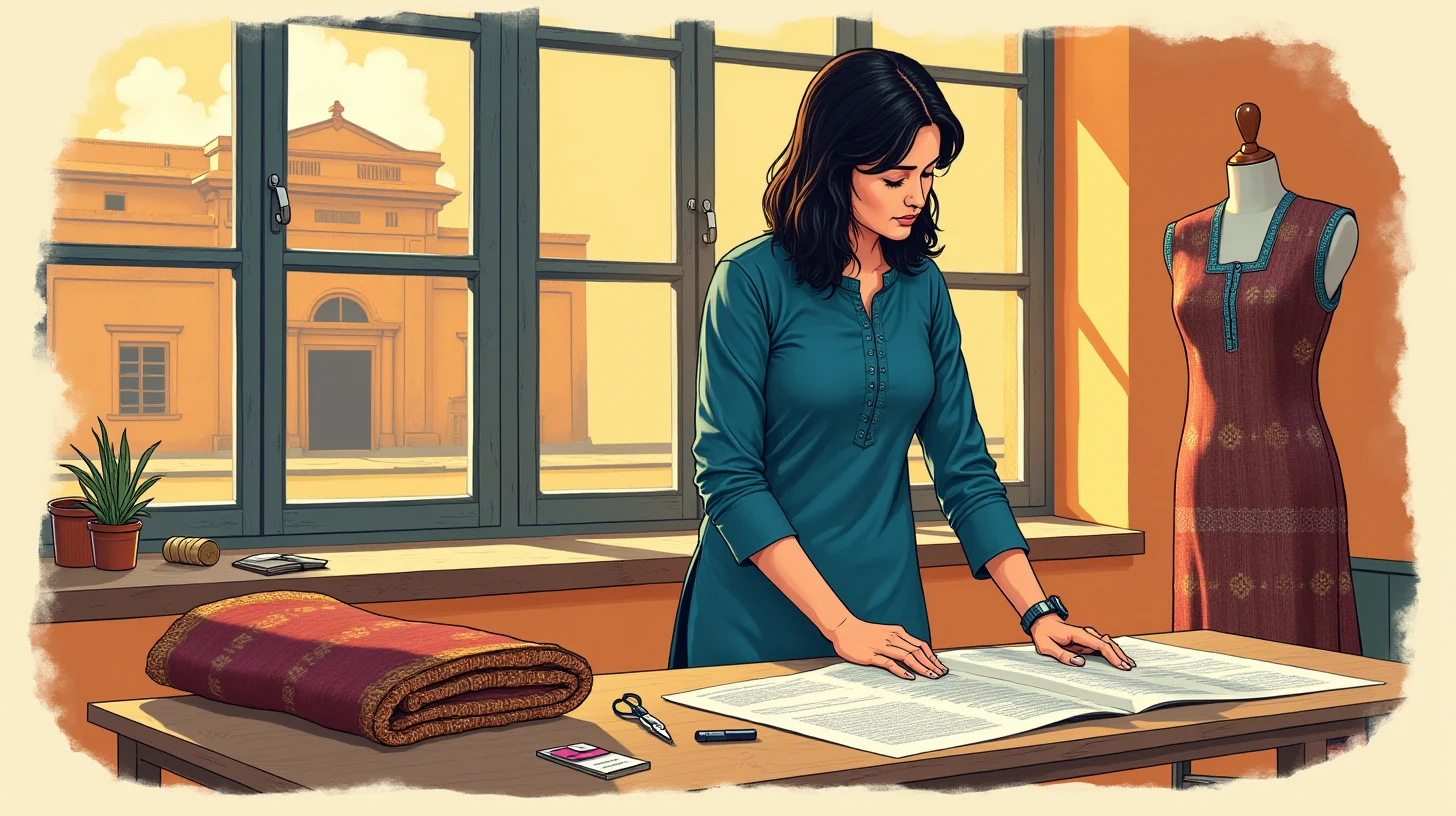
🎨 Lalrinhlui Sailo, 32, designs contemporary garments built around the Mizo Puan textile in Aizawl. She employs four hand-loom weavers and earns ₹28,000 to ₹35,000 monthly. In March 2025, she reads that a government application to protect the Puan as a Geographical Indication has stalled. No one at the corporation is pursuing it. She decides to file her own—but GI law requires an association of producers, and the registration form is 16 pages long, in English.
🚨 The problem
Geographical Indications protect collective heritage goods—they cannot be filed by an individual designer, no matter how dedicated. Lalrinhlui needs to form a Mizoram Societies Registration association first, draft a constitution, name the four weavers as founding members and legal equals, then file. The form is complex and in English. The deadline is unwritten: once any GI is registered, hers cannot be filed.
🚀 How GabFORGE helped
Lalrinhlui used an agent tool to translate the bureaucracy and surface the requirements. Over six weeks:
- 🔍 Broke down the form into plain language. The agent walked through the 16-page registration form, explaining which sections would be difficult (the constitution) and what each required. It flagged that Lalrinhlui herself could not be a founding member—only the weavers could be.
- 💬 Drafted the constitution in plain English. The agent drafted a constitution defining membership, voting rights, dispute resolution, and how the association would operate. Lalrinhlui translated it into Mizo and read it aloud to the four weavers so each understood their legal role.
- 📞 Connected the weavers to the process. Remsiami, Sialei, Zarmawii, and Zu became the association's board. They approved the application. By September 10, 2025, the Mizo Puan Weavers' Association was registered with the GI Registry—at a cost of ₹4,500.
By February 2026, Remsiami's 16-year-old daughter had joined the studio as an apprentice to learn weaving and eventually join the association as a member.
🇮🇳 Why this matters
Geographical Indication protection is only powerful when it is owned by the producers themselves, not by a distant bureaucracy. When a government corporation loses continuity, the application dies. When the producers hold the association, they keep pushing, even years later.
The long version has the stalled 2021 application by the Handloom Corporation, the annual weaving rhythm and its fragility, the moment Lalrinhlui understood she could not be a founder, and why GI protections survive when communities own them.