
Proving copyright happens in three parallel bureaucratic steps
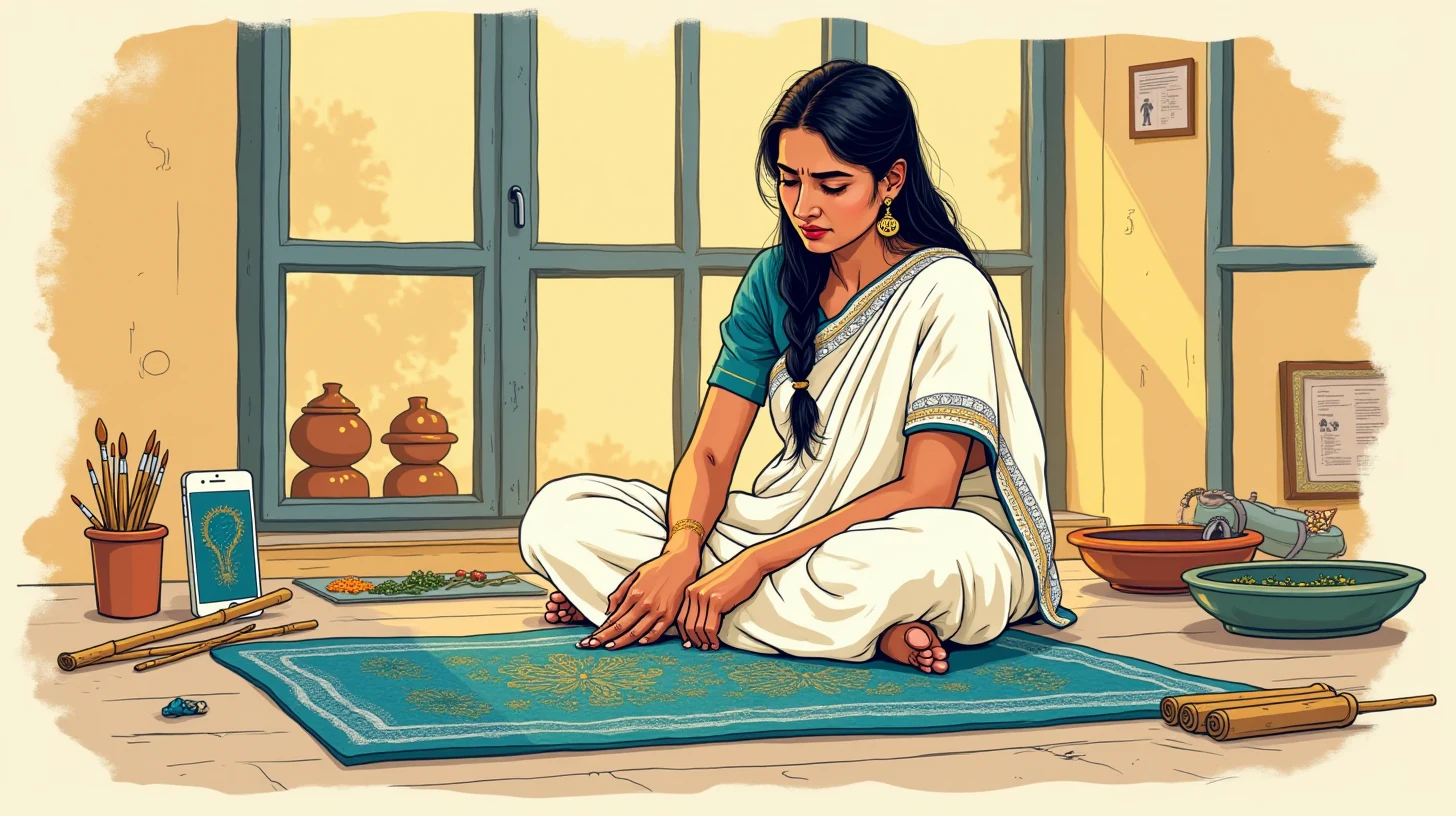
🎨 Sasmita Mohapatra, 31, is a Pattachitra painter in Bhubaneswar. She paints Krishna-Lila cycles onto silk scarves and journal covers (₹3,200 per piece). In May 2026, a friend's screenshot reveals that a Mumbai home-décor brand called Waraji Designs is selling cushion covers with Sasmita's exact teal-and-saffron motif, priced at ₹2,890 and showing over 1,200 likes. Sasmita has a Copyright Office registration certificate from 2022. But proving infringement requires three separate evidence pieces.
🚨 The problem
Copyright vests automatically upon creation, but proving it in court requires documented evidence. A designer cannot say "I created this first"—the law requires: (1) contemporaneous registration or proof of creation date, (2) verification of the infringer's identity and business address, (3) expert forensic comparison analysis of the motif. Each costs money. Each takes time. A solo designer faces ₹19,300+ and weeks of friction before legal action is even possible.
🚀 How GabFORGE helped
Sasmita typed her problem in Odia-English late May 21. Over two weeks, she executed three parallel steps:
- 🔍 Verified the copyright registration. The agent directed her to copyright.gov.in's "Certificate Verification & Certified Copy" service—a process she didn't know existed. She submitted her RoC number (L-127583/2022), paid ₹300, and received a notarized certified copy within 4 business days.
- 💬 Located the infringer's legal address. The agent pointed her to the GST portal (gst.gov.in) to search for Waraji Designs. She found the registered entity (Waraji Creative Pvt. Ltd.), their GSTIN, and Mumbai office address—verification that a lawyer would need for the cease-and-desist letter.
- 📞 Sourced the forensic comparison. The agent advised her to retain a design-forensics expert. She paid Arun Mehta in Delhi ₹8,500 for a technical report comparing 12 visual elements (peacock tail, flute angle, halo composition) and concluding 94% structural correspondence.
Total cost: ₹19,300. Total time: two weeks. Her lawyer Supriya drafted a cease-and-desist letter dated May 21. By month-end, Waraji had not replied.
🇮🇳 Why this matters
Copyright infringement is invisible without documentation. A solo designer earning ₹3,200 per piece faces ₹19,300+ in evidence gathering, then ₹50,000–₹3+ lakh for a Section 51 civil suit. A cease-and-desist has no teeth if the infringer ignores it. The bureaucratic framework exists, but most designers never learn the three-step evidence structure—and by then, the cost of fighting exceeds the cost of moving on.
The long version has the automatic copyright concept, the Registration Certificate system, the three-step evidence dossier, the forensic analysis process, and why a solo artist's choice to sue depends entirely on whether she can afford to lose.