
The Lucknow chikankari designer and the GI authorised-user her karkhana lost: When a ₹38-lakh order arrives, the certificate had expired four years ago
🧵 Anjum Khan, 34, designs ready-to-wear chikankari kurtas and saris from her studio in Aminabad, Old Lucknow. Her mother-in-law established the karkhana three decades ago. Anjum took over seven years ago and maintains the same 23 women karigars—embroiderers and shadow-stitchers—who know her hand and she knows theirs. In late February 2026, an ODOP export buyer offers ₹38 lakhs for 750 saris and kurtas—the largest single order her studio has ever seen. There is one condition: the buyer's compliance team requires a valid GI authorised-user certificate for Lucknow Chikan Craft.
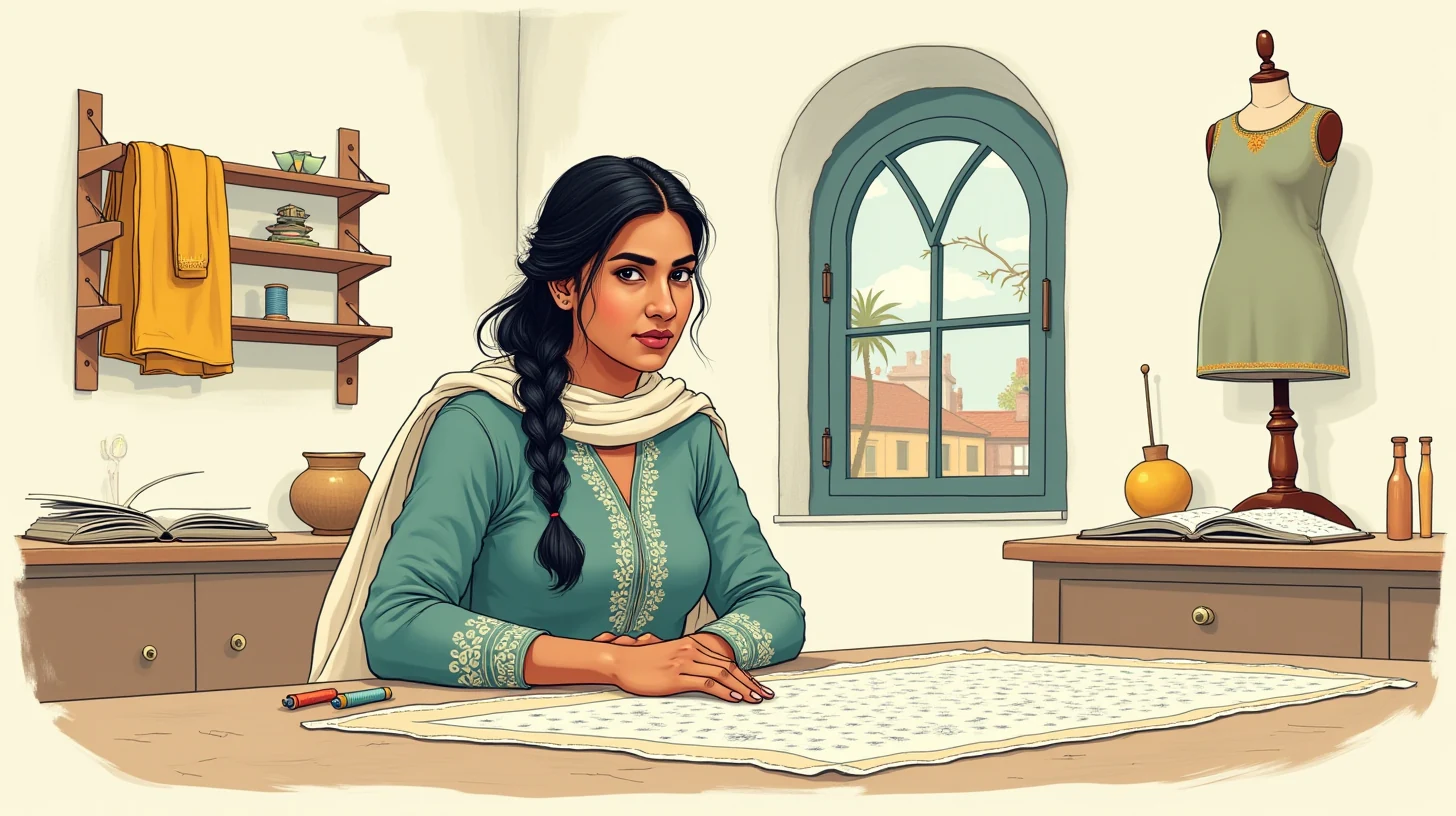
Anjum walks to her studio wall, takes down the framed certificate under the dust, and looks at the date. 2019. A three-year validity. It expired in 2022. No renewal was filed. No one knocked on the door. The certificate simply lapsed.
🚨 The problem
Geographical Indication certificates have expiration dates and renewal windows. Miss the window, the status goes into lapsed state, and the certificate becomes a framed decoration. The GI Registry does not send reminders. Export buyers checking the registry see "lapsed" and will not sign. A fresh GI application—which is what a lapsed certificate requires—takes 4–6 months at the IP India office in Chennai. Anjum has 10 weeks.
🚀 How GabFORGE helped
Her lawyer, Rajesh, discovers the Expedited Examination Scheme. GI applications can be fast-tracked for artisans with export orders in hand. The processing time falls from 4–6 months to 8–10 weeks. The DC Handlooms office can issue a letter endorsing her application. An export contract with a buyer's proof of intent qualifies as supporting documentation.
🔍 Verified expedited examination exists: Not advertised, but in the fine print of GI Registry procedures.
💬 Assembled supporting documents: DC Handlooms endorsement letter + export contract + proof of craft practice (photographs, invoices, karigars' documentation).
📞 Filed with correct precedent: Form CGI-1, submitted with export order as justification, targeting 8–10 weeks.
By early July—nine weeks later—Anjum receives her renewed GI certificate in her name. The 750 saris and kurtas ship in mid-July. Payment of ₹38 lakhs arrives. The buyer places an order for 400 more pieces in August.
🇮🇳 Why this matters
GI renewals can be expedited if the artisan explicitly requests expedited examination with proof of an export contract. Most artisans and their lawyers don't know this exists. They assume 4–6 months and lose the order. Anjum survived because she had a lawyer who read the fine print and an export buyer whose demand justified the escalation.
The long version has the lapsed certificate date, the ODOP buyer's requirement, the DC Handlooms endorsement letter, and the moment Anjum realized the system had flexibility if she asked.