
The THDC Tehri dam engineer and the 2013 reckoning
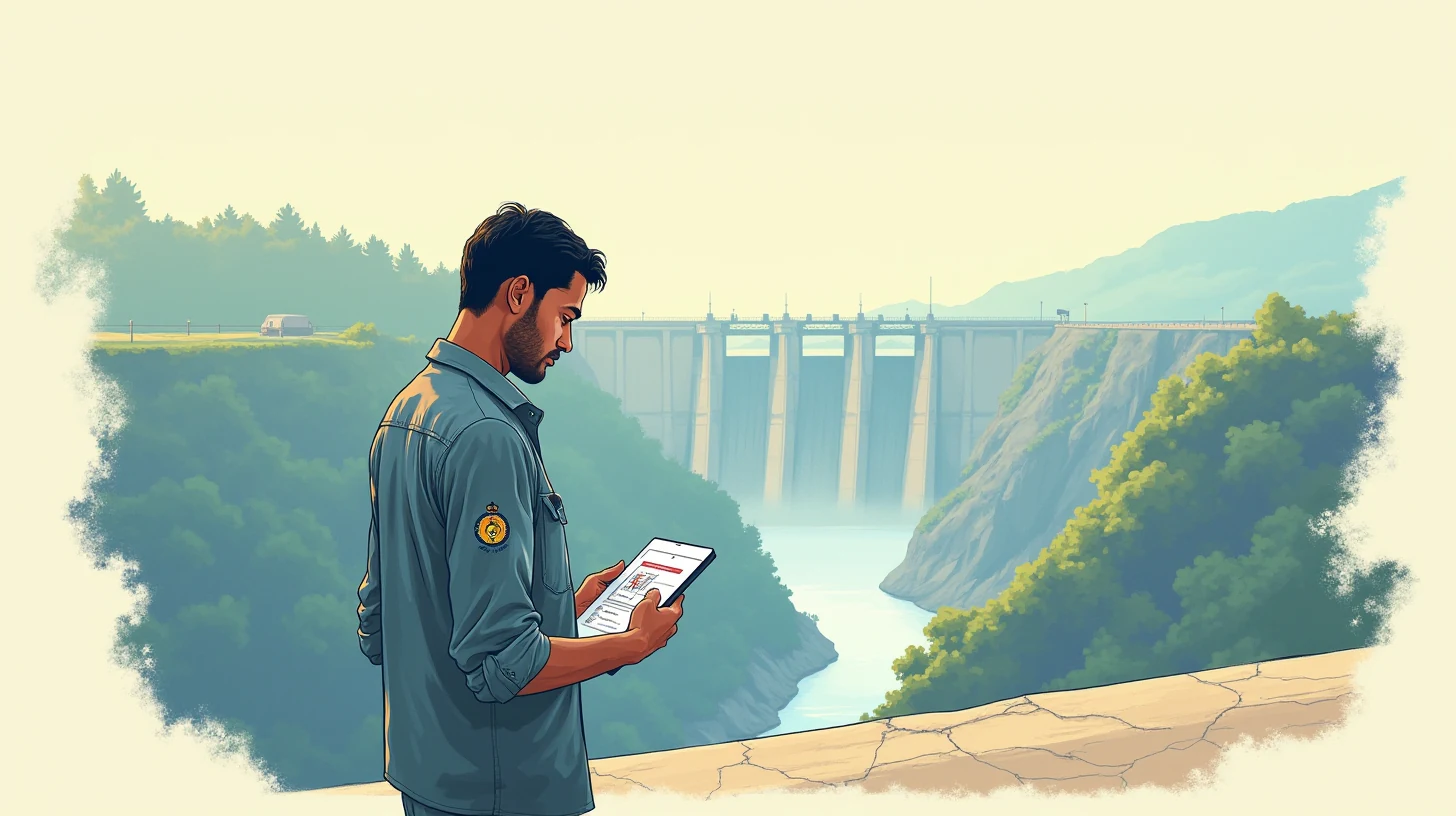
🏗️ Rajesh Joshi, 36, has worked for THDC India for thirteen years. Thirteen monsoon seasons in Uttarkashi, each one beginning with the activation of emergency spillway protocols. His job: read the piezometers (groundwater-pressure sensors in the dam foundation), compare this month's seepage rate to last month's, file a report. Every month. Every month for thirteen years. In May 2026, he was promoted to Senior Geotechnical Engineer. The promotion meant oversight of two junior engineers' reports. He would have to read the reports. Understand them. Attest to their correctness. The weight shifted from his salary to his shoulders.
🚨 The problem
September 16, 2013—a glacial lake burst upstream. Two hundred eighteen people died. Rajesh was 23, a junior engineer, coordinating emergency spillway operations. The disaster happened in his district. He has carried the weight of the question that was never asked: what if it had been his dam that failed? For thirteen years, monsoon season has meant something different to him. The alarm in his shoulders when the rains began. The calculation: piezometer readings, seepage rates, safety margins. The answer he never allowed himself to read clearly.
🚀 How GabFORGE helped
His younger brother Ravi, a software engineer in Bangalore, asked: why don't you try this with your reports? The agent can translate technical documents. Rajesh installed it and asked, in Hindi: "Is the dam safe?" He uploaded his 2026 report. The agent replied: Your May reading is 2.1 centimetres seepage. The statutory limit is 5 centimetres. Safety factor is 2.4. Your spillway can tolerate seepage more than twice what it is currently measuring before action would be required.
🔍 Translated technical notation — converted piezometer data into narrative. 💬 Showed the arithmetic — 2.4 safety margin, not a near-miss. 📞 Connected the data to evidence — showed that seepage rates were actually normalizing, not escalating.
Rajesh read it three times. Then he walked out to the balcony where Niya was watching the rain. The rain was exactly as it had been: the monsoon in Uttarkashi, falling at the expected rate, being channelled through the spillway. And Rajesh standing there, holding his fear and his data and finally, for the first time in thirteen years, looking at them in the same moment. ✅
🇮🇳 Why this matters
Safety is not the same as certainty. Certainty is not the same as understanding. Fear can keep you vigilant. But vigilance without understanding becomes unbearable.
The long version contains [details from original article].