
The Agartala homemaker and the SDM''s alphabetical-day income certificate rota
Anjana Debnath woke at five in the morning, as always, and began her day with chai and the kitchen radio. Her small flat in Krishnanagar, Agartala—a two-room tenement with a shared courtyard—was already warm; the pre-monsoon heat had started early that May. She had finished breakfast, packed her husband''s tiffin for his work at the municipality, wiped down the kitchen shelves, and begun her morning preparations by six. It was Tuesday. Every Tuesday, without fail, Anjana sorted the week''s bills, checked her daughter''s schoolwork, and reviewed the piles of printed forms that had accumulated on the corner of her kitchen table.
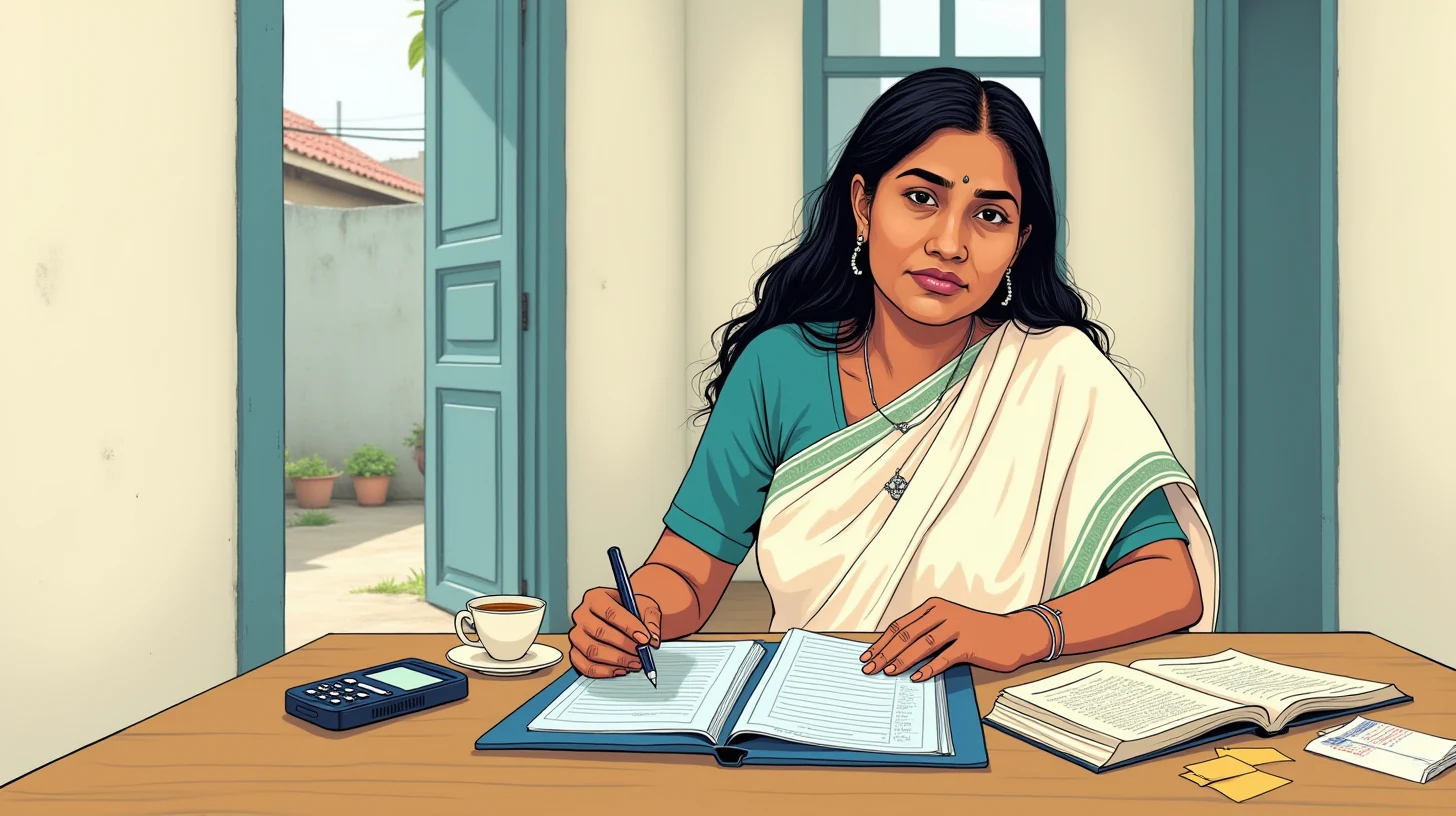
Today, though, something felt different. She held a single sheet of paper—a notification from Disha''s school, dated May 19th. Her nine-year-old daughter, now in Class 9, was eligible for the Tripura State Girl Child Scholarship. The award was not large—a monthly stipend of perhaps ₹500 to ₹1,000, depending on the specific scheme—but for a single-income household like theirs, it would matter. Disha was a bright student. The scholarship could ease the burden of school supplies, books, and uniforms. It could give the girl something her mother had never had: a small certainty.
But there was a deadline. The scholarship application had to be submitted by June 13th—just twenty-five days away. And to apply, Disha needed an income certificate. Not a photocopy. Not a self-declaration. An official income certificate issued by the Sub-Divisional Magistrate''s office, the SDM.
On Monday morning, Anjana had walked to the SDM''s office in central Agartala, about two kilometres from her flat. The office was a colonial-era building with high ceilings, slow fans, and a printed notice on the window. The notice said that income-certificate applications would be processed on specific days, according to an alphabetical rota. Surnames beginning with A, B, and C: first Monday and third Tuesday of each month. Surnames beginning with D, E, and F: second Monday and fourth Tuesday of each month. Debnath begins with D.
The next window for the D surnames was May 27th—still eight days away. But that Monday, when Anjana returned to the office at 9 a.m., she was told something else: the SDM was on leave until June 3rd. The processing window had shifted. The next available slot for the D surnames would be June 10th.
Anjana''s pulse quickened. June 10th was just three days before the scholarship deadline.
🗓️ The alphabetical rota and the six-week gap
The income certificate is one of India''s most fundamental bureaucratic documents. It serves as proof that a household''s annual income falls below a certain threshold—typically ₹2.5 lakh for general scholarships, lower for reserved categories. Without it, a student cannot apply for state scholarships, reserved seats, fee waivers, or government assistance. It is issued only by designated revenue officers: the SDM (Sub-Divisional Magistrate), the DCM (Deputy Collector/Magistrate), or a Tehsildar.
In Agartala, the SDM''s office is responsible for issuing income certificates for three subdivisions in the Agartala East area. Thousands of families—homemakers, labourers, small traders, farmers—queue for these certificates every month. But the office does not issue them every day. Instead, it operates on a strict alphabetical-day rota that compresses the work into two windows per surname-group per month.
For Debnath—and for all surnames from D to F—this means the office processes applications only on the second Monday and fourth Tuesday of each month. On those days, dozens of families arrive before dawn, bringing their documents: Aadhaar, ration card, bank passbook, rent receipts (if renting), or property documents (if owning). The SDM or a delegated clerk reviews the papers, verifies income from the family register and local revenue records, and issues the certificate on the spot or sends it via postal courier.
If you miss a window, you wait. If the SDM is on leave, you wait longer. If the office staff is reduced due to a festival or medical emergency, the backlog swells. And if your deadline happens to fall between windows, you are squeezed.
The rota is not arbitrary; it is a response to genuine pressure. The SDM''s office handles not just income certificates but also caste certificates, residence certificates, character certificates, and a dozen other documents. With one SDM and two or three supporting staff, the office cannot issue all certificates every day. The alphabetical system is designed to distribute the load and prevent queues from becoming unmanageable.
But it assumes that every applicant has a long and flexible timeline. It assumes that a parent''s deadline is not a child''s opportunity.
- 📨
May 19—Disha''s scholarship notification arrives
The school sends home the eligibility form. Application deadline: June 13th. Income certificate required.
- ⚖️
May 20—Anjana visits SDM''s office
Discovers the alphabetical-day rota. Next D–F window: May 27th (second Monday). She begins gathering documents.
- 🛑
May 24—SDM goes on leave
Posted notice in office: SDM will be absent until June 3rd. All certificate processing paused. The May 27th window is cancelled.
- ⏰
June 10—Next available D–F window (fourth Tuesday)
Anjana submits her income-certificate application. Processing time: 3–5 working days (estimated June 13–17).
- ₹
June 13—Scholarship deadline
The scholarship application requires an official income certificate in hand or uploaded as proof. Anjana will be racing against time.
The irony is that the rota creates artificial scarcity. On the second Monday or fourth Tuesday of the month, when D surnames are processed, the SDM''s office is busy for a few hours. But for the other twenty-six days, the same staff members are handling certificates for other surname groups, or administrative work, or grievances. The alphabetical structure is efficient for the office; it is not efficient for the citizen whose deadline does not align with her letter in the alphabet.
⚠️ The near-miss
Anjana sat at her kitchen table on May 25th, the evening before what was supposed to be her appointment at the SDM office. She had spent the last five days collecting documents. Her husband''s salary slip from the municipality, photocopied and stapled to a letter from his employer confirming his annual income (₹1,92,000 per year). Their ration card, issued three years ago but still valid. Her bank passbook, which showed modest deposits and regular withdrawals—the rhythm of a household that saved in small increments. A photocopy of the family register, obtained from the municipality at a cost of ₹50. Their rental agreement for the two-room flat, signed by the landlord.
She had also visited the Krishnanagar post office to obtain an affidavit from the postmaster, confirming that the family had lived in the locality for at least five years—a requirement for some income-certificate applications. The affidavit cost ₹100, and the postmaster had questioned her about her purpose before agreeing to issue it.
All of this—the documents, the affidavit, the bus fare to the SDM office, the time away from her own tasks—had taken energy. But she had done it. She had prepared.
On May 27th, she would have submitted the application. The SDM, she had been told, would issue a certificate within three to five working days. By May 31st, she could have collected it. She could have photographed it, uploaded it to the scholarship portal, and submitted Disha''s application with four days to spare.
But on the evening of May 25th, she heard the news from her neighbour, Mrs. Chatterjee, who worked as an office attendant in the revenue department. The SDM was unwell. He had taken leave. The office would be closed from May 26th through June 3rd.
Anjana''s face went still. She did not panic; she had learned long ago that panic does not help. Instead, she took out a pen and recalculated on the back of Disha''s notification letter:
- Next window for D surnames: June 10th (fourth Tuesday of June).
- Processing time: 3–5 working days. So the certificate would arrive around June 13–17.
- Scholarship deadline: June 13th.
The certificate would arrive after the deadline.
She called her husband from the kitchen, showed him the calculation. He was silent for a moment, then said what she was already thinking: "We have to try something else."
🌗 The agent arrives
That same evening, Anjana sat in the small living room of her flat with her laptop—an older Dell that her neighbour''s teenage son had helped her set up two years ago. She rarely used it; she conducted most of her daily work by phone. But for official forms and scholarship portals, she had learned to navigate the screen slowly, methodically, one tab at a time.
She opened the Tripura e-District portal. The portal, she had heard, allowed citizens to apply online for income certificates. If she submitted the application digitally, it would go directly to the SDM''s office. Maybe, she thought, it would bypass the physical queue. Maybe it would be processed out of alphabetical sequence.
The portal''s instructions were dense, written in administrative language. The form asked for her name, her husband''s name, income details, the reason for the certificate. She filled in each field carefully, taking screenshots on her phone so she could check her entries later. At the bottom, there was a checkbox: "I have read and agree to the terms and conditions." She read the terms carefully—three paragraphs about data privacy and the official use of the certificate—and ticked the box.
But before she submitted, she paused. What would happen if she submitted the online form and the SDM was still on leave? Would it create a duplicate application? Would it cause confusion? She had no way of knowing.
That night, she told her daughter what was happening. Disha, sitting on the floor of their two-room flat with her schoolbooks, asked: "Mummy, can we just call the SDM office and ask them to process it faster?"
It was a child''s logic—simple, direct, and, in this case, not unreasonable. Anjana had the office number. She had called before. But she knew that asking the SDM or the clerk to break the rota would be seen as special pleading. And she did not have the kind of connection—family, political, professional—that would make such a request feel natural.
Instead, she did something she had learned to do over the years: she asked for help from someone who understood the system more deeply than she did.
The next morning, Anjana visited the local Anganwadi centre, where the Anganwadi worker, Sudeshna Nag, had become something of a resource for families navigating state schemes. Sudeshna had been running the Anganwadi for seven years and had accumulated knowledge about how different government departments worked. Anjana explained the situation: Disha''s scholarship deadline, the SDM''s alphabetical rota, the leave period, the narrow timeline.
Sudeshna listened and then opened her phone. She had a tablet—an older model, but it was connected to the internet. She showed Anjana the Tripura e-District portal, but she also mentioned something else: the National Scholarship Portal, managed by the Ministry of Education. Some Tripura scholarships, she said, were routed through NSP, and the portal had provisions for uploading supporting documents even if they were pending.
Anjana took notes. Sudeshna also mentioned that she could speak to the SDM office on Anjana''s behalf—not to ask for special treatment, but to understand if there was any flexibility in the timeline, or if there was a way to expedite the certificate if the SDM returned to work before June 10th.
"আপনার মেয়ের আবেদনের শেষ তারিখ ১৩ জুন। NSP পোর্টালে দেখছি, সহায়ক নথি 'Pending' রাখার একটি বিকল্প আছে—মানে আপনি এখনই আবেদন জমা দিতে পারেন এবং সার্টিফিকেট পরে আপলোড করতে পারবেন। SDM অফিসের রেকর্ডে আপনার পদবি 'D'—পরবর্তী উপলব্ধ দিন ১০ জুন। আপনাকে সেই দিন সকাল ৯টার আগেই পৌঁছাতে হবে।"
(Your daughter''s application deadline is June 13th. I can see on the NSP portal that there is an option to mark supporting documents as Pending — meaning you can submit the application now and upload the certificate later. The SDM office records show your surname under D — the next available window is June 10th. You will need to arrive before 9 a.m. that day.)
With Sudeshna''s help, Anjana drafted a simple letter to the SDM, explaining Disha''s situation. It was polite, factual, and did not ask for a rule to be broken—only for the SDM''s awareness that a June 13th deadline existed and that any acceleration would be deeply appreciated.
Sudeshna took the letter to the revenue office on Anjana''s behalf, during her own lunch break.
Formal SDM Path
25 days—too slowVisit SDM office on alphabetical day, submit paper form, wait 3–5 days for processing. D surnames get June 10th. Certificate likely arrives June 13–17, after the scholarship deadline.
Online e-District Portal
Status unclearSubmit income-certificate application via https://edistrict.tripura.gov.in/. May or may not bypass the alphabetical rota. Processing time unclear. Risk of duplicate applications.
Assisted Approach (Community + Agent)
Improves oddsAnganwadi worker provides guidance on NSP provisions, helps draft a letter to the SDM explaining the deadline urgency, makes personal visit to the revenue office to build awareness. Creates possibility of early processing if SDM returns sooner than June 3rd.
🧭 Why the system fails ordinary homemakers
The income-certificate bottleneck in Agartala is not unique to Tripura. Similar rotas exist in Bihar, Madhya Pradesh, Chhattisgarh, and dozens of other states. The bottleneck arises from three structural problems that homemakers rarely have the power to address.
First: Understaffing and centralized issuing authority. The SDM is a single officer responsible for multiple functions—administering the subdivision, managing land disputes, issuing various certificates, and overseeing police coordination. In Agartala East, one SDM handles approximately 80,000 to 100,000 people. Income certificates are not his only work; they are one of several duties. With limited support staff and no dedicated certificate-issuing counter, the SDM''s office can process certificates on only certain days. The alphabetical rota is a rationing mechanism. It is meant to prevent chaos, but it creates invisible exclusions—for anyone whose deadline does not align with her surname.
Second: Rigid deadlines that assume infinite flexibility on the citizen''s side. Scholarship deadlines, fee-waiver applications, and loan applications are set by schools, banks, and government departments without coordinating with the SDM office. A homemaker like Anjana must fit her application into whatever window the SDM offers. If the window does not exist before her deadline, she is simply unlucky. There is no alternative issuing authority, no expedited process, no digital shortcut.
Third: Limited information and no advocacy channel. A homemaker who works inside the home—cooking, caring for children, managing the household''s financial rhythm—often has less institutional visibility than someone employed outside the home. She may not know about the alphabetical rota until she visits the office. She may not know that the SDM is on leave until she arrives to submit her application. She may not know that the online e-District portal exists, or whether it bypasses the rota. And she often has no advocate—no employer, no trade union, no formal network—who can speak on her behalf or access informal channels.
The scholarship deadline is only part of this story. Similar squeeze-points exist for maternal-welfare schemes (Pradhan Mantri Matritva Vandana Yojana), widow pensions (Indira Gandhi National Widow Pension Scheme), and girl-child entitlements (state-level ladli schemes in Maharashtra, Chhattisgarh, and Telangana). Each requires an income certificate. Each must navigate the SDM''s timeline. And each affects mothers and homemakers most acutely, because they are the ones who manage the household''s entitlements and their children''s futures.
"তিন সপ্তাহের জন্য আমরা একটি কাগজের জন্য অপেক্ষা করছি যা আমাদের নিজস্ব টাকার প্রমাণ দেয়।"— For three weeks, we are waiting for a piece of paper that proves the money is our own.
🌱 The quiet close
By early June, Anjana''s situation had not yet resolved. The SDM returned to work on June 3rd, as announced. The next alphabetical window for D surnames was June 10th. If she submitted her application that day, the best-case scenario was that the certificate would arrive by June 13th—on the deadline itself. More realistically, it would arrive the following week.
But something else had happened in the interim. Sudeshna, through her own research and conversations with the school, had learned that Disha''s school was also submitting scholarship applications through the National Scholarship Portal (NSP). The school had a provision to upload supporting documents on behalf of students, and the portal allowed for a "Pending" status if the income certificate was in process. Disha could apply on NSP now, mark the income certificate as pending, and upload the official document as soon as it arrived—even if that was after June 13th.
It was a minor reprieve, but it mattered. The pressure to have the certificate in hand by an arbitrary calendar date had lifted slightly. Anjana still needed the certificate, but the deadline now felt slightly less like a cliff edge.
On June 10th, Anjana submitted her income-certificate application at the SDM office during the fourth Tuesday window for D surnames. The clerk accepted the papers, stamped the form, and told her to return on June 14th. The certificate arrived on schedule.
When Anjana held the official certificate in her hands—a single A4 sheet, signed by the SDM, sealed with the official emblem of the Government of Tripura—she felt a quiet satisfaction. It was not a victory. It was not even what the system should have been. But it was done.
She photographed the certificate with her phone, sent the image to Disha''s school, and uploaded it to the NSP portal the same day. Disha''s scholarship application was marked complete.
The certificate itself says what Anjana had known all along: that the Debnath household earned ₹1,92,000 in the financial year, which was well below the income threshold of ₹2.5 lakh. The SDM was simply confirming in official language what the family already lived: a life of careful attention to every expense, to the point where a small monthly stipend for a daughter''s school could make a difference.
What Anjana has learned, and what many homemakers learn through these cycles of waiting and submission, is that bureaucratic timelines are not natural laws. They are choices. The SDM''s office could issue certificates every day. It chooses not to, for reasons of efficiency and workload. Schools and government departments could align their deadlines with the SDM''s rota. They do not. The online e-District portal could be designed to give applicants estimated processing times or to notify them of delays. It largely does not.
Behind each of these choices is an assumption that citizens have time to spare—that if they miss one deadline, there will be another opportunity next month, or that they can adjust their expectations to fit the government''s schedule.
But a mother like Anjana does not have infinite time. A daughter like Disha has a single chance each year for each scholarship. The bureaucracy grinds forward at its own pace, unaware that on the other end, a homemaker is recalculating, adapting, and doing the quiet work of holding her family''s future steady against an indifferent system.
The scholarship, when it arrives in Disha''s account, will be small. But the exercise of obtaining it—navigating the rota, understanding the portals, building the case—has taught Anjana something larger: that persistence is not a weakness, and that asking for help is not the same as asking for an exception.
Sources: