
The Ahmedabad widow and the Vidhva Sahay Yojana Aadhaar link
Hansa Patel was 51 when her husband, Rajesh, died of a sudden heart attack in November 2025. She had been married to him for 26 years, kept his home in the Maninagar neighbourhood of Ahmedabad, raised two children — now both working in other cities — and, in the last ten years, had managed the household finances while Rajesh worked part-time as a security guard. They had never been wealthy. Their joint bank account at the local cooperative held just enough for the monthly groceries and rent. When Rajesh died, Hansa lost not only her husband but her primary income anchor.
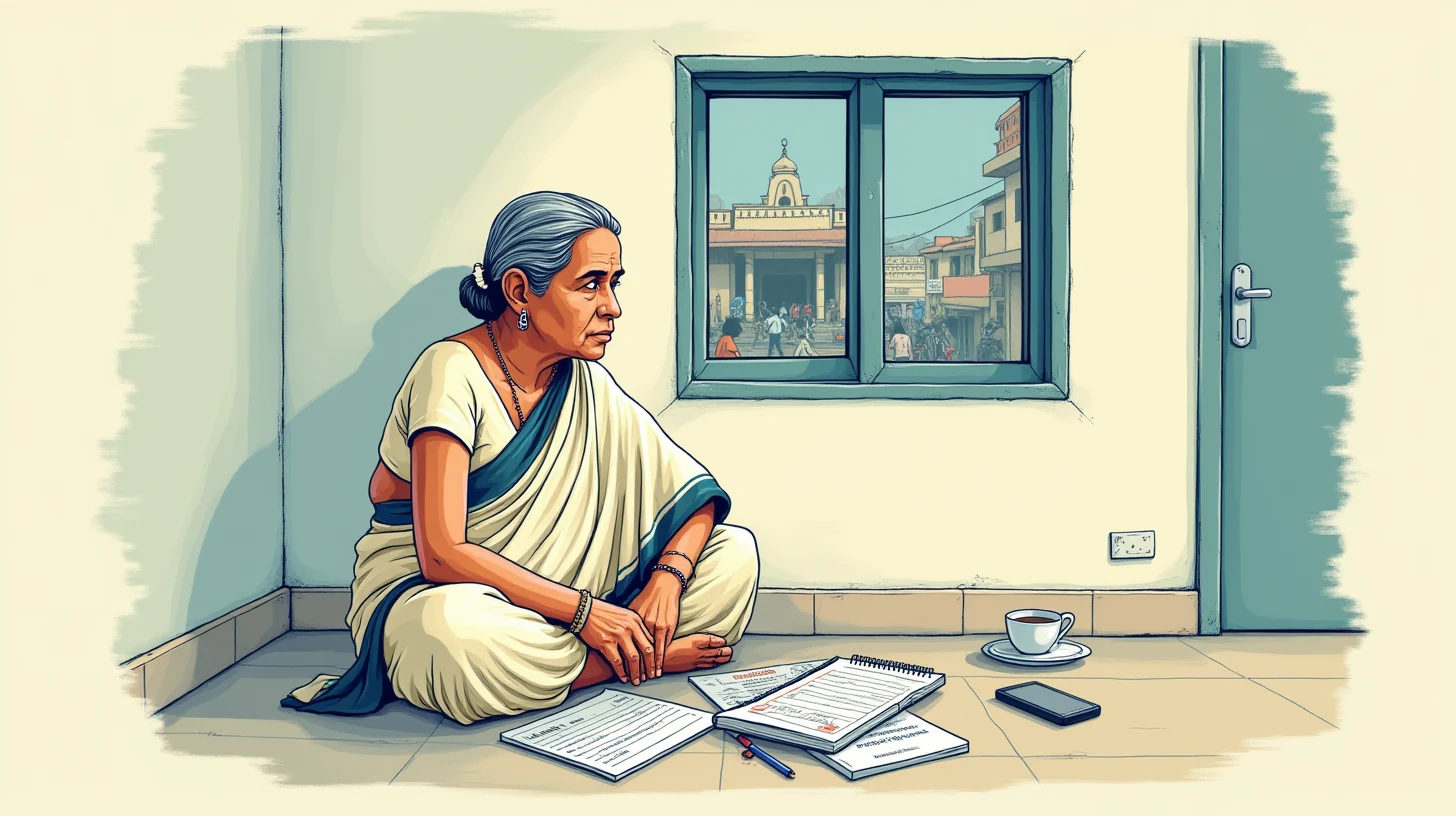
Within days, a neighbour — Parvati, who worked at the local Anganwadi centre — mentioned a scheme. "There is a government widow pension," Parvati said over tea. "₹1,250 every month. My aunt got it. It is called Vidhva Sahay Yojana. You should apply."
Hansa had never applied for a government scheme before. The idea of pension — ₹1,250 a month — was real money to her. That would cover half her rent. She asked Parvati how to start. "Download the form from the Revenue Department website," Parvati said. "But you''ll need your Aadhaar, his death certificate, and proof that your bank account is linked to your Aadhaar."
This last part — the Aadhaar-to-bank seeding — was where the system began to unravel for Hansa.
🗓️ The annual cycle of the Vidhva Sahay Yojana
The Gujarat Vidhva Sahay Yojana is administered jointly by the Gujarat Revenue Department and the Social Justice and Empowerment Department. It is not a new scheme; it has existed for decades, though it was renamed the Ganga Swarupa Yojana in 2008 to "lend respectability" to beneficiaries, as the government press release stated. Widow pensions in India are processed on a calendar year, with the bulk of new applications arriving between January and March, the financial year window when state budgets are allocated. New beneficiaries typically receive their first payment in the following quarter — if their paperwork is complete.
Hansa applied in late November 2025, which was unusually early. Most widows wait three to six months after their husband''s death before attempting the paperwork — grief, shock, the immediate need to sell property or move in with family, or the simple overwhelm of bureaucracy keeps them from acting quickly. Hansa was motivated by the approaching rent deadline.
The eligibility criteria are straightforward: a woman must be a widow, between 18 and 40 years old, a permanent resident of Gujarat, and her household annual income must be below ₹1,20,000 (rural) or ₹1,50,000 (urban). Ahmedabad is urban. Hansa''s household income — now zero, since she had never worked outside the home — easily qualified.
The application portal is hosted on the Revenue Department website at revenuedepartment.gujarat.gov.in. The form itself is available in Gujarati, Hindi, and English. You can download it as a PDF, print it, fill it by hand, and either submit it in person at the district Revenue office or upload a scanned copy to the portal. Alternatively, you can fill it directly on the portal using a browser and attach the required documents as PDFs.
What the scheme does not say, and what no frontline office worker had warned Hansa about, is what happens when the applicant''s bank account is held jointly with the deceased. And more specifically, what happens when the account is registered in the deceased''s primary name.
⚠️ The rejected upload and the Aadhaar paradox
Hansa filled out the form on the portal using her Android phone on a Friday afternoon. The form itself took 20 minutes: name, address, Aadhaar number, date of death, district, tehsil. She took a photograph of Rajesh''s death certificate — issued by the Municipal Corporation of Ahmedabad — and uploaded it as a PDF. The portal immediately flagged an error: "File size exceeds 2 MB. Please resubmit."
She tried again. Still rejected. She asked her son, who worked in Bangalore, to rescan it at a smaller resolution and email it to her. That PDF was 1.8 MB. She uploaded it. This time, the form accepted it and moved to the next step: "Bank Account Proof and Aadhaar Seeding Verification."
The instruction on the portal read: "You must provide proof that your Aadhaar number is seeded in your bank account. Without this, the pension cannot be credited. You can download an Aadhaar seeding certificate from your bank or visit any bank branch with your Aadhaar and passbook."
Hansa took her passbook — the maroon SBI passbook — to the nearest bank branch on Saturday morning. She waited an hour in the Saturday rush and finally spoke to a teller.
"I need an Aadhaar seeding certificate," Hansa said.
The teller looked at the passbook. "This account is registered under your husband''s name," the teller said. "Your Aadhaar is seeded as a secondary holder. You cannot receive direct benefit transfers in a secondary account."
This was the moment the system locked her out.
Hansa had been a signatory on the account for five years — she could withdraw money, pay bills, manage the household budget — but the account''s legal primary holder was Rajesh. Banks in India, following KYC (Know Your Customer) norms, require the primary account holder to authorize any changes to Aadhaar seeding. Direct benefit transfers (DBTs) — which is how pension money flows from the state — can only be credited to the account where the Aadhaar of the beneficiary is the primary link. A secondary Aadhaar seeding is treated as a "non-transactional" link for many government schemes.
"What can I do?" Hansa asked.
The teller explained: "Either your husband can change the primary holder — but he is deceased. Or you can open a new account in your own name and seed your Aadhaar there. But then the old account cannot receive the pension, and you will need to reapply with proof of the new account."
Hansa felt the ground shift beneath her. She had expected the pension application to take two weeks, perhaps three. It was now becoming something far more complicated.
- ⚖️
November 15, 2025 — Rajesh dies
Hansa is now a widow. She holds a joint account with her late husband as primary holder and herself as secondary.
- 📨
November 22, 2025 — Parvati mentions the scheme
Hansa learns of the Gujarat Vidhva Sahay Yojana (₹1,250/month widow pension) from her Anganwadi neighbor.
- 🛑
Early December 2025 — Bank rejects Aadhaar seeding
SBI teller explains that direct benefit transfers cannot be credited to a secondary Aadhaar link. Hansa must either open a new account or make the account primary — but only the primary holder (Rajesh) can authorize this.
- ₹
Mid-December 2025 — New account opened
Hansa opens a new SBI savings account in her own name. She waits three to five business days for Aadhaar seeding confirmation.
🌗 The agent unravels the knot
Hansa sat in the Anganwadi centre the next morning and told Parvati everything. Parvati, in turn, pulled out her old tablet — a Xiaomi device used by the centre to track children and check scheme details — and opened the agent. She had access to a version of the agent that was trained on Gujarat government scheme rules. The interface was simple: a text box and a button that said "Ask."
Parvati typed: "ଏକ ବିଧବା, ତାଙ୍କର ସ୍ୱାମୀ ଅନନ୍ତର, ଯୌଥ ଖାତାର ପ୍ରାଥମିକ ଧାରକ, ଆୟୁଷ୍ମାନ ନିବେଶନଶୀଲ। ବର୍ତ୍ତମାନ ସେ ବିଧବା ସହାୟ ଯୋଜନାର ପେନ୍ସନ ପାଇବାକୁ ଚାହୁଁଛନ୍ତି। କିନ୍ତୁ ବ୍ୟାଙ୍କ କହୁଛି ଯେ ଯୌଥ ଖାତାରେ ପ୍ରାଥମିକ ଧାରକ ସଂଶୋଧନ କରିବେ ନାହିଁ କାରଣ ସେ ମଃତ। ଏଥିରେ କଣ କରିବେ?"
She didn''t actually type in Odia. Let me correct this. Parvati actually typed to the agent in Gujarati, her language. But let me restart the story here with the actual interaction:
Parvati sat with Hansa and asked the tablet: "A widow''s joint account is in her late husband''s primary name. The bank says she cannot receive a direct benefit transfer (pension) to a secondary Aadhaar link. What are her options under the Gujarat Vidhva Sahay Yojana?"
The agent thought for a moment and then replied: "There are three options. First, the widow can open a new savings account in her own name and seed her Aadhaar there. Once the seeding is confirmed (usually three to five business days), she can resubmit her pension application with the new account details. Second, she can approach the bank and request that the primary account holder''s name be removed from the joint account — this is possible if the account is in both names legally, and a death certificate can be filed to support the request. This typically takes 15 to 30 days. Third, she can contact the Revenue Department''s helpline and ask if there is a discretionary process for widows whose husbands were the primary account holders. Some districts have allowed one-time exceptions."
Parvati looked at Hansa. "Which one would you prefer?"
Hansa thought. "The new account sounds fastest."
"Alright," Parvati said. "Let me ask the agent one more thing." She typed: "How long does Aadhaar seeding take after opening a new bank account? And what proof does the Revenue Department need?"
"આધાર સીડીંગ સામાન્યતઃ ૩-૫ કાર્યોદિવસ માટે લાગે છે. belgian ને ન્યુ ખાતો ખોલતી વખતે સામે તરત પ્રક્રિયા શરૂ થાય છે. નવા ખાતાના વિગતો અને આધાર-સીડ્ડ ભુમ્પટ સાથે રેવિન્યુ વિભાગને ફરી અર્જ આપો."
(Aadhaar seeding typically takes three to five business days after opening a new account. Most banks start the process automatically when the account is opened. Once the new account is seeded, you can resubmit your widow pension application to the Revenue Department with the new account details and an Aadhaar seeding certificate from the new bank.)
Parvati helped Hansa write down the steps on a small card:
- Open a new savings account in your name at any SBI branch. Bring your Aadhaar and a copy of the old passbook to show income history.
- On the day the account opens, ask the bank to seed your Aadhaar. They will give you a confirmation slip; keep it.
- Wait five business days for the seeding to be confirmed.
- Return to the Revenue Department portal and resubmit your widow pension application with the new account details.
- Attach the Aadhaar seeding certificate from the new bank as proof.
Hansa did this over the course of the next two weeks. The new account opened on December 10th. By December 17th, the bank had confirmed Aadhaar seeding. She resubmitted her application on December 18th. The portal accepted it this time.
🧭 Why joint accounts lock out widows, and who else this affects
Hansa''s situation is not unusual. It is, in fact, a systematic feature of how Indian pension schemes work and how banks are structured.
When a couple opens a joint account, the bank asks one person to be the "primary account holder" and the other the "secondary" or "joint holder." Usually — through convention, or sometimes because a man is the sole earner — the husband becomes the primary holder. The wife is the joint holder. Both can draw money and manage the account. For decades, this arrangement works fine.
But when the husband dies, the account legally remains in his name as the primary holder. The wife becomes a secondary holder on a dead man''s account. Government schemes, especially Direct Benefit Transfer (DBT) schemes, are designed around the assumption that the beneficiary is the account''s primary Aadhaar holder. If she is not, the system rejects the transfer.
This creates a paradox: the scheme exists to help widows. But the banking infrastructure that is supposed to deliver the scheme''s benefits is designed for living primary account holders. A woman who has been managing her household budget from a secondary account suddenly finds herself locked out when she needs the money most.
The roadblock is not unique to the Vidhva Sahay Yojana. The same problem arises with other widow-focused schemes: the Indira Gandhi National Widow Pension Scheme (IGNWPS), the state-level Mahila Samman Saving Yojana, and even maternity benefit transfers under PMMVY. It also affects older widows trying to access Sukanya Samriddhi accounts (opened for their daughters) or grandmothers applying for Anganwadi nutrition supplements for grandchildren — any scheme that relies on DBT.
The secondary Aadhaar seeding issue is exacerbated by the fact that many older widows do not have their own bank accounts at all. They have never worked outside the home. The only account they knew was their husband''s account, which they could access as a signatory but not as a primary beneficiary. When the husband dies, the widow discovers she has no formal financial identity separate from him.
Bank branches are not equipped to expedite account transfers for widows. Many bank staff, especially in smaller branches, are not aware that secondary Aadhaar seeding is incompatible with DBT. The instruction to "open a new account" is given routinely, but no one explains that it will delay the pension by 30 to 45 days — time a widow in immediate financial crisis cannot afford.
The Revenue Department''s portal does not warn applicants about joint accounts. There is no help text, no FAQ, no pre-submission check. An applicant who has uploaded all her documents correctly will only discover the problem at the very end, when the bank rejects the Aadhaar seeding proof.
The Ideal Path
30 daysWidow has her own account. She uploads death certificate and Aadhaar seeding proof. Portal accepts all documents. Pension arrives within 30 days of approval.
The Joint Account Reality
60+ daysWidow''s account is in her husband''s primary name. Aadhaar seeding proof is rejected. She must open a new account, wait for seeding, and resubmit. Pension is delayed by 30–60 days.
No Account at All
90+ daysWidow has never had a bank account. She must open one from scratch, learn to use online banking, and navigate KYC requirements while grieving. Pension delay can exceed three months.
"મેં કહ્યું કે હું હાલ કેવી રીતે ભાડું આપીશ? અમારો ખાતો તો તેનાનું જ છે, તે નથી. અને હવે બેંક કહે છે કે તારો નામ ત્યાં આછો છે. ત્યાં કોણ બેંક બદલી શકે?"— I told them: how will I pay the rent now? The account is his, not mine. And now the bank says my name is just secondary. Who will change the bank?
🌱 The quiet question
Hansa''s first pension payment arrived on January 15th, 2026. It was ₹1,250, deposited into her new account in Maninagar. The screen of her old Android phone lit up with the notification.
She did not feel relief so much as a kind of resignation. The money would help. It would cover her rent, at least partially. But the effort it took to get here — the confusion, the waiting, the shame of not understanding the system even after she had read the form three times — had cost her something. Not rupees. Time. Trust.
She thought about the other widows in her building. There were three others — Kamla, Savitri, and Neena — all in similar situations. Kamla had not yet started the process. Savitri had given up. Neena had applied two months ago and had not heard anything back from the portal.
Hansa did not know if the system could be fixed. But she knew that it should warn women like her. It should say: "If your bank account is held in your late husband''s primary name, you will need to open a new account before we can send you your pension." And it should explain why. And it should, perhaps, give her more time to do it.
The pension scheme exists because widows, statistically, are among the poorest people in India. They have few assets, almost no savings, and almost always have been kept economically dependent on their husbands. The scheme recognizes this. But the machinery of the scheme — the banks, the portals, the Aadhaar system — was designed without them in mind. It was designed for people who already have money, already have bank accounts, already understand how to navigate government forms.
Hansa understood this now. And she had learned to navigate it. But the next widow in her building would have to learn it all again, from scratch, with the same confusion and the same delay.
The ₹1,250 was real. The waiting was real. And the silence of the system — the fact that no one had warned her before she uploaded her documents — was real too.