
The Bengaluru homemaker and the Gruha Lakshmi biometric re-verification that stopped her transfers
Pratibha N. is forty-one and lives in Kengeri, southwest Bengaluru, in a two-room flat with her sister and niece. She works three days a week at a nearby anganwadi for ₹5,000 a month. In July 2023, she applied for the Karnataka Gruha Lakshmi scheme — ₹2,000 monthly to female heads of BPL households. She was approved. For thirty months, the transfer arrived on the fifteenth of every month without fail. Then, on January 15, 2026, it did not arrive.
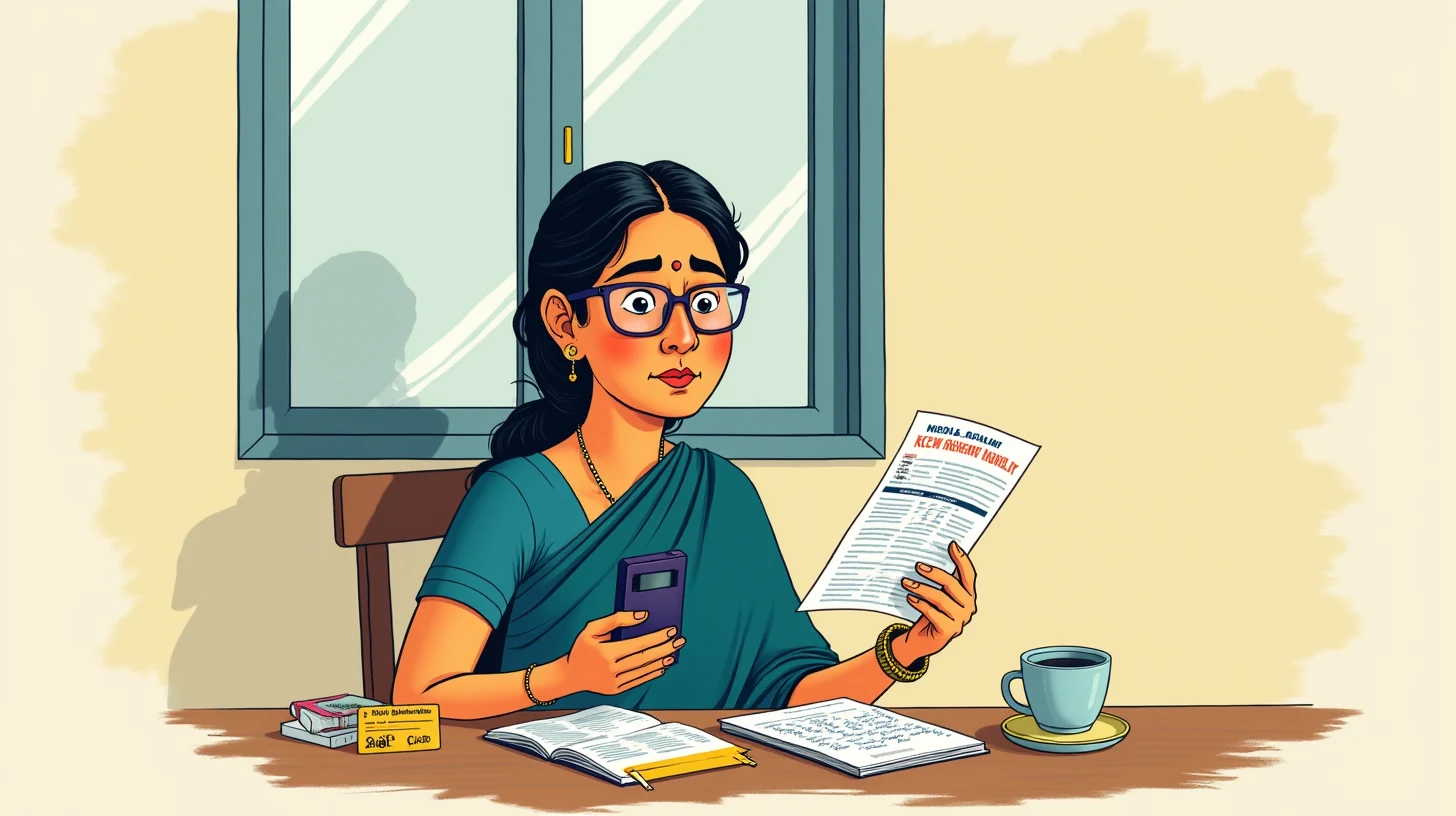
She waited three days. At the BBMP helpline, the counter woman told her the Department of Women and Child Development had flagged her account for biometric re-verification. She would need to visit the Food, Civil Supplies office and re-verify her fingerprints against the Aadhaar-linked PDS system. She received a letter — mostly in English — with an office address in Silk Board, forty minutes away by auto-rickshaw. She took a day off the anganwadi and went.
🗓️ How the Gruha Lakshmi scheme works, and why it stops
The Karnataka Gruha Lakshmi scheme is a Direct Benefit Transfer program — money moves directly from government account to beneficiary''s bank account. The criteria are straightforward: the applicant must be a woman, registered head of a BPL, APL, or Antyodaya household, a permanent Karnataka resident, with an active Aadhaar linked to her bank account. The transfer is ₹2,000 per month, arriving on the fifteenth, unless eligibility is flagged.
Eligibility is flagged for several reasons: change of address, death, or removal from the ration card. The state conducts audits every two to three years to confirm the beneficiary still meets the criteria and is alive. Re-verification happens through the AePDS system — the Aadhaar-Enabled Public Distribution System — which requires the beneficiary to present her fingerprints at an authorized PDS office, matched against her Aadhaar biometric record.
Without re-verification, the transfer is suspended. Not cancelled. But a suspended transfer, month after month, is indistinguishable from a cancelled one to a woman who has budgeted around ₹2,000.
- ⚖️
January 15 — the transfer does not arrive
No SMS, no alert. The account shows no deposit. Pratibha waits seventy-two hours before checking with the government.
- 📋
January 18 — the letter and the red stamp
BBMP helpline confirms: ration card flagged for biometric re-verification. Instruction sheet in English. Address in Silk Board.
- 🛑
January 28 — the Food Office, and the queue
Fingerprint verification appointment. Queue of forty-three women. Process takes two hours. Verification officer confirms biometric match.
- ₹
February 15 — the transfer arrives again
Gruha Lakshmi cleared through re-verification. ₹2,000 deposits in Pratibha''s account. Back-dated to January 15.
⚠️ The gap, and what happens to a woman with no margin
Pratibha''s anganwadi salary is ₹5,000 a month in two instalments. Rent is ₹4,500, due the first. Her sister does part-time cleaning for ₹2,500-3,000. The niece''s school fees are ₹1,800 per quarter. Total household expenses: approximately ₹10,500. Total income: approximately ₹10,000-10,500. No margin. There is a notebook where Pratibha tracks it.
When the transfer did not arrive on January 15, Pratibha had ₹3,200 in her account. Rent was due February 1. Her second anganwadi salary instalment would not arrive until February 23. School fees were due end of February and had been deferred once already.
Pratibha called her nephew Anand, a college student in Whitefield. He came over, read the letter aloud in Kannada, and explained that she needed biometric re-verification at the Food Office. The transfer, when it restarted, would be back-dated to January 15. She scheduled a day off from the anganwadi — losing ₹200 of income — and went to Silk Board.
"ಸರ್ಕಾರ ಹೊಸಾದರೆ ಬಿಒ ಕಾರ್ಡಾ ಪರಿಶೋಧಿಸೋ ಬೇಕು, ಆಗ ಪೋ ಮನೆ ನುಡಿದೆ ಸರಸ ಆಗುತ್ತೆ."— If the government wants me to verify the ration card, then let the money come. Then the house will be fine.
🌗 What the letter said and what it did not
Anand read the government letter carefully. It said her ration card was "flagged for biometric re-verification in accordance with the AePDS eligibility audit protocol." Report to the Food, Civil Supplies office with her BPL ration card, Aadhaar, and mobile phone. The process would take "approximately one hour" and "back-dated reinstatement will be processed within ten working days."
What it did not say:
- What day or time to report
- Whether she needed an appointment or could walk in
- Who to ask for
- What to do if her fingerprints did not match
Anand called the office number. It rang busy. When he reached someone, the man said office hours are 9 AM to 5 PM, all re-verifications are walk-in, no appointment needed. Anand told his aunt: "Go tomorrow morning. Take your ration card, Aadhaar, and phone. Get there early because there will be a queue."
When the agent at gabforge.in read the re-verification letter for Pratibha the week before she went:
"Pratibha, ee patravannu odide. Neevu AePDS biometric re-verification maadabeku. Ninne Silk Board-de Food Office ge hogi, ninnage hosabaraha identity documents mattu ration card bekagutta. Prosesa oka hour ansu, vetti maadi jayashree-annu sambhandisoli."
(Pratibha, I read this letter. You need an AePDS biometric re-verification. Go to the Silk Board Food Office with your identity documents and ration card. The process takes about an hour. Go early because many women will be there.)
She arrived at 8:15 AM. Forty-three women were ahead of her.
🧭 Why the queue exists, and what happens when you are forty-third
The Food office at Silk Board conducts re-verifications from 9 AM to 5 PM, five days a week. It serves five wards of Bengaluru. Each ward has roughly four thousand to five thousand BPL and APL card holders. Every two to three years, all must be re-verified. Twenty thousand re-verifications across five wards, processed in five-hour windows, divides roughly to sixty per day.
The office has two fingerprint scanner terminals. One was broken that day. The other was staffed by a single woman named Gowri, processing one verification every four minutes. Forty-three women divided by four minutes equals two hours of waiting.
Pratibha stood for the first hour. In the second hour, a woman next to her offered her a plastic chair. The woman, Jayashree, sixty-two, was also being re-verified. She told Pratibha she had missed her first re-verification letter and her transfer had stopped for four months. Four months. She had borrowed ₹5,000 from her daughter in Hyderabad.
When Gowri called "Pratibha, 41, Kengeri ward," she was scanned, told her fingerprint matched her Aadhaar, and given a slip: "Biometric Re-Verification Completed. Date: 28/01/2026. Status: VERIFIED. Reinstatement will be processed within 10 working days."
The transfer came on February 15: ₹4,000 — two months''s back-dated and current payment.
Back-dating and what happens after
Back-dating means retroactive benefit payment. The suspension ran from January 15 to February 14 — one month — so the back-dated amount was ₹2,000. The government deposited both on the same day: ₹2,000 back-dated January plus ₹2,000 for February.
Pratibha did not ask questions. She deposited the money, paid rent on February 1, and did not miss school fees. The process took thirteen days total and cost her one day of wages and one month of uncertainty.
What it does
- 🔍Verified her biometric against Aadhaar records, confirmed she was still the registered head of household and still alive.
- 🗂️Reinstated her transfer within the stated timeframe and back-dated the suspended payment.
- 📊Maintained her benefit uninterrupted at ₹2,000/month once re-verification was complete.
What it does not do
- 📞Never sent an advance reminder SMS or letter about the upcoming re-verification requirement in 2025 or December 2025.
- ⏰Did not provide appointment slots, leading to a two-hour queue for a one-hour process that could be scheduled.
- 📱Did not send SMS notification when re-verification was complete or when reinstatement was processed, leaving Pratibha to monitor her bank balance.
🌱 What this process reveals
The Gruha Lakshmi scheme is well-designed on paper: eligibility clear, amount fixed, delivery direct, no intermediary. The re-verification is a legitimate safeguard — the state confirms beneficiaries are real people, still alive.
In practice: a woman who cannot read English receives a letter she does not fully understand, does not know when to report, does not know if she needs an appointment, shows up when she can take a day off, waits in a queue, gets scanned, then waits ten more days for reinstatement with no money. She knows it is temporary. She also knows that if she miscalculates, she will be short on rent.
Jayashree, whom Pratibha met in the queue, had missed her first re-verification letter and lost four months of transfer. Pratibha had almost missed hers too — if Anand had not been home, she might have put the letter in a drawer. The system works for women with a nephew in Whitefield. For women alone with an Android phone and a letter in English, the system works until it stops.
The scheme will not change because of Pratibha''s thirteen-day gap. It works as designed. The problem is that a scheme delivering ₹2,000 monthly to two million beneficiaries still fails, at re-verification, to communicate in Kannada, on the timeline women need, with enough detail for them to act without a younger relative''s help. Women like Pratibha will continue to alternate between months of certainty and months of uncertainty, because the system knows they are alive only if they prove it.
When Pratibha received her ₹4,000 in February, she updated her notebook: "January-February: ₹4,000 (re-verification)." She wrote in Kannada: "Idu madbeku, sandesha irutte." "This is what must be done; it has an order." She is a woman who has learned that government schemes work if you know what they need.
The agent at gabforge.in reads Gruha Lakshmi re-verification letters in Kannada, identifies the exact dates and offices, and helps beneficiaries understand the timeline. It does not make the queue shorter. What it does is what Anand does — read the letter, explain it in Kannada, tell you exactly what to bring.
If you have received a Gruha Lakshmi re-verification letter in Karnataka, the product is free at gabforge.in. We read letters in Kannada, we know the office timings, and we will tell you the exact day to go.