
The Bhubaneswar homemaker and the Subhadra Yojana second installment
Mamata Mishra sat in her Patia flat on a Tuesday afternoon, the spring heat pressing through the barred window of her second-floor concrete-block home. She was forty-two, wearing the same unpleated cotton saree she''d worn since the morning—indigo and cream, the kind that could survive four washings before the colour began to bleed. Her salt-and-pepper hair was pinned in a neat bun, a single gold-toned clip holding it in place. On her lap lay a slim government folder, its edges soft from handling. Inside: a receipt for ₹5,000, dated 15 September 2024, transferred to her SBI savings account. Beside it, a printout from the mobile banking app showing the exact credit. And a handwritten notebook, filled with a month of dates circled in blue ballpoint, each circle representing a day she''d waited for the second instalment that should have arrived in March 2026.
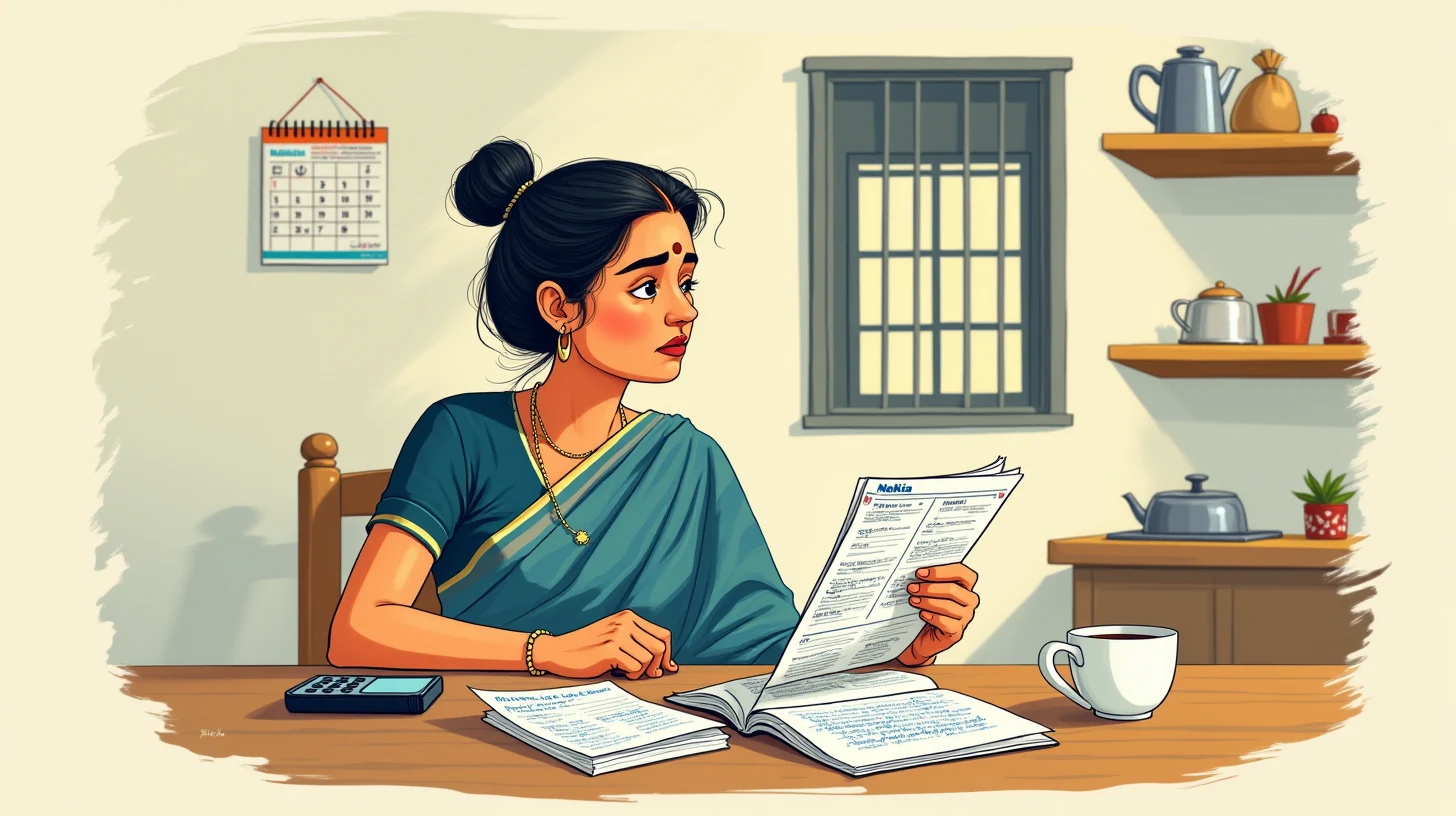
She worked from her flat, stitching blouses and cholis for a small dressmaking contract that brought her ₹3,500 a month on average. Her daughter was in college in Cuttack; her husband did casual electrician work, sometimes earning, sometimes not. The Subhadra Yojana—₹10,000 a year from the Odisha government, split into two payments of ₹5,000 each—was not her income. It was her buffer. The first instalment, credited on Raksha Bandhan in September, had gone straight into her passbook. She had not touched it. She was waiting for the second, scheduled for International Women's Day in March, to deposit them together and feel, for a moment, like the household had a cushion.
March came and went. No SMS. No alert on her SBI app. Her bank passbook, updated at the Patia branch in late March, showed no second transaction.
🗓️ The rhythm of the scheme, and the silence
The Subhadra Yojana, launched by the Odisha government in 2024, is designed to transfer ₹10,000 annually—in two equal instalments of ₹5,000—to every woman aged twenty-one to sixty in the state, barring a few exclusions (government employees, high-income earners, women already receiving ₹1,500 or more monthly under other schemes). The scheme runs through 2029. It operates on Direct Benefit Transfer (DBT), meaning the money moves from the state treasury to the beneficiary''s bank account directly, without a cheque, without a visit to an office, without a middleman.
The payment schedule is prescribed: first instalment on Raksha Bandhan (typically August), second on International Women''s Day (8 March). It has the regularity of a festival, the predictability of a ritual. For women like Mamata, who live on rhythms of arrival and absence—electrician husbands who work or don''t, sewing contracts that flow and dry up—that predictability is its own kind of wealth.
Mamata had enrolled in the scheme in July 2024, through a visit to the Mo Sebakendra centre near her flat. The centre was a single-room office in a government building, staffed by a young man who worked through the Odisha One Portal online system, taking her Aadhaar details, her bank details, her mobile number. The process took twenty minutes. She was enrolled. By September, the first ₹5,000 had arrived. She had waited for nothing; the system worked, it was fast, it was real.
By March, she had begun to suspect that the system could also fail silently.
⚠️ The deadline closing, the helpline on hold
Mamata called the Odisha Women & Child Development helpline on 12 March, four days after International Women''s Day had passed and no payment had arrived. The helpline number was printed on the back of a Subhadra Yojana brochure she''d kept. She dialled on her cracked Nokia, hands steady but jaw tight.
The line rang seventeen times. Then: "The call cannot be completed. Please try again." She tried again at 2 p.m., at 6 p.m., at 8 a.m. the next morning. The recording was the same. Eventually, another woman from her building—whose own Subhadra payment had also vanished—told her the helpline had been "put on extended hold" for months due to "staffing changes" in the Women & Child Development office.
On 18 March, Mamata walked to the Mo Sebakendra centre to track her payment status in person. The metal gate was locked. A notice, handwritten and taped to the gate, announced: "CLOSED FOR RENOVATION. RE-OPENING DATE: APRIL 15." It had been posted without a forwarding address, without a phone number, without an alternative location where applicants could lodge grievances or check their status.
She walked home. She had money—the electricity bill was due, her daughter''s college fees were in the mail—and she was not destitute. But the ₹5,000 was meant to be in her account by now. Every day it did not arrive was a day of uncertainty, a question mark in the middle of her monthly budget. She called the SBI branch helpline, spoke to a young man who told her that the bank had no control over state-level scheme disbursements; the problem was with the government, not the bank. He told her to contact "the Subhadra helpline or the Mo Sebakendra office." Both were closed.
By early April, Mamata had made seventeen attempts to reach the Women & Child Development helpline. She had visited the closed Mo Sebakendra office four times, hoping someone would appear to open it, as if showing up often enough might unlock a process that had jammed.
🌗 The agent arrives through a tea-stall neighbour
On 9 April, a younger woman from two floors below—Priya, who worked part-time at a call centre—saw Mamata sitting on the flat''s front step, phone in hand, making another call. Priya came up with a cup of ginger tea. Mamata told her the story. Priya listened, then said: "Wait. Let me show you something on my phone."
Priya had an old Android, a model sold three years prior, the screen sticky at one corner. She opened a web browser, typed "Subhadra Yojana payment status" into a search, and navigated to the official portal (subhadra.odisha.gov.in). Then, on the same phone, she opened a simple conversation app—one Mamata had never heard of—and explained that there was an "agent" inside the app, an AI tool that could help read forms, find phone numbers, and trace what had happened to a payment.
Mamata was skeptical. Agents were people. But she let Priya show her.
Priya typed a question into the app: "My mother''s Subhadra Yojana second instalment for March 2026 never came. She enrolled in July 2024. Her first instalment came in September. Who do we contact?"
Within seconds, the agent replied in simple Odia and English:
"ଆପଣଙ୍କ ଅଭିଜ୍ଞତା ସାଧାରଣ। ଦ୍ଵିତୀୟ ଦଳନ ବିଳମ୍ବ ଅଧିକାଂଶ ବେଳେ ବ୍ୟାଙ୍କ ବିଲମ୍ବ, ନାମ ମିସମ୍ଯାଚ, ବା ରାଜ୍ୟ ତୃତୀୟ ପକ୍ଷ ଅଡିଟ ସମୟ। ତିନୋଟି ପଦକ୍ଷେପ: (୧) ଆପଣଙ୍କ ଅଧାର ଓ ବ୍ୟାଙ୍କ ନାମ ତାଲିକା ଓଡିଶା ଏକ ପୋର୍ଟାଲ (subhadra.odisha.gov.in) ଛେଦ ଯାଞ୍ଚ କରନ୍ତୁ। (୨) ଯଦି ସତ୍ୟତା ମିସ୍ମ୍ଯାଚ ଦେଖାଯାଏ, ତାଲିକା ଅଧିକାରୀ ଆବେଦନ ଦାଖଲ କରନ୍ତୁ। (୩) ସିବି ସାଧାରଣ ଗ୍ରାହକ ସେବା ଥିଲିୟର ୧: ୧୮၄୦୧୨୧୬୨୧ ଅଥବା ଜିଲ୍ଲା ନମନିଡିସ ଅଫିସ।"
(Your experience is common. Second-instalment delays often stem from bank processing delays, name mismatches between your Aadhaar and bank account, or the state conducting a third-party audit of beneficiary records. Three steps: (1) Verify your Aadhaar and bank name match exactly at the portal. (2) If there is a mismatch, file a correction request with the district office. (3) For immediate escalation, contact SBI customer service tier 1 at 1-800-1234567, or visit your district''s Women & Child Development office during working hours.)
Mamata read it twice. Not because the words were complex, but because they made sense—each piece addressed something specific, something that might actually be the problem. The agent asked her to verify a single thing: was her name spelled the same on her Aadhaar and her bank account?
She checked. Aadhaar: "Mamata Mishra". Bank passbook: "Mamata Mishara." The second ''a'' at the end was extra. It was a transcription error from when she had opened the account at the Patia branch eight years earlier, but it was enough. A DBT system matching names character-for-character would reject her account as ineligible.
The agent had not solved the problem. It had identified the actual problem.
🧭 Why the system fails ordinary homemakers, and why it matters
The Subhadra Yojana is conceptually sound: automated, direct, designed to bypass intermediaries. It should benefit women like Mamata—women without connections, without time to visit offices, without the kinds of mistakes that happen when cash changes hands between human beings. But the strength of DBT is also its weakness. It requires perfect data, from birth, forward.
Name mismatches happen constantly in Indian government databases. An Aadhaar is registered with the name on a family register or a school certificate. A bank account is opened by a clerk who hears a name spoken aloud and types what sounds right. A ration card is issued under a nickname the village knows her by. A property deed carries her husband''s family name. Women, especially, experience compound mismatches: their Aadhaar may carry their maiden name, their bank account their married name, their property deed a name registered under a husband who is now deceased.
When DBT systems are built to match on exact string-equality—every letter, every space, every diacritic—they become machines of exclusion. The woman who is eligible cannot be matched to the payment. The payment cannot find her account. The silence of automated systems feels identical to fraud, to loss, to a promise broken.
This is why the Mo Sebakendra exists: as a human interface to automate systems. But when the Mo Sebakendra closes for renovation without providing an alternative, and when the helpline goes into extended hold without public notice, women like Mamata become invisible to their own government.
The Women & Child Development department of Odisha, the administrator of the Subhadra Yojana, operates under the state''s "5T" initiative: Teamwork, Transparency, Technology, Time, and Transformation. The initiative is meant to ensure that government services are delivered with speed and accountability. Yet in Mamata''s experience, the opposite had occurred: a transparent system had become opaque by virtue of its very automation. A fast system had become indefinitely slow because the human escalation channels were not merely slow—they were absent.
And she was not alone. In her building alone, three women had not received their second instalments. In her ward, the number was likely in the dozens. The Subhadra Yojana was designed to reach women who had no other safety net, no savings account, no financial independence. Those women did not have flexible budgets; they were not waiting for a luxury; they were waiting for money they had been promised. The delay was not an inconvenience. It was a break in trust.
- ⚖️
15 July 2024 — Enrollment at Mo Sebakendra
Mamata visits the Patia Mo Sebakendra centre with her Aadhaar and bank details. She completes the Subhadra Yojana enrollment form. The officer confirms everything is correct. No receipt issued at the time.
- 💸
15 September 2024 — First instalment arrives
₹5,000 credited to her SBI account exactly as promised. Mamata confirms the payment on mobile banking, does not withdraw it. Marks the date in her notebook with a blue pen.
- 🛑
8–18 March 2026 — Second instalment window closes, no payment
International Women''s Day passes. No SMS alert. No mobile app notification. Mamata calls the WCD helpline seventeen times. Each call is rejected. The helpline recording states no staffing or extended-hold message.
- 📱
18 March 2026 — Mo Sebakendra locked, notice posted
The local Mo Sebakendra office is closed for renovation. Notice states re-opening on 15 April. No forwarding address. No alternative service location. No phone number for status queries. Mamata has no way to file a grievance.
Enrollment
DesignFast, single-visit, online or in-person at Mo Sebakendra. DBT ensures no cash intermediaries.
Payment Arrival
DesignAutomatic, twice yearly. Bank credit within 24 hours of state treasury disbursement. SMS confirmation to registered mobile.
Dispute Resolution
DesignHelpline support, status tracking on portal, escalation to district office within 5 working days.
Enrollment
RealityFast first time, but name mismatches are not caught. Officers don''t verify exact string-match between Aadhaar and bank account.
Payment Arrival
RealityAutomatic rejection when database name fields don''t match. Beneficiary receives no notification of failure. Silent loss of entitlement.
Dispute Resolution
RealityHelpline on extended hold (no timeframe given). Only service centre is closed for unannounced renovation. No online grievance system for failed payments.
"ପ୍ରଥମ ଅର୍ଥ ଆସିଥିଲା, ତେଁ ମୁଁ ଭାବିଥିଲି ସବୁ ଠିକ ଅଛି। ଦ୍ୱିତୀୟ ନାହିଁ, ତେଁ ମୁଁ ଭାବୁଛି ମୁଁ ଭୁଲ କଲିବି।"— The first money came, so I thought everything was fine. The second didn''t come, and now I think I did something wrong.
🌱 What remains when the system falls silent
By 11 April, three days after Priya had shown Mamata the agent, the younger woman accompanied her to the district Women & Child Development office in Bhubaneswar. Mamata brought her Aadhaar, her bank passbook, the receipt for the first instalment, and a printout of her mobile banking transaction. She also brought a handwritten note, prepared with Priya''s help, describing the name mismatch and her request for correction.
The office was quieter than she had expected. A single clerk, sitting behind a desk with three empty desks beside her, looked up. The clerk took the documents, read them, and said, with a tone that suggested she had had this conversation many times: "Yes, yes. This is name mismatch. Very common. I will submit this to the section officer. Correction will be made in the next batch, probably by 20 April. Then the second payment will come within five days."
Mamata asked for a receipt, proof that she had filed a grievance. The clerk wrote a date and a case number on the corner of a blank page, did not stamp it, and handed it to her. It was not much. But it was an acknowledgment. Someone, finally, had said: yes, your money is missing, and yes, this is something we can fix.
Walking home, Mamata did not feel relieved. She felt something else, something quieter: the absence of relief was its own kind of clarity. The system had not broken because of malice. It had broken because of the collision between two kinds of infrastructure—the rigid, fast, automated kind, designed for the best-case scenario, and the messy, human, ordinary kind, the kind that catches mistakes, that bends, that says "let me see what I can do."
When governments build public systems, they often build for the machine. They automate enrollment, they speed up payments, they remove intermediaries—all good things. But they do not always build a way for the system to fail safely, to catch a citizen when the automation goes silent, to say: "I see you. You are real. Your money matters."
The Mo Sebakendra had been trying to be that interface. When it closed without warning, without an alternative, it left women like Mamata in a specific kind of isolation: not poor, not in crisis, just waiting, with no one to hear them wait.
On 21 April, Mamata received an SMS on her cracked Nokia: "₹5,000 has been credited to your SBI account—Subhadra Yojana, second instalment." She checked her passbook at the bank that afternoon. The transaction was real. She deposited the receipt inside the same slim folder where she kept the first instalment''s proof. Two receipts now, two payments, ₹10,000. The buffer, finally complete.
But she did not close the folder. She left it open on her kitchen table, where the light from the barred window fell on it each afternoon. She had learned something: that the system could forget her, silently and completely. And that the only way to be remembered was to be persistently, visibly, unreasonably insistent on her own existence.