
The Kavaratti homemaker and the ONORC ration card the ePoS could not register
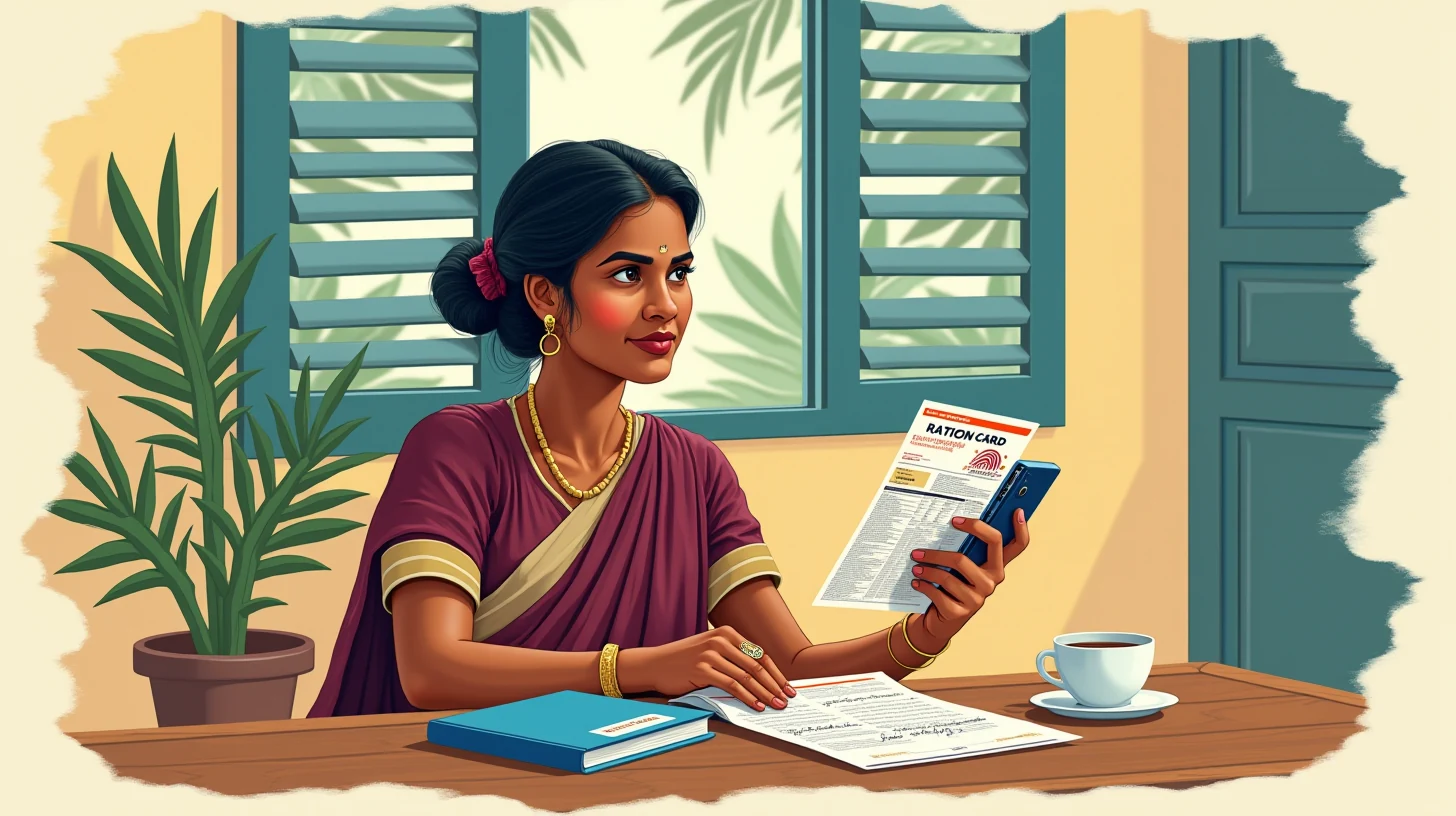
Khadeeja Beegum lived alone in Kavaratti with her three children — Farah, seventeen; Hassan, fourteen; and little Aisha, nine. Her husband had died eight years earlier, and she supported the household through a small grocery shop that opened at dawn and closed by evening, selling rice, dal, and tinned coconut milk to the families in her lane. Her income was modest, and her ration card — issued by the Lakshadweep Food & Civil Supplies department — was a lifeline. Every month, she collected forty kilograms of rice and wheat from the Fair Price Shop near the harbour, along with subsidized kerosene and sugar. The ration card was registered in her name; her Aadhaar number linked to the biometric system at Kavaratti's point-of-sale (ePoS) device. The routine was sacred.
In April 2026, Hassan began to stumble when he walked. A neurologist in Kavaratti suspected a degenerative condition and referred him to the All India Institute of Medical Sciences in Kochi for a three-month diagnostic protocol. Khadeeja sold the second shelf of inventory to a cousin, borrowed 40,000 rupees from her SHG lending circle, and booked passage for the four of them on a ship bound for the mainland. They would leave in late May, after Hassan's school term ended. The three months away meant leaving Kavaratti, leaving the shop, leaving the rhythm she had built. But Hassan came first.
Khadeeja had heard — through an Anganwadi worker — about the One Nation One Ration Card scheme. ONORC, as everyone called it. The idea was simple enough: her Lakshadweep ration card would work in Kerala's Fair Price Shops without re-registration. As long as her biometric was registered in the national database, the Kerala PDS machines would read her card and let her withdraw her monthly entitlement while her family lived in Kochi. No ration would be wasted; no months lost to bureaucratic limbo. She would not starve in a city where she knew no one.
In the first week of May, she walked to the Kavaratti RATION CARD OFFICE to check the process. The officer at the desk — a woman named Ansari — was kind. "Your Aadhaar is already linked, Khadeeja," she said. "All you need is the biometric enrolment at the ePoS. The machine here will read your fingerprints and push the data to IMPDS. Once it''s there, any Fair Price Shop in India can issue your ration." Ansari pointed to the ePoS device in the corner: a grey rectangular box the size of a microwave, with a fingerprint scanner and a small screen. "Come back tomorrow when the device is working."
🗓️ The Silent System of Mainland Portability
The One Nation One Ration Card scheme was a ambitious piece of bureaucratic architecture. Before ONORC, if a person moved from one state to another, their ration card became a useless piece of plastic. A widow from Bihar who migrated to Bangalore for work could not access her entitlement in the new state. A daughter-in-law from Jharkhand who married into a Hyderabad family had to apply for a new card and wait months. The scheme aimed to dissolve these invisible borders. One card. Any state. The portal was the National Informatics Centre''s Integrated Management Public Distribution System, or IMPDS, which maintained a national registry of ration card numbers, Aadhaar linkages, and biometric fingerprints.
The rhythm was annual. Every year, the states ran a "Family Register" update cycle, where ration card holders would present themselves at the local Fair Price Shop or RATION CARD OFFICE to update any change in family size, income, or address. Then came the biometric enrolment phase. The ePoS machines — electronic Point of Sale devices — would scan the fingerprints of every card-holder and push the data upstream to IMPDS. Once uploaded, the card became portable. The data was supposed to sync within forty-eight hours. After that, the card was valid anywhere.
Lakshadweep, as a small Union Territory with fewer than 80,000 residents, had only four ePoS machines: one in Kavaratti (the capital), one in Agatti, and one each in Kavarati and Minicoy. They were vulnerable machines. Monsoon salt spray could corrode the fingerprint scanner. Power fluctuations — common during the cyclone season — could crash the device or corrupt the local buffer. The Lakshadweep Food & Civil Supplies department maintained the devices through a contractor in Kochi who came once every three months for servicing. The four-week gap between visits left the machines in a fragile state.
Khadeeja knew none of this. She only knew that she had to be registered before May 28, when the family would board the ship.
⚠️ The Device That Would Not Cooperate
On May 5, Khadeeja returned to the RATION CARD OFFICE with her Aadhaar card, her ration card, and her electricity bill (proof of address). Ansari was at her desk. "Let''s do the enrolment now," she said brightly, and led Khadeeja to the grey ePoS machine.
Khadeeja placed her right thumb on the glass scanner.
The screen flickered. A red message appeared: SCANNER TIMEOUT — TRY AGAIN.
Ansari frowned. She tried again. Red message. Again. Red message. The fourth attempt produced a different error: DEVICE NOT RESPONDING. Ansari pressed the power button. Nothing. She held it down for ten seconds. The machine beeped once and went dark.
"It''s broken," Ansari said quietly. "Come back tomorrow."
Over the next ten days, Khadeeja returned four times. On May 6, the machine powered on but the fingerprint scanner would not calibrate — the screen showed a ghostly smear and rejected her fingerprints as "too faint". On May 9, the device accepted two fingerprints but then crashed before she could complete the enrolment form. On May 15, Ansari told her the contractor from Kochi had been called, but there was a shipping delay — the spare scanner would arrive on May 24, and the engineer could come on May 25. "You may not make your deadline," Ansari said. "Let me check if there''s any other way."
The other way, as it turned out, did not exist. The only ePoS machine in Kavaratti was the one at the RATION CARD OFFICE. The Agatti machine was eighty kilometres away by boat — a two-hour journey in a private speedboat, which cost 2,000 rupees. Khadeeja did not have 2,000 rupees to spare. And even if she did, the Agatti office had limited hours; she would need to close her shop, arrange childcare for Aisha, and pray the Agatti machine was working.
By May 20, with only eight days until her family''s departure, Khadeeja felt the weight of a choice that was not really a choice. She had two options: spend 2,000 rupees she could not afford to waste on a boat ride to Agatti and hope their machine was working. Or leave Kavaratti without the biometric registration and hope — somehow, impossibly — that her card would work in Kochi''s Fair Price Shops anyway. Neither option was good. Both felt like failure.
She sat with her Aadhaar card and ration card on the wooden table in her kitchen, and she did what she had learned to do in eight years alone: she waited for someone to help.
🌗 The Tablet and the Daughter''s Phone
It was her eldest daughter, Farah, who remembered the agent. The year before, during the school holidays, a young woman from the Anganwadi had come to the house with a tablet — a small iPad-sized screen — and shown Khadeeja how to search for government schemes. At the time, Khadeeja had been interested in the Pradhan Mantri Matri Vandana Yojana, a scheme for pregnant women''s cash assistance; she had wanted to help a neighbour whose daughter was expecting. The agent had walked through the eligibility, the portal, and the documents needed. Khadeeja had forgotten the agent''s name, but Farah remembered the idea: there was a thing that could answer questions about the government.
On May 21, in the afternoon, Farah borrowed her schoolteacher''s Android phone and searched "One Nation One Ration Card problem mainland". The search returned a government helpline: 1800-180-1551. But there was also a mention of an agent that could help with "ration card registration delays". Farah typed a question into her browser: "Can I use my ration card in another state if the ePoS is broken?"
The agent appeared.
The tablet did not have a physical form in Khadeeja''s house; it existed inside the phone, a voice that answered in Malayalam. Farah held the phone to her mother''s ear and played back the agent''s reply.
The agent said: You cannot use your ration card in another state without biometric registration in IMPDS. The registration happens only through the ePoS scanner. The Kavaratti device is broken. You have three practical paths: first, travel to Agatti and use the ePoS there before your departure date. Second, request an emergency extension from the Lakshadweep Food & Civil Supplies office — you can apply for a provisional certificate stating that you are a registered ration card holder, and request that Kerala PDS honor the card during your medical travel on the basis of this certificate pending biometric registration. The certificate would not be binding on Kerala — it would be a courtesy request — but it has worked in past cases. Third, contact the contractor who services the Kavaratti ePoS and ask if the May 25 repair is confirmed. If it is confirmed and you can stay in Kavaratti two more days, you can register after the repair and travel on May 27 instead of May 28.
The agent gave her the exact name and phone number of the Lakshadweep Food & Civil Supplies director. It also provided the email of the Kerala Food & Civil Supplies nodal officer for inter-state ration card issues. It told her which documents to attach to a request letter: her ration card copy, her Aadhaar copy, a medical certificate from AIIMS Kochi confirming the three-month treatment, and a letter from the doctor stating that the family needed to relocate immediately.
Farah wrote down the names and phone numbers on paper. Khadeeja folded the paper into her blue government folder.
🧭 Why the System Leaves Ordinary Homemakers Behind
The One Nation One Ration Card scheme is one of India''s largest digital inclusion projects. It covers 80 crore ration card holders and operates through 30 lakh Fair Price Shops. The vision is sound: a single card, one identity, freedom to move. But it rests on an assumption that is almost never questioned: the machines will work.
Khadeeja''s story is not unique. Across India, ePoS devices fail in remote areas and poor neighbourhoods. They fail in monsoon season, cyclone season, and the months when a contractor is overdue for maintenance. A widow in Odisha cannot register her biometric because the machine in her block has been waiting for a part for six weeks. A migrant worker from Chhattisgarh arrives in Delhi for construction work and discovers the ePoS device in his Delhi suburb has been offline for two months — and without that registration, he cannot access subsidized rations. The scheme is designed for permanence, but the machines are fragile.
There is also a deeper structural problem. The ONORC scheme assumes that ration card registration is routine — something that happens once a year during the Family Register update cycle. But migration is not routine. A woman who needs to leave urgently for medical care, or to care for an elderly parent, or because of a family crisis, cannot wait for the ePoS to be repaired. She needs the card to work now. The system has no emergency pathway. There is no "provisional portability" built into the design. There is no one-button way for a state''s director to say, "This woman is a verified cardholder. Please honor her card in your Fair Price Shops while we sort out the biometric registration." The system is all-or-nothing. And when the machines fail, the nothing falls entirely on the homemaker.
Khadeeja was not alone. In her lane in Kavaratti, there were two other women who had biometric registration pending. One was waiting to migrate to her son''s house in Dubai (she needed the certificate for a visa application, proof that she had no pending welfare claims in India). The other was a widow whose daughter had married into a family in Bangalore and invited her mother to help with childcare. Both were trapped by the same broken ePoS.
The Lakshadweep Food & Civil Supplies office, when Khadeeja called, had no authority to override the biometric requirement. The officer was kind but clear: "The system requires the fingerprint scan. I cannot create an exception." What he could do was write a letter, a courtesy letter, stating that Khadeeja Beegum was a verified ration cardholder in good standing, and that she was migrating due to medical reasons. It would not bind Kerala. But it might help.
Khadeeja sent that letter to Kerala, along with Hassan''s medical documents. She also called the contractor in Kochi directly — a man named George — and asked him to confirm the May 25 repair date. George said yes, the scanner would arrive on May 24, and he would come on May 25 morning. By midday May 25, the machine would be working.
It meant changing her departure date by two days. It meant another two days of rent in Kochi while waiting, another 4,000 rupees she did not have budgeted. It meant Hassan would miss two more days of school. But it meant she would have the biometric registration before her family left the island.
- ⚖️
May 1 — Medical referral
Hassan''s neurologist refers him to AIIMS Kochi. Khadeeja decides to travel with her three children for a three-month diagnostic stay.
- 📱
May 5–15 — ePoS failures (four attempts)
Khadeeja visits the Kavaratti RATION CARD OFFICE four times. The fingerprint scanner fails due to calibration issues, crashes, or power loss. No registration completed.
- 🛑
May 20 — Deadline crunch
With eight days until departure, Khadeeja faces three costly options: boat to Agatti (2,000 rupees), emergency certificate request (uncertain acceptance), or delay travel.
- 📨
May 21 — Agent consulted
Farah uses a borrowed phone to find the agent. The agent provides three pathways, including the director''s contact and the emergency certificate option.
- 📞
May 22–24 — Coordination
Khadeeja calls the Lakshadweep director and the Kerala nodal officer. She confirms the May 25 contractor visit with George in Kochi. She sends medical documents and a courtesy letter to Kerala PDS.
- ✅
May 25–26 — Registration completed
George repairs the ePoS. Khadeeja completes biometric enrolment. The registration uploads to IMPDS within 24 hours.
- 💸
May 27 — Departure
Khadeeja and her family board the ship to Kochi with a registered card and a provisional courtesy letter from Lakshadweep, valid for Kerala PDS shops.
ONORC Promise
DesignOne ration card, any state, any Fair Price Shop. Biometric registration ensures nationwide portability.
Real Machinery
If it worksePoS machines scan fingerprints, upload to IMPDS within 48 hours, enable portable use. Assumes machines are maintained and operational.
Khadeeja''s Reality
When it breaksBroken ePoS for two weeks. No emergency pathway. No authority to override the biometric requirement. No provisional access. One working option: delay travel and wait for contractor repair.
"എന്റെ കാർഡ് ഇപ്പോൾ വേണ്ട, അത് പിന്നീടായാലും വേണ്ടെന്നിരിക്കാം. പക്ഷെ മെഷീൻ തകർന്നിരിക്കുമ്പോൾ എന്താണ് ചെയ്യേണ്ടതെന്ന് പറയാൻ ആരുമില്ലാ"— "My card, I don''t need it to work right now. Maybe I''d be okay later. But when the machine is broken, there''s no one to tell you what to do."
"നിങ്ങളുടെ റാഷൻ കാർഡ് കേരളത്തിൽ വേണ്ടി വരുന്നുണ്ടെങ്കിൽ, നിങ്ങൾ ഒന്നാമത്തെ തിങ്കളാഴ്ച ലക്ഷദ്വീപിന്റെ ഡയറക്ടറെ വിളിക്കണം. അവർ ഒരു കത്തെഴുതിത്തരും, പക്ഷെ ബാധ്യത കേരളത്തിനില്ല. നിങ്ങളുടെ ഉൾനാട്ടറിയ എപിഐഎസ് മെഷീൻ അഞ്ചും നാലും താരിഖ് നടക്കുന്നുണ്ട് എന്ന് പരിശോധിക്കുക"
(If you need your ration card to work in Kerala, call the Lakshadweep director first thing Monday morning. They will write you a letter, but Kerala has no obligation to honor it. Verify that your ePoS machine is working on the 24th and 25th before assuming you can register.)
🌱 The Quiet Lesson in Waiting
Khadeeja''s registration was completed on May 25, at 2 p.m. The fingerprint scanner worked. The form processed without crashing. By May 26, the data had synced to IMPDS. On May 27, when she and her family boarded the ship, she carried her registered ration card and the letter from the Lakshadweep director.
When she arrived in Kochi, she walked into the Fair Price Shop nearest to AIIMS — a small shop called Sudha that sold rice, wheat, and kerosene from a cramped wooden counter. She handed her Lakshadweep card to the shopkeeper, a woman named Meera.
Meera scanned it into her ePoS device.
The screen read: CARD VERIFIED. LAKSHADWEEP REGION. VALID IN KERALA UNDER ONORC PORTABILITY.
Khadeeja could withdraw her monthly rice and wheat. She could walk into that shop every month for three months and take what she was entitled to. The system, when it worked, worked quietly. No fanfare. No one to thank except the contractor who repaired the machine, and Farah, who remembered the agent, and Hassan, whose illness had forced his mother to find a way forward.
The deeper lesson was invisible. The system assumes that the machines will work. It assumes that homemakers can wait if they do not. It assumes that a woman can take ten days off from her shop, make repeated trips to a government office, and not lose income. It assumes that everyone has a daughter who knows how to use a borrowed phone to find answers. It assumes that a letter from a director carries the weight it should.
Khadeeja''s story is about what happens when none of those assumptions hold true. It is also about what happens when one woman — one ordinary homemaker with a broken ration card and a sick son — decides that waiting is not the same as being stuck.
Relevant portals for ration card issues:
- IMPDS (Integrated Management Public Distribution System): impds.nic.in — Check your registration status, find Fair Price Shops near your temporary location, and verify biometric status.
- National ONORC Helpline: 1800-180-1551 — Free, toll-free support for ration card portability questions.
- Kerala IFT (Institute of Food and Nutrition): ift.kerala.gov.in — For Fair Price Shop locator in Kerala and inter-state ration card policy.
- Lakshadweep Food & Civil Supplies: Official office in Kavaratti — Contact the director directly if your ePoS is non-functional and you have urgent travel needs.
If your ePoS machine is broken and you need urgent registration: call your state''s Food & Civil Supplies director directly. Ask for a provisional portability certificate (a courtesy letter, not legally binding, but honored in many states). Provide medical documents or proof of urgent need. Then confirm the machine repair date before traveling.