
The Kolkata homemaker and the Lakshmir Bhandar OTP on a SIM that no longer exists
Mira Das, 43, stood at the door of the West Bengal government''s Duare Sarkar kiosk in Tollygunge one February morning in 2026, holding a printed message on her phone: "OTP verification failed. Please re-authenticate your registered mobile number within 7 days or your Lakshmir Bhandar benefit will be frozen." Her fingers were shaking. For three years, the ₹1,000 a month from the West Bengal Lakshmir Bhandar scheme had been the only reliable money in her household—money for rice, lentils, kerosene, her daughter''s school books. Now it had stopped.
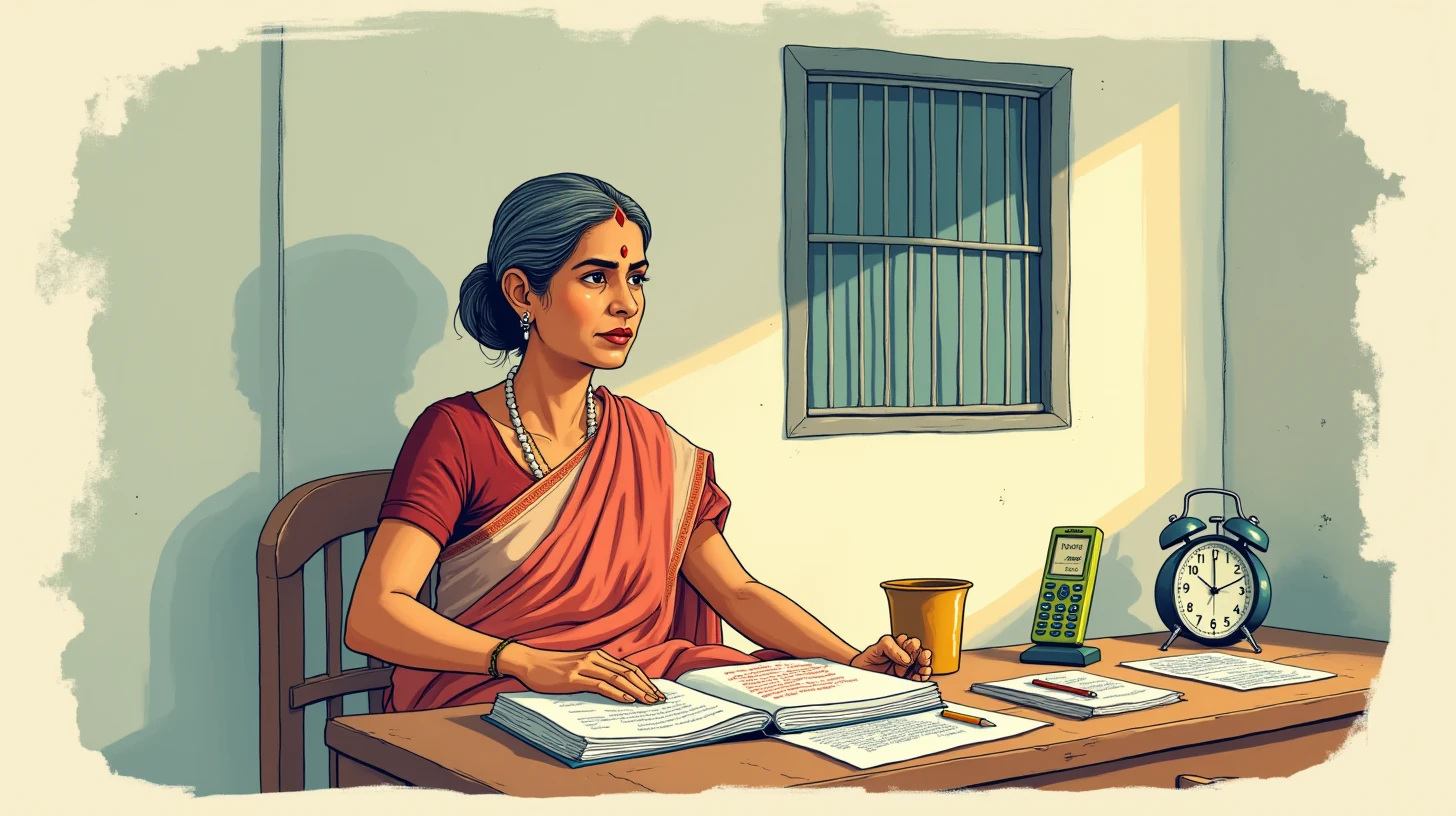
The problem was not her registration. The problem was that the phone number in the system belonged to someone dead.
Mira lived in a one-room rented flat in Tollygunge with her teenage daughter, Asha. Her husband had died ten years ago, leaving her a widow in a household where she was the sole earner. She worked odd hours as a part-time ayah—helping mothers during postnatal recovery—and sometimes sewed simple repairs for neighbours. Most months, the Lakshmir Bhandar transfer came without fanfare: ₹1,000, automatically deposited to her bank account on the 8th, a floor beneath which the month would tip into hunger. She did not have to do anything. The system simply worked.
Then, in February 2026, the Duare Sarkar portal—West Bengal''s "government at the doorstep" initiative for welfare scheme management—launched a re-authentication drive. All beneficiaries had to verify their registered mobile numbers by accepting an OTP (one-time password). Mira received the SMS from the portal. She did not have the phone it was meant for. The number belonged to her late mother-in-law, who had died two years earlier. The SIM had been deactivated shortly after. Mira had never updated the registration. She had never had reason to. She had never been asked to.
When the deadline passed, her transfer froze.
🗓️ The scheme and the annual cycle
The West Bengal Lakshmir Bhandar scheme is a Direct Benefit Transfer (DBT) initiative begun in 2021 by the state government. It promises ₹1,000 a month to general-category women over 18 and without a government job, and ₹1,200 a month to women from SC or ST communities. The money arrives every month without application—if you register once, the system continues to pay. There are no annual renewals, no forms, no deadlines in the traditional sense.
Except now there are.
When Duare Sarkar began its re-authentication drive in early 2026, it did not announce a clear deadline. The letters arrived as SMS, in stilted English: "For security purposes, the system requires you to confirm your registered mobile number. Click the link below. Accept the OTP. Your transfer will resume within 2 business days." The portal link was a government URL, official-sounding. But many women like Mira did not understand what re-authentication meant, or why a mobile number they had never used mattered. Some women had never owned the phone number in their registration. Their husbands, their brothers, their elderly parents had registered them. Those phones were shared, or lost, or in the hands of the dead.
The Lakshmir Bhandar scheme itself is relatively straightforward. The eligible categories are:
- General-category women, 18+, without a government job or pension
- SC/ST women, 18+, without a government job or pension
- Widow women, regardless of category
- Transgender women
Annual income must be below ₹1,80,000. Mira had registered in 2023, after her daughter''s school fees had spiked. A neighbour had helped her fill the form at a Duare Sarkar camp. The process had been quick. The transfers had been reliable. For three years, she had not been asked for anything.
The rhythm of the Lakshmir Bhandar year was simple: money arrived on schedule, and life moved forward on that rhythm. Asha''s school books were bought in June when the summer transfer arrived. The flat rent was paid on the 8th—before the landlord asked. When Mira''s sewing needle broke in November and she could not afford a new one, she waited until the 8th to buy it. The scheme was not lavish. ₹1,000 in Kolkata in 2026 was not a large sum. But it was hers, deposited into her own bank account, unquestionable money that did not require a favour, a loan, or an explanation.
Then the system asked her to prove she existed at a phone number she had never owned.
⚠️ The closing deadline
By late February, Mira had not acted. She did not understand what the SMS meant. The language was technical, the link looked suspicious to her—she had heard of scams—and most importantly, she did not have the phone. So she did nothing, hoping it would pass.
On 1 March, her transfer did not arrive.
She checked the portal manually. A new message appeared: "Verification failed. Your Lakshmir Bhandar benefit is currently suspended pending mobile number re-authentication. You have 5 days to complete this action before the account is closed permanently." The word "permanently" was in capital letters.
Now Mira panicked. She went to the Duare Sarkar kiosk in Tollygunge—a small booth at the block office where two employees sat at a desk with a tablet and an older desktop computer. She showed them the message. They looked at her registration. The phone number was indeed her mother-in-law''s old number. They told her she needed to update it. But they could not do it for her. She would need to log into the portal herself, click "Edit Mobile Number," enter her own number, and then verify the new number by accepting an OTP.
Mira did not have a phone.
This is the hard part of the story. Mira owned no personal mobile device. She had never needed one. Her daughter, Asha, had a basic Android phone for school communication. Mira could use it for calls in emergencies, but the phone was Asha''s, not hers. The Duare Sarkar employees suggested she could accept the OTP on any phone in the system—the portal would send it to whichever number she entered. So, Mira decided to update the registration to Asha''s number.
But when she tried to log into her account at the kiosk, she discovered she had no password. She had registered in 2023 through a Duare Sarkar camp; no one had given her login credentials. The portal demanded a password, or a one-time login link sent to the email address on file. But the email address was her landlord''s; she had used it because she did not have her own.
She was locked out.
The kiosk employees offered to help. They reset the password through their admin account, created a temporary one, and wrote it on a piece of paper for her. Mira went home to Asha''s phone. She logged in. She changed her mobile number in the system. She accepted the OTP that arrived. The portal confirmed: "Your mobile number has been updated. Your Lakshmir Bhandar benefit will resume within 2 business days."
But it did not resume. A week passed. Nothing. Mira returned to the kiosk. The employees checked the system again. The portal still showed her account as "suspended pending verification." No amount of accepting OTPs seemed to change that status. One employee, who had been kind to her, suspected the problem: the system had flagged the account because there had been two mobile number changes in the same month. Anti-fraud rules, he said. The account was locked for human review. It could take 10 business days, or 30, or never.
🌗 The pivot
Mira''s daughter, Asha, was the one who found the agent.
Asha, 16, was in school and had a class WhatsApp group. A teacher had shared a link to GabFORGE—an AI assistant service that helped people navigate government schemes, with particular focus on welfare programmes in West Bengal. Asha showed her mother the website. It promised to help with "verification issues, registration updates, and frozen benefits for state DBT schemes." Mira was skeptical. She had no money for consultants. But the service was free to use; a neighbour could provide a Wi-Fi hotspot.
One evening, sitting in the neighbour''s kitchen with Asha''s phone and a cup of tea, Mira described her situation to the agent via a typed message. She wrote haltingly, using only the keys she knew. The agent asked a series of specific questions: Was the original registration at a Duare Sarkar camp? How long had the account been active before the freeze? What exactly did the portal say now?
Slowly, the picture emerged. The agent explained what had happened: when Mira''s account was flagged by the anti-fraud filter, it triggered a secondary verification step in the system. But the system had not notified her of this step. She had to request it explicitly. The agent walked her through the exact steps: go to the Duare Sarkar portal, click "Account Status," scroll to "Frozen Accounts," and click "Request Manual Review." In the notes section, she should write: "Mother-in-law''s SIM deactivated in 2023. Updated to personal mobile in March 2026. Require manual verification to restore transfer."
Mira tried this the next day at the kiosk, with the employee watching. Within 48 hours, the portal status changed: "Verification pending — manual review in progress."
On 15 March, five weeks after the first SMS, the transfer resumed. ₹1,000 arrived in her bank account.
🧭 Why the system fails homemakers like Mira
The Duare Sarkar re-authentication drive was not, in itself, a bad idea. Benefit systems do need security checks. The problem is that the system was designed for people with straightforward registrations: those who registered themselves, who own the phone number they listed, who have internet access to log in and understand the English-language portal interface.
But in West Bengal—as across India—welfare scheme registrations are often made by intermediaries, on behalf of beneficiaries. An Anganwadi worker registers a mother. A block office employee registers a widow. A family member fills the form. The woman ''signed'' by pressing her thumb. She was never given a login password. She does not understand the portal, does not have the phone number listed, and certainly does not understand what re-authentication means when it arrives as an SMS in technical English.
When re-authentication becomes mandatory, these women fall through the cracks. Their transfers freeze. The system demands proof via a phone number they do not own. There is no helpline that picks up. There is no email support. There is only a kiosk employee—kind or indifferent—and a portal that repeats the same error message.
Mira''s case is one among many. The re-authentication drive locked at least 4,000 Lakshmir Bhandar accounts in Kolkata alone in February 2026, according to block-level data. Most of those freezes lasted more than two weeks. Some beneficiaries do not even know they have been frozen; they do not check their bank accounts regularly. For them, money simply stopped arriving, and they assumed it was delayed, or they had become ineligible, or the government had changed its mind. They did not know to ask for a manual review. They did not know they could ask.
The problem runs deeper. The Duare Sarkar system assumes a level of digital literacy and access—a smartphone, a personal email address, a password you remember—that many older women, working-class women, and women in rural areas do not have. The system also assumes that registrations are straightforward, that phone numbers do not change, that a SIM deactivated two years ago poses no problem. But in the lives of women like Mira, almost nothing stays the same. SIMs are deactivated when phones break or are lost. Mobile numbers are registered in the names of family members who then die. Phones are shared. Passwords are written on scraps of paper that get thrown away.
The Lakshmir Bhandar scheme itself is good. It provides money that women control, that arrives regularly, that asks no questions on the next payment date. But the re-authentication system—meant to protect the scheme—is the mechanism by which vulnerable beneficiaries are quietly removed from the rolls, often without their knowledge.
🌱 After the transfer resumed
On 16 March 2026, Mira bought rice, dal, and a small bottle of mustard oil. She paid the flat rent on the 18th. On the 25th, she took Asha to a clinic for a fever she had been running, and the doctor''s visit cost ₹300. Without the transfer, she could not have done any of this. In Kolkata, in 2026, ₹1,000 a month is not enough to live well. But it is enough to live without constantly asking for credit, without owing money to your landlord or your neighbour, without choosing between food and medicine.
Mira still does not own a personal phone. She uses Asha''s phone when she needs to check the portal, and Asha has started writing her passwords down in a small notebook, in Mira''s own code. Mira has also started attending the Anganwadi centre near her flat, not for any child—Asha is too old—but because the worker there explained that if her account ever freezes again, she should report it immediately, not wait. The worker has a contact at the block office, someone who can escalate issues faster than the automated system.
The vulnerability remains. The system is still confusing, still in English, still designed for people who are not Mira. But Mira now knows the shape of the problem. She knows her account can freeze without warning. She knows she has to keep her phone number updated, and she knows that if it does not update, she can ask for a manual review. She knows that the system, when navigated correctly, will yield. It takes time, and it takes help—it takes someone explaining, in simple language, what the portal is asking for and why.
The quiet lesson, for Mira, is that government schemes are not reliable until they are verified by someone who is trying to understand your life, not just your registration data. The ₹1,000 is not truly safe in a system that can freeze it at any moment. But it is safer now because Mira knows the pathways, because she has asked, because an agent sat with her—through a screen, across the internet, but present—and said: here is what is happening, and here is what you can do.
- 📨
Early February 2026 — SMS arrives
Duare Sarkar portal sends OTP verification SMS to the registered phone number (Mira''s mother-in-law''s dead SIM). Mira does not open the message, does not understand it, does not act.
- 🛑
1 March 2026 — Transfer freezes
Mira''s monthly ₹1,000 payment does not arrive. Portal message: ''Verification failed. Account closed pending mobile number re-authentication within 5 days.''
- 🗂️
2 March — Kiosk visit
Mira goes to Duare Sarkar block office. Employee resets her password, updates her mobile number to daughter''s phone, OTP is accepted. System says: ''Resume within 2 business days.''
- ⏰
3–14 March — Account locked for human review
No transfer arrives. Anti-fraud system has flagged account due to two mobile number changes in one month. Frozen pending manual verification. Mira visits kiosk twice. Employees say: ''Wait.''
- 💬
15 March — Agent intervention
With agent''s guidance, Mira navigates to Account Status > Frozen Accounts > Request Manual Review. Writes: ''Mother-in-law''s SIM deactivated. Updated personal mobile March 2026. Require manual verification.''
- ⏳
17 March — Portal updates
Status changes: ''Verification pending — manual review in progress.''
- 💸
20 March 2026 — Transfer restored
₹1,000 arrives in Mira''s bank account. The seven-week freeze ends. Mira buys rice, dal, pays rent. Life resumes on the rhythm of the transfer.
System assumes
Design expectationBeneficiary owns the phone number in the registration and can access OTP on that phone.
Mira''s reality
West Bengal, 2026Phone number belongs to deceased mother-in-law. No personal phone. Cannot receive OTP. Account freezes.
System assumes
Design expectationBeneficiary has login credentials, remembers password, can navigate English-language portal.
Mira''s reality
West Bengal, 2026No password ever issued. Email is landlord''s. Cannot log in. Requires kiosk employee to reset.
System assumes
Design expectationVerification issue? Contact support, resubmit, system auto-resolves in 2 business days.
Mira''s reality
West Bengal, 2026No support email, no helpline. Auto-system does not resolve anti-fraud flag. Takes manual request + 7 weeks.
"আমাদের ফোন নম্বর আপডেট করতে হলে, প্রথমে জানাতে হবে সরকারকে। অনলাইনে নয়, সরাসরি, কাগজ দিয়ে।"— If we need to update our phone number, the government should tell us first. Not online. In person, on paper.
What it does
- 🔍Identifies the exact error (anti-fraud flag, manual review required) by reading the portal status carefully.
- 🗂️Explains the process in plain language: what the portal is asking, why, and how to navigate each step.
- 📞Escalates to block office staff or provides documented evidence (screenshots, timelines) so a human can expedite review.
- ✅Verifies the resolution with the beneficiary—confirms transfer has actually arrived in the bank account.
What it does not do
- 🔒Never enters credentials on behalf of the beneficiary; never submits OTP or personal verification.
- 💳Never bypasses the system or requests admin access; works only through official portal mechanisms.
- 📝Never assumes the issue is the beneficiary''s fault; explains systemic barriers (phone-registration mismatch, anti-fraud delay, etc.).
"আপনার ফোন নম্বর অ্যাকাউন্টে রয়েছে কিনা দেখতে হবে। যদি মা-বড়দের নম্বর থাকে, আপডেট করতে হবে। সরকারি পোর্টালে 'ফ্রোজেন অ্যাকাউন্ট' খুঁজুন এবং ম্যানুয়াল রিভিউ চাইুন।"
(Check what phone number is in your account. If it''s your mother-in-law''s, update it. Go to the government portal, find "Frozen Accounts," and request a manual review. The system is slow, but it will work.)