
The Leh homemaker and the Mahila Shakti Kendra grant the DPC didn''t know about
Stanzin Dolma was 42, and the apricot season had come early that year to Karzoo, a village on the outskirts of Leh. She sat in her kitchen — a room no larger than twelve feet by ten, with a window that opened onto the cold-desert landscape and a wood stove that had heated that same space for thirty years. Before her lay jars of sea-buckthorn paste, labels still being handwritten by her daughter-in-law, and beside them, a ledger in which she had tracked the nine women of her Self-Help Group (SHG) for the past four seasons. The group had made preserves together since 2021 — first as a way to use the apricot glut that came each summer, then as a quiet income stream that bought medicine for one member''s mother, school uniforms for another''s grandchildren, and small dignity to the rest. It was not a business in any formal sense. But it was reliable. It was theirs.
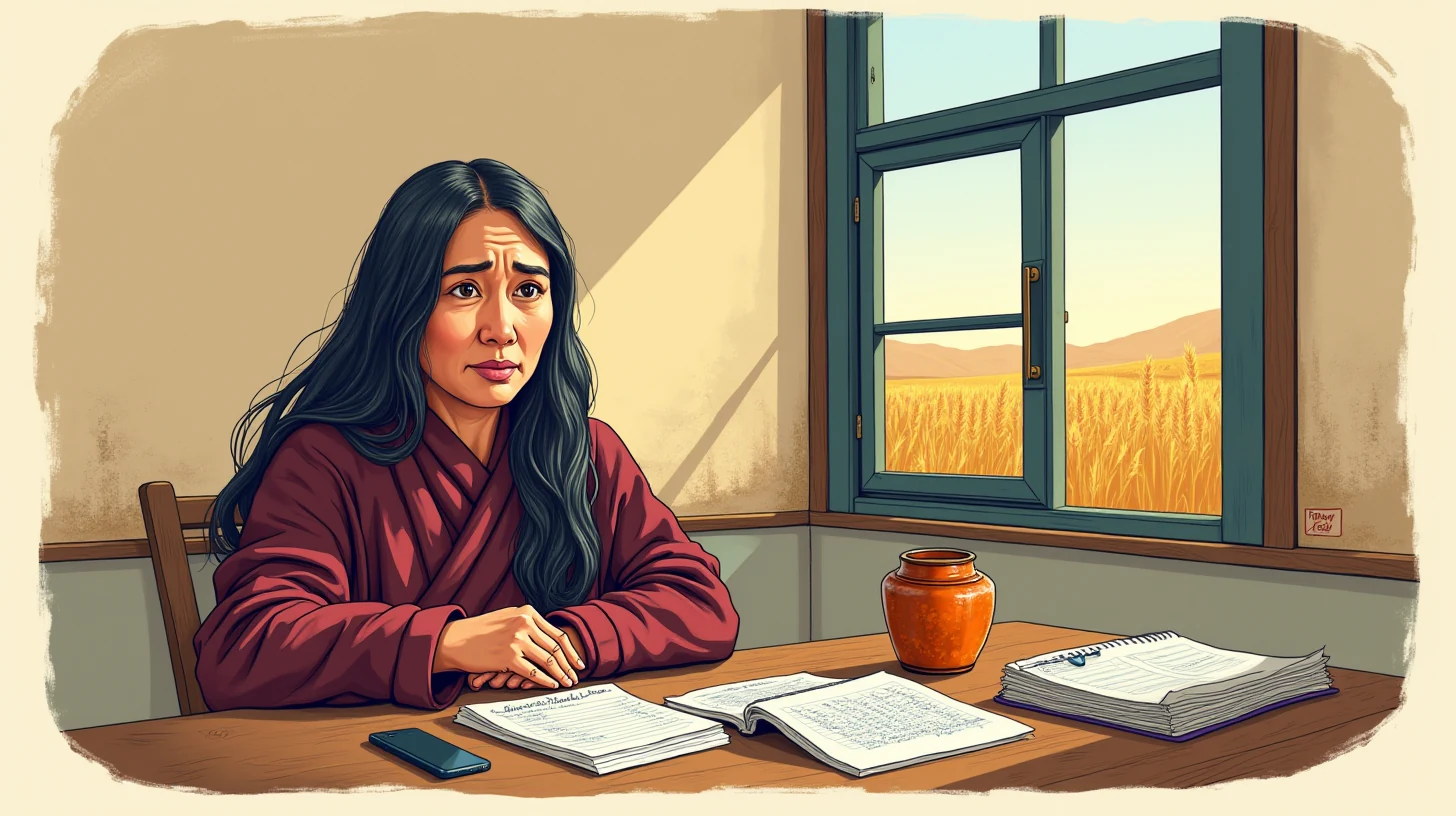
That spring, Stanzin Dolma''s niece — who worked in the Leh District Social Welfare office — had mentioned something offhand over chai: there was a new grant. Fifty thousand rupees. For SHGs like hers. It was called the Mahila Shakti Kendra grant. Stanzin Dolma had nodded, filed it away, and said nothing. She had learned long ago not to chase schemes. But something in the number — fifty thousand — stayed with her. With that money, the group could buy a proper stainless-steel pan for batch cooking, a sealing machine, labels printed instead of handwritten, and, if the numbers held, a small buffer for the months when orders slowed.
The challenge was that no one in the District Project Coordinator''s office had heard of the new portal.
🗓️ The system nobody had updated
The Mahila Shakti Kendra programme is a central Ministry of Women and Child Development scheme, meant to provide convergent support — skill training, financial assistance, health camps, digital literacy — to rural women and their Self-Help Groups. Each district is supposed to have a DPC (District Project Coordinator) who interfaces between the ministry portal and the village-level SHGs. The grant Stanzin Dolma had heard about was straightforward on paper: ₹50,000 in seed capital, available to SHGs with a formal bank account and Cluster Federation registration, and a recommendation from the DPC.
What nobody had accounted for was that in 2024, the ministry had migrated the application system to a new online portal. The old system — a combination of PDF forms, email submissions, and phone-based coordination — had been retired. The new portal was digital-first: upload documents, track status in real time, receive notifications via SMS. It was more efficient, on theory.
The problem was administrative. The DPC''s office in Leh — a small team of two coordinators and one assistant — had never been formally notified of the migration. The message had come through the ministry''s circulars, yes, and been posted on the MIS (Management Information System) portal. But no one had sat down with the team and said: the old system is closed. You must use this new one. Here is the username and password. Here is how to verify documents.
By late March 2026, when Stanzin Dolma asked her niece for details on how to apply, the DPC''s office had no idea that applications were being filed. They had received no applicant lists. No budget allocations. No notification that the system had changed. They were still expecting SHGs to submit paper forms, as they had done for five years prior.
⚠️ The deadline nobody could meet
Stanzin Dolma''s first attempt to apply was in April. Her niece had given her the portal address — missionshakti.wcd.gov.in — and Stanzin Dolma had sat down with her basic Samsung Android phone (a hand-me-down from her son, who worked in Chandigarh) and tried to navigate the form. The portal required:
- The SHG''s 9-digit registration number (Stanzin Dolma had this, written in her ledger)
- A Cluster Federation registration certificate (the SHG was part of the Karzoo Women''s Cluster, but the certificate had been issued in 2022 and Stanzin Dolma was unsure if it was still valid)
- Bank account details for the SHG (they had opened a joint account at the State Bank in Leh, but the passbook was with Tsewang, the group''s treasurer, and she lived two villages over)
- A scanned copy of the DPC''s recommendation letter (this was the blocker: Stanzin Dolma went to the DPC''s office, was told that they did not issue such letters for "online applications," and was asked to return with paper forms)
She left the office confused. The website said the DPC had to recommend her. The office said there was no recommendation process for online applications. The deadline on the portal was May 15, 2026.
By May 10, Stanzin Dolma still had no recommendation letter. She had made two more trips to Leh, spent money on shared-jeep fare, and had been told by different staff members three different things: that the DPC could not issue a letter without a formal request on ministry letterhead; that the letter was only for paper applications; and that the application itself served as the proof.
On May 12, she called her niece in tears. The deadline was in three days. The portal would not let her proceed without a recommendation. The office would not give her one. And no one seemed to know who was responsible for fixing the gap.
🌗 The agent arrives via a younger relative
Stanzin Dolma''s niece — Dawa Tenzin, 28 — worked in the social welfare office not as an administrative officer but as a data-entry assistant. She had access to the old forms, the old mailing lists, and the office'''s email archives. More importantly, she had a smartphone and a habit of searching for things online. It was Dawa Tenzin who suggested, at 10 p.m. on May 12, that they use the agent — a language model she had heard about through a government training webinar months earlier.
They sat in Stanzin Dolma''s kitchen with the phone (still on 4G because Karzoo''s Wi-Fi was unreliable) and Dawa Tenzin typed out the problem in plain language: "My aunt runs a 9-woman SHG in Leh. We want to apply for the Mahila Shakti Kendra seed capital grant. The portal says we need a DPC recommendation. The office says they don''t know about the new portal and don''t issue recommendations for online applications. What do we do?"
The agent read back what it understood: that Stanzin Dolma was applying for ₹50,000 under the central Mahila Shakti Kendra scheme; that the application portal required a DPC recommendation; and that the DPC''s office was unaware of the 2024 portal migration. It asked for the exact URL of the portal, the date the office last received ministry communication, and the name of the DPC. Then it surfaced something specific:
"Mahila Shakti Kendra ke naye portal par application ke liye, DPC ki recommendation letter municipal office se hi chalti hai. Agar DPC ko portal ke baare mein pata nahi, toh aap apne SHG ke registration certificate aur bank passbook ke saath ek letter likhkar DPC ke paas bheje — is letter mein likha hona chahiye ki aap Mahila Shakti Kendra ke seed capital grant ke liye apply kar rahe hain, aur DPC se likhakar bhijwao ki haan, yeh SHG sahi hai."
(The new Mahila Shakti Kendra portal requires a DPC recommendation letter that comes from the municipal office. If the DPC does not know about the portal, you should write a letter to the DPC with your SHG''s registration certificate and bank passbook — stating in the letter that you are applying for the Mahila Shakti Kendra seed capital grant, and requesting that the DPC issue a confirmation that you are a valid SHG.)
The agent also suggested that Dawa Tenzin check the ministry''s circular archives for the date the migration was officially announced. It was announced on January 15, 2024. The DPC''s office should have received the notification through the ministry''s official state coordinator. If they did not, that was a problem at the state level, not the district level.
The agent did not fill out the form. It did not sign anything. It did not submit anything on Stanzin Dolma''s behalf. It simply surfaced the gap, named it, and suggested a workaround: write the letter yourself, include all documentation, and ask the DPC to issue a confirmation based on what you''ve shown.
🧭 Why the system fails ordinary homemakers
The Mahila Shakti Kendra scheme is, in design, generous. The ₹50,000 grant is meant to flow to SHGs within 45 days of approval. The portal is built to reduce middlemen and expedite release. The Cluster Federation tier is supposed to aggregate SHGs and reduce individual paperwork.
What fails is the transition layer. When a system migrates — from paper to digital, from one portal to another, from one ministry office to a new one — the implementation assumes that every stakeholder has been notified and trained. In reality:
- District coordinators'' offices operate on thin budgets and thinner staff. A new portal means new training. Training requires time away from desk. There is no time. The office bumps along, using the old system for as long possible, until a frustrated applicant or an audit forces them to move.
- Homemakers like Stanzin Dolma do not read ministry circulars. They hear about schemes through relatives, neighbors, Anganwadi workers, and word-of-mouth. By the time the news reaches them, the official launch is months old.
- The portal assumes digital literacy. It assumes a reliable internet connection. It assumes that applicants can scan documents. For a woman in Karzoo, whose phone is a hand-me-down and whose Wi-Fi is spotty, these are not small assumptions.
- The recommendation letter — the human interface in an otherwise digital system — is the most fragile link. It requires a DPC who (a) knows the application has been filed, (b) knows it is their responsibility, and (c) has the authority to issue a letter. When the DPC does not know the portal exists, the letter never materializes.
This same gap — notification, literacy, infrastructure, human interface — repeats in every scheme. The pension officer who has not heard of a new DBT system. The Anganwadi worker using outdated enrollment forms. The bank branch manager who does not know that Aadhaar is now optional for opening an account. The homemaker is caught between systems. She is not at fault. The system is.
- 📨
January 15, 2024 — Ministry announces portal migration
The new Mahila Shakti Kendra application portal goes live. State coordinators are notified. Circular is issued on official channels.
- 🛑
January-April 2024 — No local notification
The Leh DPC office does not receive direct training or formal notice. The circular sits in an inbox or a filing cabinet. The office continues using the old paper-based system.
- 📱
April 2026 — Applicant discovers the gap
Stanzin Dolma learns about the ₹50,000 grant. She tries the online portal. She finds that a DPC recommendation is required. She goes to the office for a letter.
- ⚠️
May 12, 2026 — Crisis emerges
The DPC office does not know how to issue a recommendation for an online application. The deadline is in three days. No one knows who should fix the gap — the ministry, the state, or the district.
What happens to other homemakers in similar situations is often simpler: they miss the deadline. They give up. They do not receive the grant. Their SHG remains underfunded. The scheme fails in silence.
What the manual says
IdealSHG submits application online. DPC reviews and recommends within 5 days. Ministry approves within 45 days. ₹50,000 is transferred to SHG bank account.
What actually happens
RealitySHG submits application. DPC office does not know the portal exists. No recommendation is issued. Application cannot proceed. Deadline passes. SHG receives nothing.
What the agent surfaces
WorkaroundApplicant writes letter to DPC. Applicant includes all documentation. Applicant requests confirmation. DPC issues letter based on submission, not portal knowledge. Application can proceed.
🌱 The quiet truth
Stanzin Dolma did write the letter. It took her two days — she worked with her niece to compose it in Hindi, print it on paper, and include a copy of the SHG registration, the bank passbook, and the Cluster Federation certificate. She walked into the DPC''s office on May 13, at 2 p.m., and placed the folder on the desk. She did not argue. She did not explain the portal. She simply said: "I want to apply for the Mahila Shakti Kendra grant. This is the group, this is the account, this is the registration. I need your recommendation."
The DPC — a woman named Dolkar, who had been in the role for six months and was still learning the systems herself — read the letter and the documents, and wrote a one-paragraph recommendation on her official letterhead. It took fifteen minutes. Stanzin Dolma uploaded it to the portal at 3:30 p.m., five hours before midnight on May 13. The application was submitted.
Three weeks later, on June 4, the portal issued an approval notification. The ₹50,000 was credited to the SHG''s bank account the next day. Tsewang, the treasurer, called Stanzin Dolma to confirm. The group bought the stainless-steel pan. They ordered printed labels. They brought on a tenth member — a widow from the next village who had been making preserves alone.
What Stanzin Dolma understood, in that quiet moment of seeing the deposit, was not that the system had suddenly become fair. It had not. The system was still broken for most women: those with no niece in the government, no access to an agent, no person to whisper a workaround. What she understood was that the system had always been partly broken, and that it only worked because some people knew how to write letters, how to ask the right questions, and how to push past the silence.
"ང་ལ་ལམ་ཤེས་མཁན་ཞིག་ཡོད་མི་ན། ང་ཐུགས་མི་ཁྲལ་བར་ལོག་ཡོང་ཡོད།"— If I had not had someone who knew the path, I would have come home empty-handed.
The grant was not a gift from the government. It was a tool that had always been there. But like all tools in a broken workshop, it required someone to know where it lay.