
The Lucknow homemaker and the Kanya Sumangala stage-3 payment that never arrived
Salma Khatoon was thirty-five when her daughter Naseem was born, in late 2016, in a small nursing home in Lucknow''s Aminabad neighbourhood. Her husband, a contract labourer at a textile warehouse, had missed the birth—he was out of the city that week. By the time he returned, Salma was already home, in the two-room flat they rented on the third floor of a building that smelled of diesel and cardamom from the spice merchant''s stall below. Naseem was a quiet baby, jaundiced for a week, then settled.
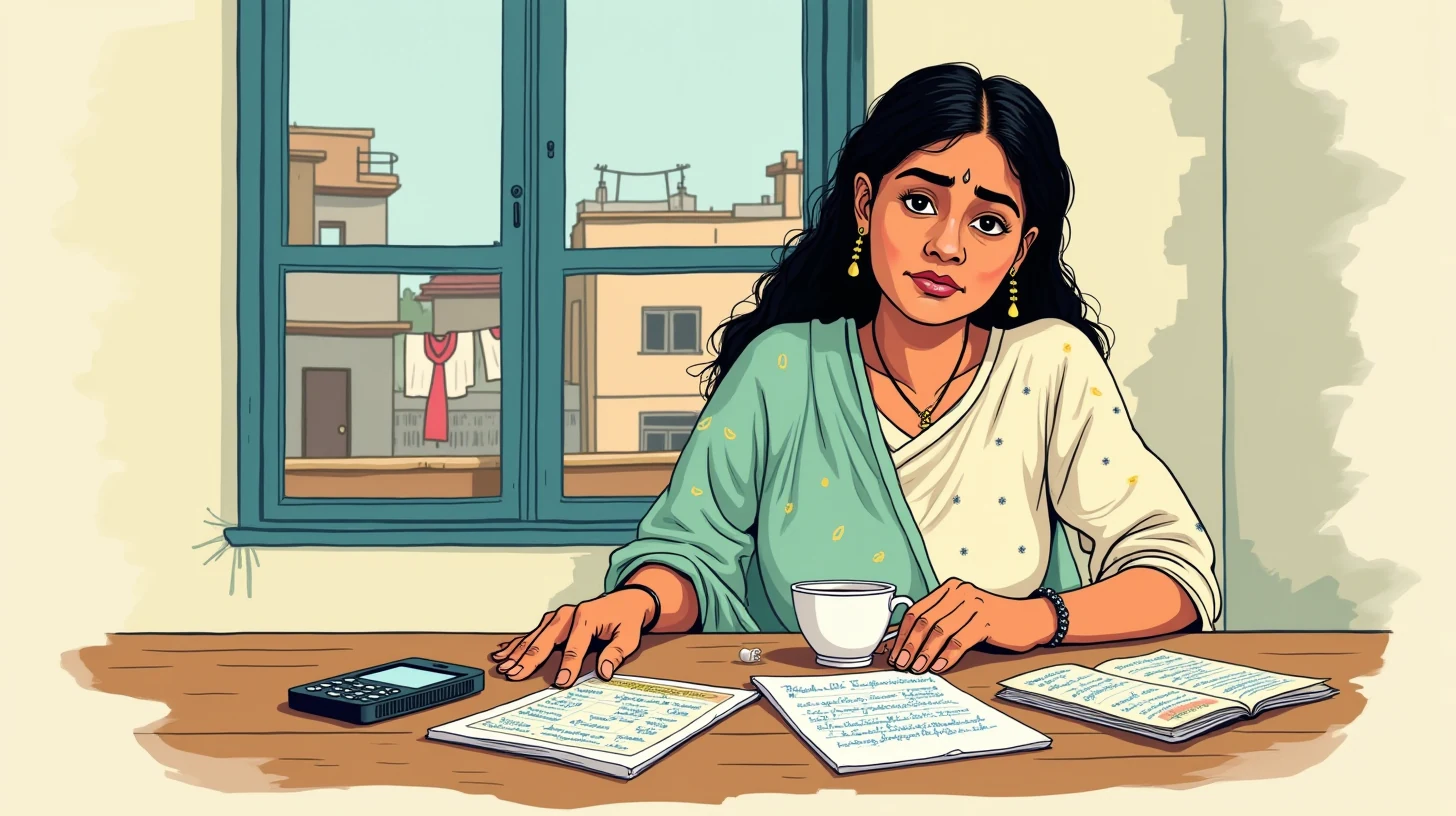
Four years later, when the Mukhyamantri Kanya Sumangala Yojana—the state scheme that paid money to families for each daughter—opened its doors, Salma''s mother-in-law pressed her to register. The scheme offered five payments as Naseem grew: ₹5,000 at birth, ₹2,000 after full immunization, ₹3,000 when she entered Class 1, and more as she progressed through school. By the time Naseem turned eighteen, the family could receive up to ₹15,000 or more. To Salma, who managed the household on her husband''s irregular wages and the small money she made stitching school uniforms for neighbourhood children, this seemed like a lifeline during lean months.
She walked to the Anganwadi centre in Aminabad in the summer of 2021, filled out the form with help from the volunteer, submitted Naseem''s birth certificate and her own Aadhaar, and waited. Three months later, the first payment arrived: ₹5,000 in a bank transfer to the account her husband had opened in both their names. Salma felt lighter. She had never received money from the government before.
The years passed. Naseem grew from a toddler into a small girl with Salma''s dark eyes and her father''s quick temper. She played marbles in the courtyard, attended the municipal school down the street, and came home each day with scraped knees and stories. Salma''s work kept her busy—she had taken on twenty-five uniforms a week by 2024, earning enough to cover half the rent. The house filled with the rhythm of school terms, summer holidays, monsoons, and festivals. Naseem''s second payment came without fuss in 2022. Then, in August 2024, Naseem turned eight and was admitted to Class 1.
By the rules, the third payment—₹3,000 for Class 1 enrolment—was due to arrive within a month of admission. Salma waited. The weeks turned into October, and nothing came. She visited the school office to ask if they had submitted the admission form correctly. The headmaster was irritated. Yes, they filed it. She called the Anganwadi worker, who said the school had to upload it to the state MKSY portal themselves; the Anganwadi only registered children at birth. Salma began to worry. Three thousand rupees, for her, was a month''s stitching work.
🗓️ The systemic backdrop
The Mukhyamantri Kanya Sumangala Yojana, launched in 2019 by the Uttar Pradesh government, was built on a simple promise: the state would provide regular, staged cash transfers to girls from economically vulnerable families, anchoring each payment to a major life milestone. Birth, immunization, first admission, Class 6, Class 9, and finally Class 10 or 12 completion or higher education enrolment—six gates, six cheques.
The reasoning was clear. Female child mortality and malnutrition are persistent in rural and urban poor neighbourhoods across UP. So is child marriage. If money arrived reliably at the right moment, the scheme''s architects believed, parents would invest in their daughters'' survival and schooling. The scheme promised a total of ₹15,000 to ₹25,000 per girl by age eighteen, conditioned on documented milestones.
For families like Salma''s, the Kanya Sumangala scheme sat at the intersection of two worlds: the old, informal economy of daily wages and cash transactions, and the new, digital state apparatus that demands proofs, portals, and permanent records. Salma''s husband had no phone. She had a basic Nokia that she used to call her mother and receive messages. The school where Naseem studied was a municipal institution, one of dozens in the Aminabad block, run on a skeletal budget. The headmaster handled admissions by hand, wrote them into a large ledger, and was responsible for uploading each child''s details to the state database. But the upload was not automatic. It was a separate task, dependent on the school having internet access, staff training, and the headmaster''s priority-setting. And for a school serving sixty Naseem''s, it was easy to slip.
The state expected this gap to be bridged by the Anganwadi worker at the ground level. But the Anganwadi''s role was to register girls at birth or within six months. After that, the child''s journey through the scheme''s milestones became the school''s responsibility. The Anganwadi worker could only verify, not push. So the payment system depended on a chain: the girl''s birth registration, the Anganwadi''s enrolment of the girl in MKSY, the school''s timely filing and uploading of the admission, and finally, the state''s batch processing of verified records once a month.
Break one link, and the payment stopped. For Naseem, the school had filed the admission locally but had not uploaded it to the state Mahila Kalyan Vibhag portal within the required window. By the time the DM Office checked the record in September, the August payment slot had already passed.
⚠️ The near-miss
In October 2024, Salma decided to go to the DM Office in Lucknow herself. She had never been before. She dressed carefully in a clean salwar-kameez, carried Naseem''s school admission certificate, her own Aadhaar, and a photocopy of the MKSY registration letter from 2021. She left Naseem with her mother-in-law and took a rickshaw to the government building.
The DM Office was a maze. Three guards, two different blocks, and a hallway that smelled of old paper and chai. She asked for the Mahila Kalyan section. A bored clerk directed her down a corridor. The officer she finally found—a woman, middle-aged, in a burgundy sari—looked at her papers without emotion and said: "Your school has not uploaded the admission to the MKSY portal. We have no record of Class 1 enrolment. Come back when the school uploads it."
"But the school says they sent it," Salma said.
"They say a lot of things. The portal doesn''t have it. Without the portal entry, we can''t release the payment. Ask the school again. They have until the end of November for the December slot. After that, you''ll miss two months.''
Salma felt something collapse in her chest. She went back to the school. The headmaster, when she cornered him at lunch break, was defensive. "I filled the admission form. If the system didn''t catch it, that''s not my fault. The internet was slow that day. Maybe it didn''t upload."
By late November, the school finally resubmitted. But by then, the November payment window had closed. The Mahila Kalyan section told Salma to wait for the December processing. Naseem, meanwhile, was in Class 1 for three months now, her admission long completed. The payment was no longer for a real milestone; it was a bureaucratic echo, a name on a form, a ₹3,000 debt that the state said it owed her but could not quite find.
🌗 The pivot
In early December, Salma''s younger sister Aisha came to visit from Varanasi. Aisha worked at a local NGO that helped women with government schemes. Over chai, Salma told her the story. Aisha listened, then pulled out a smartphone—a recent gift from her employer—and opened the e-Saathi portal. "Let me check," she said.
They found Salma''s account. The portal showed Naseem''s MKSY registration (Stage 1, ₹5,000 received, date 2021), and the immunization record (Stage 2, ₹2,000 received, date 2022). But Stage 3—the Class 1 payment—was marked as "Pending Documents." There was a status page that said: "School admission certificate not found in state database. Contact school to verify and resubmit."
"आपकी बेटी नसीम का MKSY खाता दिख रहा है। Stage 3 का status है 'Pending Documents'—school का admission certificate state portal पर नहीं मिला। Deadline 30 नवम्बर है। अगर school उस तारीख से पहले digital copy Mahila Kalyan Vibhag को email करे, तो December के payment batch में ₹3,000 आ सकते हैं।"
(Your daughter Naseem''s MKSY account is showing. Stage 3 status is 'Pending Documents'—the school''s admission certificate is not on the state portal. The deadline is November 30. If the school emails a digital copy to the Mahila Kalyan Vibhag before that date, the ₹3,000 can be released in the December payment batch.)
"So they never really confirmed the upload," Aisha said. "The school filed it locally, but the state system isn''t seeing it. You need to ask the school to attach a copy of the admission directly to the portal somehow, or get the school to generate a digital receipt of the upload."
Salma returned to the school with her sister''s phone, this time with Aisha. They asked for the headmaster''s email. He gave it reluctantly. "I don''t use email for school work," he said. They asked if the school had uploaded the admission document to any online form. He said no—they just sent a form to the DM Office address by post, years ago, and hadn''t bothered since. The admission was filed in the school ledger. Wasn''t that enough?
"No," Aisha said quietly. "The state system doesn''t see post. It needs a digital record. The e-Saathi portal or the MKSY portal directly. You need to use one of them."
The headmaster was annoyed but agreed to send a digital copy of the admission certificate via email to the Mahila Kalyan section address listed on the e-Saathi portal. Two weeks later, Salma checked the portal again. The status had changed to "Documents Verified—Payment Processed." A few days after that, ₹3,000 arrived in the bank account.
It was a small victory. But it had taken three months, a trip to the DM Office, the intervention of an educated younger relative with a smartphone, and a change in the school''s filing method. For a family with no margin for error, three months of lost income was a wound that took longer to heal.
- 🎓
August 2024: Naseem admitted to Class 1
The school files an admission form in the local ledger. No digital upload to the state MKSY portal.
- ⏰
September 2024: Payment deadline passes
The MKSY system looks for verified Class 1 admissions. Naseem''s name is not in the state portal. The August payment slot closes. No funds are transferred.
- 📋
October 2024: Salma visits the DM Office
The Mahila Kalyan section confirms that the school''s admission record is not in the state database. They tell Salma to ask the school to resubmit digitally.
- 📨
November 2024: School resubmits via post
The school sends another paper form to the DM Office by regular post. No digital upload. Another payment window closes.
- 📱
December 2024: Sister helps with e-Saathi portal
Aisha checks the e-Saathi portal using her smartphone, finds the status, and advises the school to upload the admission document digitally to the Mahila Kalyan email.
- ₹
January 2025: Payment finally received
The Mahila Kalyan section verifies the digital copy, updates the MKSY portal, and releases the ₹3,000 payment to Salma''s bank account—four months after Naseem''s admission.
🧭 The systemic argument
Salma''s case is not unusual. It is the rule.
The Kanya Sumangala Yojana is a sound policy in principle: conditional cash transfers, indexed to real milestones, reduce the economic pressure on families to withdraw girls from school or marry them young. But the policy''s implementation depends on a chain of perfectly timed, perfectly coordinated digital uploads across hundreds of schools and government offices in a state of 230 million people. That chain breaks constantly.
The first bottleneck is at the school. A municipal school in Lucknow, or Kanpur, or Gonda, has one principal, sometimes one clerk, and six or eight teachers. The school receives no special budget for digitization. The admission process, when girls are enrolled, happens in person, in a ledger. No one is trained to use the MKSY portal. The principal often doesn''t know that uploading to the MKSY portal is a separate step from filing locally. And even if he does, the school Internet is slow, intermittent, or blocked during network upgrades. The upload takes time and creates no visible receipt. So it is postponed, forgotten, or simply not done.
The second bottleneck is at the Anganwadi level. The Anganwadi worker is responsible for registering girls at birth and ensuring they are enrolled in MKSY. But the worker also conducts nutrition programmes, monitors pregnant women, manages ration distribution, and serves as a de facto health clinic for the neighbourhood. For many workers, the MKSY enrolment is one task among twenty. And once a girl is registered at birth, the system expects the school to handle the subsequent milestones. There is no one assigned to follow up.
The third bottleneck is at the state level. The MKSY portal is maintained by the Mahila Kalyan Vibhag, but the school upload happens via a different system, or no system at all. Paper records arrive at the DM Office by post, where they sit in a pile until someone scans them and enters them manually into the portal. Or they are entered into a separate database that is not synced with the MKSY system. The batch processing of payments happens once a month, and if a girl''s record is missing from the verification database, she is skipped. She is not flagged as missing. She is not auto-corrected. She simply does not receive the payment, and the family is expected to flag the error themselves.
The burden of proof is inverted. Instead of the state system having to verify and pull records, the family must push. They must know that the portal exists. They must understand that it is their job to ensure every step is completed digitally. They must have access to a smartphone, literacy in digital systems, or a younger relative with those skills. For Salma, none of this was true until her sister visited.
What it does
- 💸Provides staged cash transfers if all documents are verified.
- 📱Allows families to check payment status via the e-Saathi portal.
- 📨Sends occasional SMS notifications for approved payments.
- 📧Allows email contact with the Mahila Kalyan section to query status.
- 🗂️Maintains a digital record of each girl''s registration and payment history.
What it does not do
- 🔄Auto-verify school admissions or sync school databases with the state portal.
- 🔔Send reminders before payment deadlines or auto-extend deadlines for delayed uploads.
- ⚠️Auto-escalate missing documents or flag families at risk of missed payments.
- 📞Provide toll-free helpline support for families without portal access.
- ☎️Offer offline alternatives for families without smartphones or internet.
The impact is visible across UP. The scheme was meant to reach 2.36 million girls. By 2024, it had registered just over 1.7 million. Of those, only about 60 per cent receive payments on time. The rest face delays of weeks or months—delays that, for a household earning ₹500 a day, can force a child to drop out.
Schools are especially vulnerable. A private school can maintain digital records and ensure timely uploads because the school fees system already runs on digital infrastructure. A municipal school, a government school in a smaller town, or a school in a slum neighbourhood simply lacks the capacity. The headmaster is not negligent; he is overwhelmed. And the system penalizes the girls in his school, not the headmaster. The state could mandate school integration with the MKSY portal, provide training and budget, and synchronize the databases. It has not done so.
The result is that the Kanya Sumangala Yojana, like many other state welfare schemes, becomes a system that favours the digitally literate and connected. Salma received her payment only because her sister—an educated woman with access to a smartphone and knowledge of government portals—visited at the right moment. Thousands of other girls, in smaller towns, in neighbourhoods without an educated relative nearby, fall through the cracks silently.
"स्कूल वाले ने कहा कि उन्होंने फार्म भर दिया। अब मेरा काम है कि मैं सरकार को बताऊँ कि मेरी बेटी को स्कूल मिल गया। पर कैसे? फ़ोन नहीं है, कंप्यूटर नहीं है। बस मेरी बहू को आना पड़ा और हमें सिखाना पड़ा।"— The school said they had filled in the form. Now it was my job to tell the government that my daughter got a school seat. But how? I don''t have a phone, I don''t have a computer. My sister-in-law had to visit and teach me.
🌱 The quiet close
By January 2025, Naseem had been in Class 1 for five months. The ₹3,000 payment arrived in the bank. Salma used half of it for school supplies and books for the next term. She saved the rest.
The experience left her with two habits. First, she now wrote down all the milestones Naseem would reach—Class 1 done, Class 6 in five years, Class 9 in eight years—and marked the expected payment dates in a notebook. She did not know if she could ensure digital uploads for all of them, but at least she would not be surprised. Second, she stayed in touch with her sister. Aisha had promised to check Naseem''s portal status once every few months, to catch any delays before they became crises.
Naseem, in Class 1 now, had no idea that the government had promised her money for her education, or that the promise had nearly been broken. She came home each day with chalk dust on her uniform, recited her lessons, and played in the courtyard as she always had. Her world had not changed. Only Salma''s understanding of the world had shifted—the world where systems that sound simple, kind, and reliable turn out to require knowledge, persistence, and the good fortune of a literate relative passing through at the right moment.
The Kanya Sumangala Yojana, when it works, is a lifeline. But it works unevenly, and the unevenness is not random. It follows the old faultlines of literacy, access, and proximity to the digital world. Salma now understood this. She could not change the system. She could only learn to navigate it, and hope that the next milestone arrived on time.