
The Chandigarh streetwear creator and the Trademark Class 25
Harpreet Sidhu is twenty-five years old. He lives in Sector 22-B, Chandigarh, in the flat his parents bought in 2004 — a two-bedroom DDA-style block where the ground floor is a stationery shop and the roof terrace has become, over the past eighteen months, a makeshift photo studio. The terrace faces west, which means it catches the clean afternoon light that Chandigarh's grid-planned sectors are designed to allow, and it is this light that appears in the 95,000 Reels that have made him, in the language of his collaborators, "a legitimate Chandigarh streetwear voice." He photographs there every Tuesday and Thursday, using a Canon EOS R7 on a Manfrotto tripod his mother said was too expensive and his father said nothing about because he had not yet been told the price.
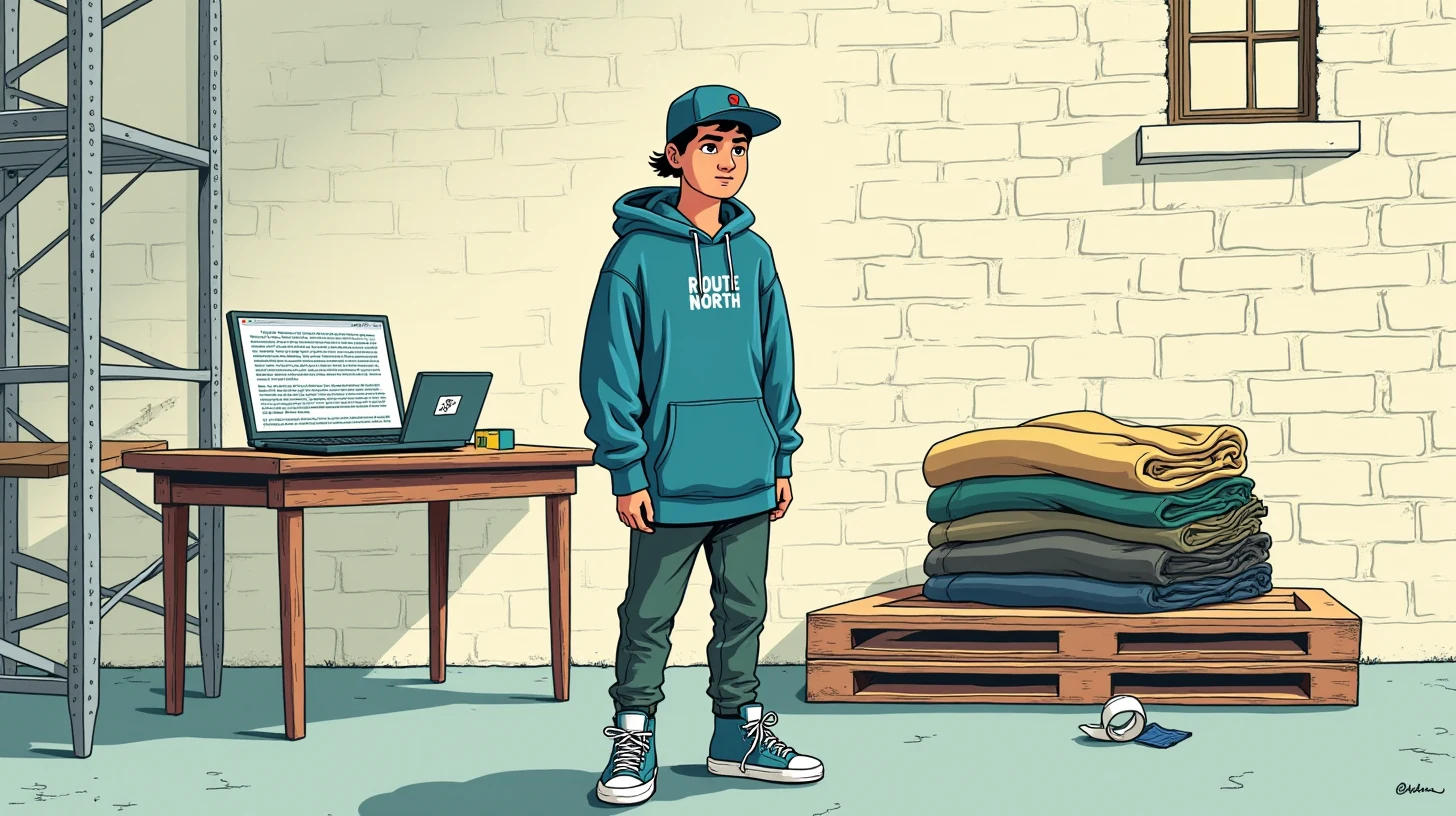
He studied B.Com at DAV College, Sector 10, and completed it in 2023 without any particularly firm conviction about what came next. What he had, since the eleventh standard, was an eye: for fit, for proportion, for the specific relationship between a sneaker silhouette and the break of a trouser hem. He started posting in 2022, initially on the strength of flat-lays shot on the roof and a caption style that was direct in Punjabi and slightly wry in English. By late 2023, he had 40,000 followers. By early 2025, 95,000, a Shopify store with ₹12–18 lakh in annual brand-collab revenue, and two college friends — Gurjot from UIET, who handles print liaison, and Manmeet from PEC, who manages shipping and inventory — working with him on a part-time basis.
The label had been forming in his head for two years. Not merch, he was specific about this: a brand. Oversized tees in 240 GSM cotton with original graphic prints, cargo pants with the right taper, hoodies with a zip weight that sat correctly. He would design; Gurjot would manage the print vendor in Ludhiana; Manmeet would handle the Sector 35 storage unit and shipping. The name came on a Tuesday evening when he was on NH-22 coming back from Pinjore, watching the Shivalik hills flank the northern horizon. ROUTE NORTH. It felt right. He did not search for it.
Eleven days after the first batch shipped — on a Saturday morning in March 2026, while he was photographing the third colourway on the terrace — his phone showed a WhatsApp message from an unknown Mumbai number. The number identified itself as belonging to a law firm. The message said: cease and desist.
🗓️ The system Harpreet didn't know existed
India's trademark registration system is administered by the Trade Marks Registry, part of the Office of the Controller General of Patents, Designs and Trade Marks under DPIIT. The governing statute is the Trade Marks Act 1999, which replaced the earlier 1958 Act and aligned India with the Madrid Protocol on international registration. Marks are registered in forty-five international classes — the Nice Classification — and registration in one class does not confer protection in others. For an apparel brand, the critical class is Class 25.
- 🔍
Step 1 — Public search (before adopting any name)
IP India's Trademark Public Search at ipindia.gov.in/trade-marks.htm lets anyone search registered and pending marks by class, phonetic similarity, and keyword — for free, without an account. This is where the process must begin, before printing a single shirt.
- 📋
Step 2 — TM-A application (Form TM-A, ₹9,000 or ₹4,500 for startups)
Application filed online via the IP India portal. Includes the mark's representation, specification of goods/services, class, and the applicant's details. A receipt is issued immediately; the mark is 'pending' from this date.
- ⚖️
Step 3 — Examination + opposition window (12–18 months)
The Examiner raises objections under Section 9 (absolute grounds) or Section 11 (relative grounds — conflicting earlier marks). If the mark clears examination, it is advertised in the Trade Marks Journal. Any party can oppose within four months.
- ✅
Step 4 — Registration certificate (18–36 months from filing)
Once the opposition window closes without challenge (or the applicant wins opposition proceedings), the mark is registered. Registration lasts ten years, renewable. From the filing date, the ® symbol may not be used — only ™ (TM).
Class 25 — clothing, footwear, and headgear — is one of the most contested classes in the Indian registry. Delhi, Mumbai, and Ludhiana have dense filings from garment manufacturers, exporters, and brands going back decades. A name that phonetically resembles or visually suggests a registered Class 25 mark can be refused registration under Section 11 of the Trade Marks Act 1999 on "relative grounds" — meaning the earlier mark's existence is itself the ground for refusal, regardless of whether the applicant knew about it.
Class 25 sub-categories
Clothing, footwear, headgearIncludes all wearable garments (tees, hoodies, cargo pants, joggers, jackets), footwear (sneakers, sandals, boots), and headgear (caps, beanies, hats). A single TM-A filing covers the specified sub-categories within Class 25 — you can list 'clothing, footwear' or be more specific.
Section 29 — Infringement test
Identity or deceptive similarityUnder Section 29 of the Trade Marks Act 1999, infringement occurs when a mark identical or deceptively similar to a registered mark is used in relation to identical or similar goods. 'ROUTE NORTH' and 'ROUTE 9' — both Class 25 — share a dominant word ('ROUTE') and trade in the same sub-categories. Phonetic and conceptual similarity is assessed holistically.
Designs Act 2000 — Design protection
Original visual design of the articleSeparate from trademark, the Designs Act 2000 protects the novel visual design applied to an article — a distinctive graphic print, a specific pattern, or an unusual cargo-pocket arrangement. Registration lasts 10 years (extendable to 15). Design protection requires registration before the design is published or disclosed; it cannot be filed retroactively.
The Designs Act 2000 route — protecting original graphic prints on the tees rather than the label name — is often overlooked by D2C apparel founders. Trademark and design registration are parallel systems; the former protects the brand name, the latter protects the original visual design applied to the product. For a streetwear creator whose competitive moat is the graphic work, both matter.
What Harpreet had not done before printing four thousand shirts was either.
⚠️ What very nearly happened — and what actually happened instead
The cease and desist came from ROUTE 9 Private Limited, a Mumbai-based streetwear brand with a Class 25 trademark registered in February 2021. Their registration pre-dated Harpreet's use by four years. The letter cited Section 29 of the Trade Marks Act 1999 — infringement by use of a deceptively similar mark in relation to identical goods — and demanded he immediately withdraw all stock, cease all use of the ROUTE NORTH name on social media and Shopify, and respond within thirty days. It was sent via WhatsApp first, and then by courier to the Sector 22-B flat.
Harpreet read it on the terrace. Then he called Gurjot, who called Manmeet, and by noon all three were sitting on the same sofa trying to work out whether the letter was serious. The Ludhiana print vendor, when Harpreet called him, said he had already sent the invoice and could not take back printed fabric. The Shopify orders — forty-one of them — were already packed and ready to ship from the Sector 35 unit.
"ਯਾਰ, ਮੈਂ ਸੋਚਿਆ ਕਿ ਨਾਂ ਮੈਂ ਖ਼ੁਦ ਬਣਾਇਆ ਹੈ — ਉਹ ਮੇਰਾ ਹੀ ਹੋਵੇਗਾ। ਪਰ ਇੱਥੇ ਕੋਈ ਨਿੱਜੀ ਸੋਚ ਨਹੀਂ ਚੱਲਦੀ, ਇੱਥੇ ਦਾਖਲਾ ਚੱਲਦਾ ਹੈ।"— I thought: I came up with this name myself, so it must be mine. But here, personal logic doesn't count — registration counts.
The arithmetic was direct and bad. Forty-three hundred metres of printed fabric at Ludhiana — ₹94,000. Screen-printing charges — ₹38,000. Labels, hangtags, packaging — ₹21,000. Shopify setup, product photography, influencer gifting (four creators already had pieces) — ₹47,000. Total sunk cost before a single rupee was refunded: ₹2,00,000. Plus the forty-one pre-orders he now had to refund: ₹41,200. Rounded and including the Sector 35 deposit lost when he vacated before the month was up: ₹2.4 lakh.
None of the stock could be sold. Selling ROUTE NORTH branded product after a Section 29 cease and desist letter would have converted a civil infringement claim into a calculated one — relevant in any damages assessment under Section 135 of the Trade Marks Act 1999 if ROUTE 9 chose to file in court. Harpreet did not know this at the time. He would learn it in the following ten days.
The reputational cost was harder to quantify. Four of his creator contacts had already posted with ROUTE NORTH pieces. He had to message each of them, explain that the brand was on pause for "operational reasons," and ask them to archive the posts. Two did immediately; one asked for the gift to be returned; one did not reply for four days. He drafted the Instagram story himself — "label relaunch incoming, same energy, new identity" — and posted it at eleven at night because he could not sleep.
🌗 What changed
On the fourth day after the cease and desist, Harpreet got a voice note from Anmol, a senior from his DAV batch who had gone on to NLIU Bhopal for the five-year law programme and was now a first-year associate at a Delhi IP firm. They had not spoken in two years. The voice note was characteristically brief: "Sun, tera koi trademark issue hai toh mujhe bata. Kisi ne mujhe forward kiya tera Instagram story."
Harpreet called back. Anmol asked him to share the cease and desist letter on WhatsApp. Twenty minutes passed. Then Anmol replied with a voice note that was longer — five minutes and eleven seconds.
"Yaar, sun. Section 29 claim legitimate lag raha hai — 'ROUTE' word dominant hai, same class 25, goods identical hain. Tujhe fight karna mushkil hoga court mein. Lekin — aur yeh important hai — agar ROUTE 9 ka lawyer teri taraf se koi genuine attempt dikhe toh compounding ho sakti hai. Aur ek aur cheez hai: Section 142. Agar unhone yeh cease and desist groundless threats ke form mein bheja hai — bina proper basis ke, ya intimidate karne ke liye — toh tu Section 142 ke under counter-suit kar sakta hai. Filhaal, tu ek kaam kar: IP India par public search kar, ROUTE 9 ki registration dekh. Phir TM-A file kar naye naam ke liye immediately — kyunki filing date count karti hai."
(Listen. The Section 29 claim looks legitimate — 'ROUTE' is the dominant element, same Class 25, identical goods. You'll have a hard time fighting this in court. But — and this matters — if ROUTE 9's lawyer sees a genuine attempt at resolution on your side, there's room for compounding. And one more thing: Section 142. If they've sent this cease and desist as groundless threats — without proper basis, or to intimidate — you can counter-sue under Section 142. For now, do this: run the public search on IP India, look at ROUTE 9's registration. Then file TM-A for your new name immediately — because the filing date is what counts.)
That evening, Harpreet opened the agent on his phone and typed in Punjabi: "IP India te ROUTE 9 di trademark registration kiven dekhni hai?" — How do I find ROUTE 9's trademark registration on IP India?
The agent pulled up the Trade Marks Public Search interface at ipindia.gov.in/trade-marks.htm and walked him through the search: class 25, keyword "ROUTE 9," proprietor name search for Route 9 Private Limited. The result came back in seconds. Class 25, registration date February 2021, registered proprietor Route 9 Private Limited, Mumbai. The agent then showed him the registration certificate image available in the public record.
"Harpreet, ROUTE 9 di registration valid hai — Class 25, February 2021 ton. Tenu section 11 relative grounds under refusal honi si agar tune pehlan TM-A file kita hunda. Public search portal ithe free hai: ipindia.gov.in/trade-marks.htm — zero account chahida. Ab naye naam di TM-A filing karo immediately — pending date filing date ton chalti hai. DPIIT startup recognition apply karo — registered startup nu 50% fee reduction mildi hai, ₹9,000 di jagah ₹4,500. Design registration alag hai — tere original prints nu Designs Act 2000 under protect karna chahida, pehlan publication ton pahlan."
(Harpreet, ROUTE 9's registration is valid — Class 25, February 2021. You would have been refused under Section 11 relative grounds if you'd filed TM-A first. The public search portal is free: ipindia.gov.in/trade-marks.htm — no account needed. Now file TM-A for your new name immediately — protection runs from the filing date. Apply for DPIIT startup recognition — registered startups get 50% fee reduction, ₹4,500 instead of ₹9,000. Design registration is separate — your original prints should be protected under the Designs Act 2000, before any publication.)
Harpreet spent the next three evenings with the agent and Anmol on call. The new name — he landed on NORTH BLOC — was searched on the IP India portal. No conflicting Class 25 marks. The TM-A was filed on Day 8 after the cease and desist. DPIIT startup recognition was applied for the same week. The design registration forms for his three original graphic prints — the arch motif, the highway-marker typeface, and the washed-cement texture overlay — were prepared for filing before the new brand's first public disclosure.
Anmol reviewed the cease and desist response letter himself. Harpreet wrote to ROUTE 9's lawyer in formal English, through Anmol, acknowledging the valid registration, committing to full cessation of ROUTE NORTH use, and attaching evidence that all social media posts had been archived and all Shopify listings deactivated. No admission of damages. No acknowledgment of past wilful infringement — because there was none; Harpreet had not known. The response was sent within the thirty-day window.
ROUTE 9 did not file suit.
🧭 Why we built it
Harpreet is not unusual. He is the template. India's D2C creator-to-brand pipeline — Instagram presence → Shopify store → own label → first production run — has become a standard career arc for a specific cohort of 22 to 30-year-old fashion and streetwear creators in cities like Chandigarh, Jaipur, Indore, Lucknow, and Surat. These are creative people who understand product deeply — material weight, silhouette, graphic execution — and understand their audience even more deeply. What they have not studied, because nothing in a B.Com curriculum or a brand-collab career taught them, is IP law.
The public search on IP India is free. It takes eleven minutes. It requires no account, no legal knowledge, no fee. The only thing it requires is knowing it exists and doing it before the name is printed on anything. That is the entire prevention. The cure — rebrand mid-launch, absorb sunk costs, negotiate with a cease and desist lawyer while managing forty-one refund DMs — costs ₹2.4 lakh and three weeks of sleep.
What it does
- 🔍Runs the IP India public trademark search across all forty-five Nice classes — searches by phonetic similarity, keyword, and proprietor name — and shows the creator the registration status of any conflicting mark before the brand name is adopted.
- 🗂️Guides the TM-A application process on the IP India e-filing portal — explains each field, the class selection, the mark representation upload, the fee structure, and the difference between ™ (pending) and ® (registered).
- 📋Explains the Designs Act 2000 registration pathway for original graphic prints — the Form-1 process, the novelty requirement, the publication bar, and the ten-year protection window — so the creator understands what to file before going public.
What it does not do
- ⚖️Never advises on litigation strategy, damages quantum, or whether a Section 142 groundless-threats counter-suit is viable — these require a registered trademark attorney or advocate.
- 🔒Never files the TM-A or the cease and desist response without the creator's explicit confirmation at each step — and recommends legal review before any correspondence with the opposing party.
- ✅Never tells the creator their new name is 'safe' — it surfaces the public record, explains the relative grounds test under Section 11, and flags phonetic or conceptual similarity risks. The filing decision belongs to the creator.
The section of the Trade Marks Act that most D2C founders will never read — but should — is Section 11. Relative grounds for refusal. An earlier registered mark in the same class, covering the same goods, is itself the ground for refusing your application and for a Section 29 infringement action. The earlier mark does not have to be famous. It does not have to have high goodwill. It just has to have been registered first. ROUTE 9 was registered in 2021. ROUTE NORTH came to Harpreet's mind in 2025, on a highway near Pinjore, while the Shivalik hills ran north.
Section 142 is the counterpart — groundless threats. If a registered trademark holder sends cease and desist communications without a genuine prima facie case of infringement, the recipient can apply to the court for a declaration that the threats are groundless and for an injunction against further threats, plus damages. It is a right that exists precisely because the power imbalance between an established Mumbai brand and a 25-year-old Chandigarh creator is real, and because not every cease and desist letter is sent in good faith. In Harpreet's case, the claim appeared to have a genuine basis. But knowing Section 142 exists — and knowing that Anmol had flagged it within forty minutes of reading the letter — changed the tenor of Harpreet's response from panic to negotiation.
🌱 What we hope happens
By May 2026, NORTH BLOC had its TM-A filing receipt. The DPIIT startup recognition application was under review. The three original graphic prints were registered under the Designs Act 2000, filed before the first NORTH BLOC image appeared on Instagram. The Ludhiana print vendor — once Harpreet explained what had happened — agreed to reprint the first batch at cost, on the understanding that future orders would stay with him. Gurjot reworked the screen for the arch motif. Manmeet renegotiated the Sector 35 storage at a shorter-term rate.
The forty-one ROUTE NORTH customers were refunded in full. Twenty-nine of them — on their own — asked when NORTH BLOC would ship.
What we hope happens next is simpler than the story that got him here. We hope the next Harpreet — in Jaipur's C-scheme lanes, in Lucknow's Hazratganj, in Surat's Ring Road studios — opens the agent before the Ludhiana print vendor is called. We hope the eleven-minute IP India public search happens before the brand name becomes the label and the label becomes the inventory and the inventory becomes the sunk cost.
The Trade Marks Registry has searchable records going back decades, sitting on a public portal, free and accessible to anyone with a phone and a browser. The designer who is about to print four thousand shirts does not need a lawyer for that part. They need to know the portal exists, and what to type into it, and what the result means.
That is what the agent does first. Everything else comes after.
If you are building an apparel, sneaker, or accessories label — or any D2C brand — and you are at the naming stage, the agent is free at gabforge.in. It reads the IP India public record with you, in Punjabi, Hindi, or English, and it tells you what the registry shows before you print anything. We will not advise you on litigation. We will not submit your application without your confirmation. We will not tell you a name is safe when the registry shows a conflict. We will show you the conflict before you have spent ₹2.4 lakh finding it yourself.