
Quick read: Ranchi Sohrai painter and the GI tag, MSME Udyam, and the ₹50k GST threat
A Ranchi IP lawyer's letter, copied to the Jharkhand State GI Cell, landed in Somi Murmu's inbox the same morning the Tata Steel commission email arrived. The commission: a 40-foot Sohrai mural at the Jamshedpur headquarters, ₹4,80,000 plus GST. The letter: her studio's invoices were describing murals as "GI-certified Sohrai" without authorized-user registration under Section 17 of the GI Act 1999 — a Section 21 infringement risk. Her unlicensed turnover of ₹23 lakh also meant a ₹50,000 late-GST penalty under Section 122.
She could not invoice the Tata commission without a GSTIN. She could not use "GI-certified" without a Section 17 registration. She had seven days before the procurement quarter closed.
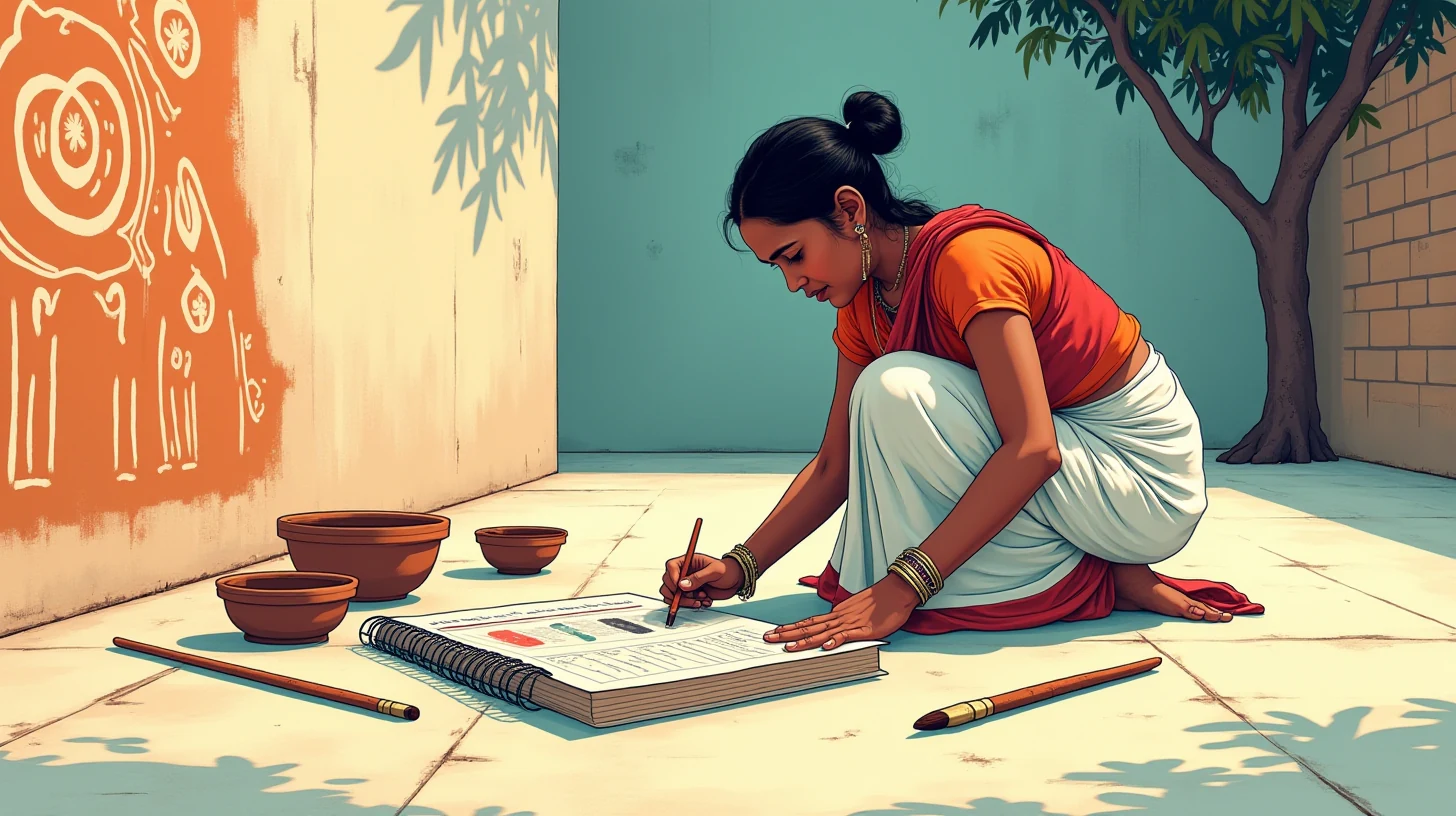
🎨 Somi Murmu, 32, is a Santhali-Oraon Sohrai-painting creator in Doranda, Ranchi. She learned the harvest-festival mural tradition from her grandmother — earth pigments, bamboo brushes, deer and sun-wheel motifs in white and red-ochre. She has 85,000 Instagram followers, 40,000 YouTube subscribers, a studio run with four nieces, and a commercial mural practice that had reached Tata Steel offices in Jamshedpur and Vedanta facilities in the Ranchi industrial corridor.
🚨 The problem
Sohrai painting holds GI Registration No. 612 (granted 2020, Jharkhand State as proprietor). Under the GI Act 1999:
- Section 17 requires producers to apply for authorized-user status from the State GI Cell before commercially labelling goods or invoices with the GI mark or any phrase implying GI certification.
- Section 21 makes commercial use of the GI mark without authorized-user status an actionable infringement — the State GI Cell can file a complaint with CGPDTM.
- Separately, Somi's aggregate turnover had crossed ₹20 lakh in FY 2024-25. Late GST registration carries a ₹10,000 minimum penalty under Section 122 of the CGST Act — and she had not registered.
- Tata Steel's vendor-onboarding also required MSME Udyam registration for contracts under ₹50 lakh — a step she had missed entirely.
Three compliance gaps. Seven days.
🚀 How GabFORGE helped
Her niece's school friend's father — an NGO director familiar with Jharkhand craft GI filings — arrived on a Tuesday evening with a tablet. The agent surfaced all three gaps in a single conversation:
- GI Act analysis: confirmed Sohrai GI Reg No. 612, explained Section 17 authorized-user process, identified her as eligible (Santhali-origin, Ranchi-based, traditional pigments), told her to remove "GI-certified" from invoices immediately and replace it with "traditional Sohrai painting" while the application was pending
- GST amnesty window: identified the Section 128A amnesty (in force through March 31, 2025 — nine days away), which waived interest on backdated returns if she registered before the deadline. Priya, her eldest niece, completed GST registration at gst.gov.in the next morning in one hour forty minutes
- Udyam registration: flagged that Tata's procurement clause required MSME Udyam registration — filed at udyamregistration.gov.in on the same morning, zero cost, registration number issued the same session
By the following Monday: GSTIN confirmed, Udyam Registration Number issued, Section 17 authorized-user application filed with the Jharkhand State GI Cell. The Tata Steel purchase order was raised that Tuesday afternoon.
✅ Outcome
The 40-foot Sohrai mural — deer, sun-wheel, and ancestral bird motifs in earth-red and white on lime plaster — was completed in six weeks. A second Jamshedpur commission followed. The Section 17 authorized-user application is in its seventh week of processing; when approved, Somi's invoices will, for the first time, legally carry the GI mark that truthfully describes what she has been painting since she was nine.
Total professional fees paid for all three registrations: ₹0. Total time to complete GST and Udyam registrations: one morning.
🇮🇳 Why this matters
Jharkhand has more than twelve thousand registered Sohrai and Khovar artisan households. A growing number have moved from festival-only painting to commercial work — corporate murals, government heritage installations, branded prints on Instagram. For all of them, the GI tag intended to protect their tradition has become a compliance requirement they were not warned about.
The Section 17 application is something an eligible creator can complete without a lawyer. The Section 128A amnesty exists precisely because small artisan businesses cross the GST threshold without realising. But both require knowing the correct sequence before the deadline moves — and "seven days before the quarter closes" is not when you want to be reading the GI Act for the first time.