
Quick read: Srinagar Pashmina creator and the GI tag and KCC scheme
Two envelopes arrived the same week in February 2026. One was from the Kashmir Chamber of Commerce, forwarding a GI infringement notice under Section 22 of the Geographical Indications of Goods (Registration and Protection) Act, 1999 — citing her Shopify listings and three Instagram Reels that used "Kashmiri Pashmina" without a CDI authorized-user mark. The other was from J&K Bank Rajbagh, about a Kisan Credit Card application for her cooperative that had been sitting half-complete for three months. Both envelopes sat on the table beside her loom for four days before she opened them.
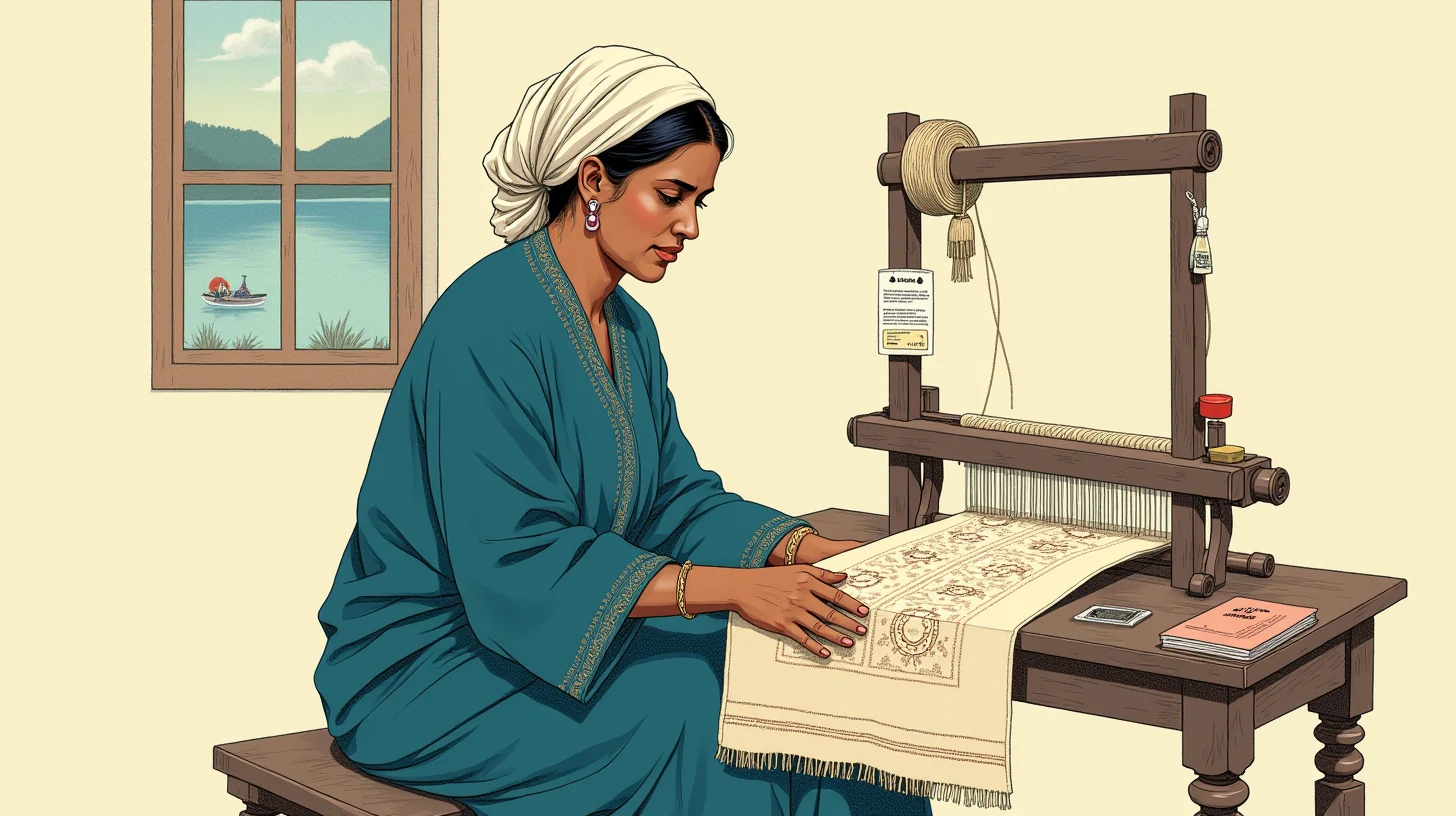
🧣 Roohi Wani, 35, Pashmina creator in Rajbagh, Srinagar — 120k Instagram, 55k YouTube. Fourteen-woman weaving cooperative near Dal Lake. Sells genuine Pashmina shawls from ₹6,800 to ₹1,24,000 on Shopify and Instagram. Four years of reels on natural dyeing, sozni embroidery, and the Changthang-to-Srinagar supply chain. Every piece real. Every listing, technically, an infringement.
🚨 The problem
Kashmiri Pashmina holds GI Registration No. 46, granted in 2008 — one of India's earliest GI grants under the 1999 Act. The Crafts Development Institute (CDI), Srinagar, is the designated inspection body. Any producer who commercially describes their product as "Kashmiri Pashmina" without CDI authorized-user status is liable under Section 22 of the GI Act — injunction, damages, and seizure of goods. Roohi had never known the authorized-user system was a formal legal registration, not a passive quality label.
Separately, the KCC handicraft extension (2018-19, under NABARD refinancing) offered her cooperative's fourteen members up to ₹3 lakh each — a total ₹42 lakh working-capital facility at an effective 4% interest after subvention. She had picked up the form in November. The missing piece: artisan identification cards for three weavers, a gap no one at the bank branch had flagged.
🚀 How GabFORGE helped
Her cooperative's anchor weaver had a nephew, Imtiyaz, who had just joined CDI Srinagar. He brought the agent on his phone to Nowgam on a Sunday afternoon.
- Identified the CDI pathway in full — Form GI-AUTH-02 at CDI Srinagar, parallel Section 17 application to the GI Registry Chennai, and an interim undertaking to the Kashmir Chamber that stays the infringement proceedings while the inspection runs
- Matched existing documents to the form — her J&K Handicrafts Department cooperative registration certificate and Changthang fibre sourcing declaration covered most of the CDI requirements already on hand
- Named the KCC gap — three weavers lacked artisan identification cards; the agent walked through the J&K Handicrafts Department online registration at kashmir.gov.in and the cards were applied for the same week
- Both applications filed in parallel — CDI inspection logged and KCC application submitted to J&K Bank Rajbagh within one week of the Nowgam Sunday visit
✅ What happened
CDI inspection completed in six weeks — all three shawls passed. GI Registry authorized-user certificate issued. Kashmir Chamber closed the infringement proceeding. Shopify listings restored with CDI Pashmina Mark batch numbers in each product description.
KCC appraisal by J&K Bank confirmed NABARD refinancing eligibility. Disbursement pending in the week Imtiyaz sent his April message — but the application was complete, the weaver payments would no longer be delayed, and the raw-fibre purchase for the summer run would not come from current revenue.
🇮🇳 Why this matters
Every Kashmiri craft creator selling online is in the same unlit junction. The GI authorized-user system for Pashmina has been active since 2008, enforced by an inspection body with a formal form number and a designated portal — and almost none of the 14,000-odd weavers and cooperatives in the Valley have filed it. The KCC handicraft extension has been available since 2018-19, with NABARD refinancing and a 4% effective rate, and the document gap that blocks most applications is one artisan card. The infringement came for the creator who was most genuinely selling the real thing.