
The Chennai Carnatic music creator and the Bollywood remix strike
Shreya Ramachandran is twenty-nine years old and lives in a second-floor flat in Mylapore, Chennai — four blocks from the Kapaleeshwarar temple tank. She began learning Carnatic classical vocal at the age of seven under Smt. Padmavathy Krishnaswamy at a music school on P.S. Sivaswamy Salai in T. Nagar, attending the 6 a.m. class before school with a frequency that her mother still refers to as incomprehensible. By fourteen she had performed twice at the Madras Music Academy's junior category during the Margazhi season. By twenty, she had a Bachelor's in Music from the Madras Music College and was teaching at the same T. Nagar school where she had learned.
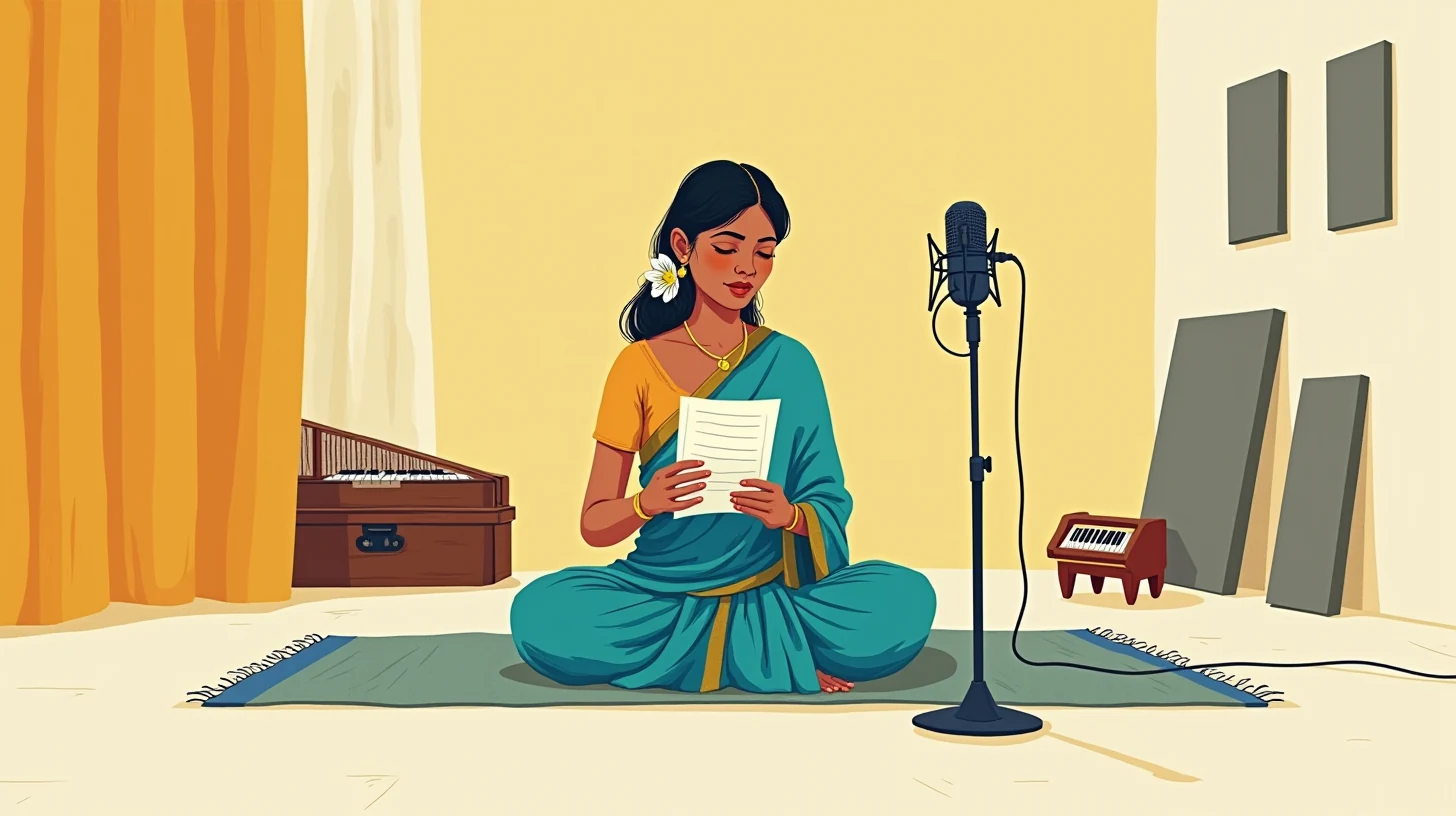
The YouTube channel began in 2018 as an experiment she expected to fail. She filmed herself in this same Mylapore flat — acoustic foam panels glued to the wall, a secondhand tanpura from Triplicane, a condenser microphone ordered from Bengaluru — and recorded "Yashomati Maiyya se bole Nandlala" from Satyam Shivam Sundaram, arranged in Kalyani raga. It reached eleven thousand views in four days. A second video — Lata Mangeshkar's "Tu Hi Re" from Bombay, in Bhairavi — reached forty thousand. The format had found its audience: people who knew Carnatic music and the Bollywood songs Shreya was rearranging, and people who knew only one or the other and were learning the connection from her. Over eight years the channel grew to 2.2 lakh subscribers and eighty-three videos — covering compositions by Naushad, Madan Mohan, Bappi Lahiri, A. R. Rahman — that Shreya thinks of, without melodrama, as her life's most coherent work.
Her household income arrived in three streams: YouTube AdSense at approximately ₹28,000 per month, brand partnerships with two South Indian classical music institutions (an annual retainer of ₹1.2 lakh combined), and paid music-class referrals to the T. Nagar school where she still teaches three days a week. Her mother, Smt. Vasantha Ramachandran, is a retired government school Hindi teacher; her father, R. V. Ramachandran, retired from Bharat Electronics Limited. They live one floor above. The distance between households is a staircase, and Shreya takes most of her meals upstairs.
Then, in the first week of March 2026, an email arrived from YouTube at 7:43 a.m. while she was mid-rehearsal. She did not see it until the session ended. It said: your third copyright strike has been applied.
🗓️ The annual ritual
A Carnatic-Bollywood cover is a specific creative act. It is not sampling — Shreya does not use any part of the original recording. It is not karaoke — she is performing an entirely new arrangement, usually in a Carnatic raga whose relationship to the original scale is structural and theoretically argued. The arrangement changes the ornaments (gamaka), the tempo structure, the tala (rhythmic cycle), and sometimes the mode — she has rendered "Lag Ja Gale" in Bhimpalasi, which shifts the emotional register of the composition in a direction Roshan might not have recognised. Each arrangement takes ten to fourteen days of work.
The Content ID claims began arriving in 2021. T-Series and Saregama — the two largest music rights holders in India — operate automated Content ID systems on YouTube that fingerprint audio against their catalogue of master recordings. The problem Shreya encountered is structural to how Content ID works: it does not assess whether a new work is a cover, an arrangement, or a transformative derivative. It matches audio similarity. A Carnatic cover of "Tu Hi Re" will not match the A. R. Rahman original; but Shreya's arrangement, if it shares enough melodic material with a section of the film track, can match secondary derivatives — covers of covers — that T-Series has licensed and uploaded to its own YouTube channel. Three of her eighty-three videos triggered this mechanism.
- 📨
July 2025 — First Content ID claim on 'Yashomati Maiyya'
T-Series filed an automated Content ID claim on her 2018 upload. YouTube demonetized the video but did not issue a copyright strike — a claim and a strike are legally distinct. Shreya disputed it on Section 52 fair-use grounds and T-Series rejected the dispute. YouTube then issued Strike 1.
- ⚠️
November 2025 — Second strike on 'Tere Bina Zindagi Se'
Saregama claimed her Carnatic arrangement of the Gulzar-Pancham composition from Aandhi. Shreya again disputed citing transformative nature; Saregama, with no obligation under Indian law to accept a transformative defence, rejected the dispute. Strike 2 issued.
- 🛑
March 2026 — Third strike on 'Lag Ja Gale'
T-Series claimed her 2022 Bhimpalasi arrangement. At this point YouTube demonetized the entire channel — not just the three videos. She had 90 days before the strikes could be individually resolved. One more strike in that window: permanent channel termination.
- ⚖️
The underlying law: Section 52 vs Section 31D
Under Indian Copyright Act Section 52(1)(j), fair dealing for private or personal use, research, criticism, or review is permitted — but commercial online distribution is not clearly covered. Section 31D provides a statutory cover-version licence route that Shreya had never used.
She had not, until this point, understood the difference between a Content ID claim and a copyright strike. A claim is a monetization event — T-Series takes the ad revenue from the video. It is not a legal proceeding and it does not threaten the channel. A strike is YouTube's internal response to a rejected dispute — it is a punitive mechanism. Three strikes in a rolling ninety-day window result in permanent channel termination with no appeal path. Shreya had been disputing claims on Section 52 fair-use grounds — a defence that holds in US courts under the four-factor test and that YouTube's dispute interface implicitly invites — without understanding that Indian Section 52 is materially narrower, that T-Series had no obligation to accept it, and that disputing and losing converts a claim into a strike. She had, in trying to defend herself, generated two of her three strikes.
⚠️ What very nearly happened
The demonetization of the channel — the March email — was not simply a financial event. The ₹28,000 per month in AdSense revenue stopped immediately. But the calculation of what very nearly happened runs further than that. Shreya's eighty-three videos represent eight years of arrangements, each taking ten to fourteen days of documented compositional work. The channel is, in a specific sense, the public record of an argument she has been making — that the Bollywood song and the Carnatic raga are in a conversation that neither tradition has fully heard — and the audience of 2.2 lakh subscribers is the evidence that the argument found listeners. Termination would have meant all eighty-three videos gone, the subscriber relationship severed, the eight-year archive deleted. YouTube does not archive terminated channels.
Immediate income
₹28,000/month stoppedAdSense demonetized the entire channel on Strike 3 — not just the three claimed videos. Brand partnerships paused; one institution asked to renegotiate the retainer. The T. Nagar school referral income continued, but the primary digital revenue was gone.
Archive at risk
83 videos, 8 yearsTermination deletes the channel permanently. No export, no archive, no appeal mechanism. The eighty-three arrangements — each 10–14 days of compositional work — exist only as YouTube uploads. Shreya had no local backup of the published master files.
Legal position
Section 52 insufficientHer fair-use argument under Section 52(1)(j) applies to private and personal use — not commercial online distribution. The 'transformative' defence that works under US fair use has no statutory equivalent in Indian copyright law. She was using the wrong legal framework entirely.
She sat with the email for three days. She drafted a formal dispute letter citing Section 52(1)(j) and posted it in a Tamil YouTube creator group. A music-law lecturer at Chennai Law College told her, gently, that she was about to convert Strike 3 into Strike 4. He said she needed to understand Section 31D before she touched the dispute panel again.
"நான் ஒவ்வொரு பாடலையும் பத்து நாள் உழைத்து வடிவமைத்தேன் — ஆனால் என் உரிமைகள் என்னவென்று ஒரு நாளும் படிக்கவில்லை."— I spent ten days on every arrangement — but I never spent one day learning what my rights were.
She did not file the dispute. That was the correct instinct. She closed the YouTube dispute interface and — for the first time in four months of intermittent panic — stopped moving.
🌗 What changed
Priyanka Venkatesan teaches Carnatic flute at a music school in Nungambakkam and has been Shreya's closest friend since their days at the Madras Music College. She was not a lawyer, not a technology person, and not a creator — she had three hundred YouTube subscribers from a series of flute tutorials she had posted in 2020 and abandoned. She arrived at Shreya's flat on a Sunday afternoon in late March with idli from the corner mess and, on her phone, an AI agent that someone in a Carnatic musicians' WhatsApp group had shared two weeks earlier.
They sat at Shreya's recording desk — the condenser mic still standing, the acoustic panels still up — and Priyanka typed the question in Tamil:
"என் நண்பருக்கு YouTube copyright strike வந்தது — Bollywood பாட்டுக்கு Carnatic cover பண்ணிவிட்டாள் — எப்படி சரி செய்வது?" — My friend got a YouTube copyright strike — she made a Carnatic cover of a Bollywood song — how do we fix it?
The agent asked for the specific sections cited in the strike emails. Shreya pulled them up. There were none — YouTube's strike notices cite YouTube's Terms of Service, not the Indian Copyright Act. The agent said: the first step is to separate the claims from the strikes, because the response to each is different.
"Shreya, Section 31D ஐ பார்ப்போம் — இது Indian Copyright Act 1957-ல் உள்ளது, இணைய ஒலிபரப்புக்கான cover version statutory licence. உங்கள் arrangement ஒரு cover version ஆக qualify ஆகும் — original melody-ஐ retain செய்து, new sound recording ஆக create செய்திருக்கிறீர்கள். PPL India-வில் prescribed royalty — roughly ₹50 per hundred streams — register செய்து advance royalty கட்டினால், T-Series அல்லது Saregama-வுக்கு content ID claim திரும்பப் பெற request செய்யலாம். இது fair use argument அல்ல — இது statutory right."
(Shreya, let us look at Section 31D — this is in the Indian Copyright Act 1957, a statutory cover-version licence for internet broadcasting. Your arrangement qualifies as a cover version — you have retained the original melody and created a new sound recording. Registered with PPL India and with advance royalty paid at the prescribed rate — roughly ₹50 per hundred streams — you can request T-Series and Saregama to withdraw the Content ID claim. This is not a fair-use argument — it is a statutory right.)
Shreya read it twice. She typed, in Tamil: "Section 31D எனக்கு apply ஆகுமா? நான் YouTube-ல் பாடினேன், concert-ல் இல்லை." — Does Section 31D apply to me? I sang on YouTube, not in a concert.
The agent walked through the provision: Section 31D was introduced by the 2012 amendment specifically to create a statutory licensing mechanism for internet broadcasting of cover versions. The prescribed rate — notified in 2010 by the Intellectual Property Appellate Board (IPAB) — is ₹50 per hundred streams. Shreya's disputed videos had collectively approximately 4.2 lakh lifetime streams: a total statutory royalty obligation of roughly ₹2,100, not the unquantified sum she had imagined.
What the agent also surfaced was the distinction between the underlying composition (administered by IPRS) and the master sound recording (administered by PPL). T-Series and Saregama own the masters of the Bollywood originals. They do not own the underlying compositions — those belong to the original composers and lyricists, assigned to IPRS. Shreya's Carnatic covers create a new master recording; they do not copy T-Series's master. The Content ID claim was technically a master-recording claim, not a composition claim — and the Section 31D licence route was available precisely because she was not copying their master, only using their composition. The agent put it plainly:
"T-Series claim claim செய்வது: உங்கள் வீடியோ எங்கள் master recording-ஐ பயன்படுத்துகிறது. ஆனால் நீங்கள் உங்கள் சொந்த recording-ஐ create செய்திருக்கீர்கள். இந்த claim-ஐ dispute செய்யும்போது, IPRS-ல் Section 31D statutory licence எடுத்திருக்கிறோம் என்று சொல்லுங்கள் — master infringement அல்ல. ஆனால் முதலில் IPRS licence எடுங்கள், பின்னர் dispute செய்யுங்கள்."
(What T-Series is claiming is: your video uses our master recording. But you have created your own recording. When you dispute this claim, say: we have obtained a Section 31D statutory licence through IPRS — this is not master infringement. But first obtain the IPRS licence, then dispute.)
What it does
- ⚖️Identifies the correct statutory provision — Section 31D, not Section 52 — and explains exactly why one applies and one does not for commercial online distribution of cover versions.
- 🗂️Separates the composition rights (IPRS) from the master recording rights (PPL) and maps which Content ID claim targets which layer — a distinction Shreya's dispute letters had not made.
- 🔍Calculates the actual royalty obligation under the prescribed IPAB rate — ₹50 per hundred streams — so the statutory licence cost is a known number, not an open-ended fear.
What it does not do
- 🔒Does not file the IPRS licence application, submit the PPL registration, or draft the formal dispute response — each requires Shreya's personal details and a music lawyer's review before submission.
- 💳Does not pay the advance royalty, negotiate with T-Series or Saregama directly, or contact YouTube on her behalf.
- ✅Does not guarantee the dispute will succeed — it explains the strongest available argument, not an outcome.
Priyanka stayed until the idli was finished and the evening azan from the mosque two streets over had come and gone. Shreya sat at the recording desk and opened the India Code text of Section 31D on one screen and the IPRS website on the other.
🧭 Why we built it
Shreya's situation is not unusual. It is, among Indian cover-channel creators, endemic.
There are several thousand YouTube channels in India supplementing a classical musician's teaching income by creating cover versions of Bollywood, Tamil film, or Telugu film music. The legal landscape they operate in is genuinely confusing: the IPAB, which was supposed to set and update royalty rates under Section 31D, was dissolved in 2021 and its functions transferred to the High Courts — creating procedural uncertainty about how to obtain a statutory licence. T-Series and Saregama's automated Content ID systems detect audio similarity and file claims without reference to Section 31D. The dispute process invites a fair-use argument that fails under Indian law.
Standard advice available to creators in this situation is either useless or dangerous. Music lawyers who handle entertainment copyright are concentrated in Mumbai and charge consultation fees that eliminate the economic logic of a ₹2,100 statutory royalty. IPRS handles composition rights but does not guide creators through the licensing process proactively. YouTube's Creator Academy contains no India-specific copyright education. The result is that creators like Shreya fight Section 52 battles that Indian law does not support, generate strikes in the process, and lose years of work.
Section 31D was drafted during the 2012 amendment specifically to give internet broadcasters a statutory right to cover versions without needing a direct licence from the rights holder, as long as the prescribed royalty is paid. The rights holder cannot refuse the licence; they can only enforce the royalty rate. It is the legal instrument that makes cover-channel creation viable in India — and almost no Indian cover creator has been told it exists.
The problem the agent is solving is informational. The law exists. The portal exists. The royalty rate — ₹50 per hundred streams, codified in a 2010 notification — exists. What does not exist, for a classical musician in Mylapore who learned copyright law from the YouTube dispute interface, is someone who knows which provision applies and why, and can explain it in Tamil at 4 p.m. on a Sunday, before she clicks the wrong button and converts Strike 3 into Strike 4.
🌱 What we hope happens
Priyanka sent a message in late April. The IPRS licence application had been submitted, the advance royalty calculated and set aside, and a music lawyer in Alwarpet — found through the same Tamil creator WhatsApp group — had reviewed the dispute letter before it was filed. T-Series had twenty-one days to respond to the formal dispute under YouTube's process. The channel remained demonetized while the process ran.
Shreya, in the interim, had done three things. She had backed up all eighty-three master recordings to a local drive — a thing she had been meaning to do for eight years. She had made a document, for the first time, of the compositional decisions in each arrangement: the raga choice, the tala structure, the gamaka interpretation — the evidence of originality that a copyright registration under Section 13 as a derivative work requires. And she had recorded a new arrangement she had been sitting on for two years: Bade Ghulam Ali Khan's "Yaad Piya Ki Aaye" — not a Bollywood composition but a semi-classical thumri, squarely in the public domain, which required no licence and no dispute at all.
The recording was seventeen minutes long. She posted it without a copyright concern and without a claim. It reached ninety thousand views in the first week.
We do not know, as of this writing, whether T-Series will accept the dispute and restore the three videos. What we know is that she stopped making the same mistake — stopped filing Section 52 disputes that Indian law cannot support, stopped treating a Content ID claim as synonymous with a copyright strike, stopped working in the dark about a provision that had, all along, been written to protect exactly what she was doing.
There is a specific kind of loss in the Indian creator economy that comes not from the platform taking something but from a creator not knowing the instrument built to protect her. Section 31D is fourteen years old. The statutory rate has been published since 2010. None of this was secret. It simply lived in a 1957 act, amended in 2012, administered by a body dissolved in 2021, in a format that a classical musician who learned copyright law from a YouTube help page could not have found.
If you make covers — of any film music, in any language, on any Indian platform — the agent is free at gabforge.in. We have Tamil, Telugu, Kannada, Hindi, Marathi, Malayalam, Bengali, Odia, and Punjabi, and the routing knows Section 31D, the IPRS licensing process, PPL's claim categories, and the distinction between a Content ID claim and a copyright strike that costs creators like Shreya months of income and years of anxiety before someone sits down beside them and reads the law correctly. We will not file anything for you. We will read the Copyright Act with you — Sections 14, 31D, 52, and 57 — and we will be quiet.