
The Kochi Ayurveda beauty creator and the Drugs and Magic Remedies Act
Devika Menon is twenty-six years old. She lives in Thrippunithura, a town on the eastern edge of Kochi's mainland, in the kind of house where the courtyard has a tulsi plant in a brass kindi and the kitchen still smells of coconut oil heated with curry leaves every morning. Her father, Krishnakumar Menon, is a retired Ayurvedic vaidyar — sixty-one, with forty years of practice and a row of handwritten formulation notebooks in worn cloth covers above the kitchen window. He does not post on Instagram. He maintains his patient ledger with the same fountain pen he has used since 1992, and he has opinions, expressed quietly at the dinner table, about which formulations should and should not be described as cures.
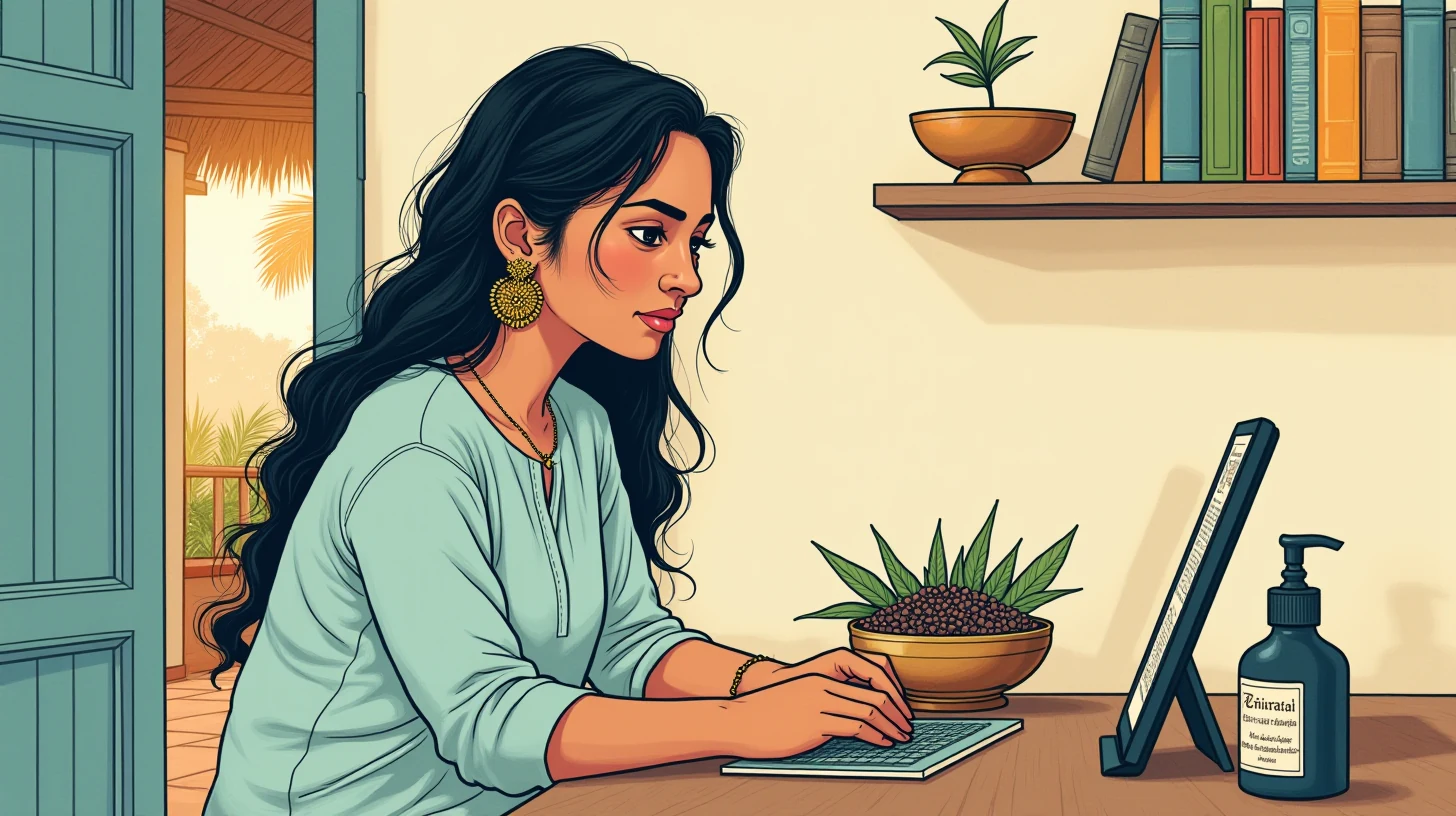
Devika began posting in 2022 — short Malayalam-language videos on kitchen-Ayurveda: how to make an amla-and-coconut hair mask, the difference between bringaraj oil heated fresh and bringaraj oil from a sealed bottle, which neem formulations her father actually prescribed for acne versus which ones she had invented herself. The channel grew faster than she expected. By late 2023 she had 1.4 lakh followers; by early 2025, 3.2 lakh. The audience skews toward women between twenty-two and forty-five across Kerala, Tamil Nadu, and the Malayali diaspora in the Gulf. Most of them have mothers who know the same Ayurvedic formulations and want to understand the science, or at least the sensibility, beneath what their mothers did.
The brand collab arrived in December 2024 — a Kerala-based Ayurvedic hair-oil manufacturer, established in 1987, with a product line sold in pharmacies across the state. The contract was for two Instagram Reels and one YouTube video, total payment ₹1.4 lakh, with the brand providing the script outline and Devika adding her own texture and in the style she had developed: conversational Malayalam, her father's kitchen visible in the background, the ingredients shown raw before the product was introduced. She had done four prior collabs. This was the largest fee she had received.
The script outline the brand sent included the line: "21 ദിവസം ഉള്ളിൽ മുടി വളർച്ച കാണാം" — hair regrowth visible within 21 days. Devika paused at it briefly. She asked her father, who glanced at it and said the oil was a standard bringaraj-amla formulation, nothing unusual. She changed the script slightly, softened the delivery, and went ahead.
The video went live on January 17, 2025. By the end of February, an ASCI complaint had been filed.
🗓️ The annual ritual
Indian beauty and Ayurveda creators have, for most of the creator economy's existence, operated inside a loosely defined grey zone. Ayurvedic claims were treated as traditional testimony, not pharmaceutical advertising. A creator saying "my grandmother's oil recipe stops hair fall" was personal narrative, not a regulated claim. The ASCI Code had existed since 1985 but enforcement was patchy and consequences for influencers were typically a quiet request to remove or modify a post. The ecosystem had settled into a comfortable informality.
2024 changed the rules in three compounding ways.
First, ASCI updated its Guidelines for Influencer Advertising in Digital Media — the 2024 revision — to make mandatory disclosures non-negotiable. Paid content must carry a clear label: "Paid Partnership" or "Ad" prominently, within the first line of the caption, and in audio form for video content. Not in a hashtag buried at the end. Not visible only after "more." In the first line, legible, audible. The January 2025 collab video had the disclosure in the seventh hashtag of a twelve-hashtag caption. That alone was a violation.
Second, the Ministry of Information and Broadcasting, in a January 2023 advisory reinforced by a 2024 circular, confirmed that the IT Rules 2021 apply to influencers as publishers of digital content. Influencers are not exempt from the Drugs and Magic Remedies (Objectionable Advertisements) Act, 1954, simply because they are individuals rather than companies.
Third — and this is the part almost no beauty or Ayurveda creator knew — the DMR Act 1954 is not limited to pharmaceutical drugs. Section 3 of the Act prohibits any advertisement that claims to diagnose, cure, mitigate, treat, or prevent any disease listed in the Schedule or any other condition that includes hair loss. The Schedule to the Act was amended by a 2019 notification to explicitly include alopecia, hair fall, and baldness as conditions whose treatment cannot be advertised. A claim of "hair regrowth in 21 days" is not an Ayurvedic testimonial under the DMR Act. It is an objectionable advertisement under Section 3, punishable under Section 7 with imprisonment of up to one year for a first offence and six years for subsequent offences.
The financial exposure was significant and the legal exposure was worse. The ₹70,000 withheld by the brand was probably unrecoverable — the contract had a clause permitting withdrawal on regulatory grounds. The ASCI process, if it ruled against her, would result in a public takedown directive listed on ascionline.in — visible to every brand considering a collab. The MIB show-cause, if unresponded to or poorly responded to, could escalate to a formal order under IT Rules 2021, which carries the power to have content blocked. And the Kerala Drug Controller's notice — the one she had not yet fully read — raised the question of whether the Ayurvedic hair-oil brand's product might be reclassified as a "drug" under the Drugs and Cosmetics Act, 1940, which would expose both the brand and Devika, as the endorser, to a different and more serious set of consequences.
She had seven days to submit a written representation to the MIB. She had never written a legal document. She had never spoken to a lawyer about her creator work. She was twenty-six, living with her parents, and her father was the only person she knew who had professional knowledge adjacent to the subject — but vaidyars and drug-law compliance officers are not the same thing.
She went to sleep on a Tuesday and spent the next four nights not sleeping particularly well.
🌗 What changed
Devika's cousin Arjun is twenty-eight, a junior associate at a mid-size law firm in Kochi's MG Road. He handles civil matters mostly — property disputes, contract reviews — but his firm has one partner who does media and advertising work, which is how Arjun had heard, in passing, of both ASCI and the DMR Act. He was at the Thrippunithura house the following Sunday for a family lunch when Devika, at the dining table after the meal, mentioned the notice.
Arjun asked to see it. He read it and was quiet for a moment — the specific quiet of someone recognising a name they have encountered but not closely studied. Then he said: "ഇത് DMR Act ആണ്. ഇത് ഗൗരവമുള്ള കാര്യം തന്നെ. പക്ഷേ ഇത് handle ചെയ്യാൻ പറ്റൂം — representation ശരിയായി submit ചെയ്താൽ." — This is the DMR Act. This is serious. But it can be handled — if the representation is filed correctly.
He offered to help her research the response and suggested she use the AI agent his firm's trainee had started using for preliminary legal research. He installed it on her phone that afternoon, set the language to Malayalam, and handed it across.
She typed, in Malayalam: "DMR Act 1954 Section 3-ൽ എന്താണ് prohibited? Hair oil collab-ന് ഇത് ബാധകമാണോ?"
"ദേവിക, DMR Act 1954-ലെ Section 3 ഒരു advertisement-നെ prohibit ചെയ്യുന്നത് അത് ഒരു product ഒരു disease diagnose ചെയ്യും, cure ചെയ്യും, mitigate ചെയ്യും, treat ചെയ്യും, അല്ലെങ്കിൽ prevent ചെയ്യും എന്ന് claim ചെയ്യുമ്പോൾ ആണ്. Act-ന്റെ Schedule-ൽ 'alopecia, hair fall, premature baldness' explicitly ഉൾപ്പെടുത്തിയിട്ടുണ്ട് — 2019 notification പ്രകാരം. '21 ദിവസം ഉള്ളിൽ മുടി വളർച്ച' എന്ന claim ഒരു therapeutic claim ആണ്, ഒരു testimonial claim അല്ല. ഇത് Section 3-ന്റെ scope-ൽ വരും. ആദ്യ offence-ന് Section 7 പ്രകാരം ഒരു വർഷം വരെ imprisonment penalty ഉണ്ട് — പക്ഷേ first-time violations-ൽ courts സാധാരണ monetary settlement-ലേക്ക് പോകുന്നത് ആണ്. Representation-ൽ ഉൾക്കൊള്ളേണ്ടത്: video remove ചെയ്തത്, ഇത് ഒരു brand script ആണെന്ന് confirm ചെയ്യുന്ന evidence, future compliance-ൽ ഒരു undertaking."
(Devika, Section 3 of the DMR Act 1954 prohibits any advertisement claiming that a product can diagnose, cure, mitigate, treat, or prevent any disease. The Schedule to the Act explicitly includes alopecia, hair fall, and premature baldness — per the 2019 notification. The claim "hair regrowth within 21 days" is a therapeutic claim, not a testimonial. It falls within Section 3's scope. Section 7 provides up to one year imprisonment for a first offence — but for first-time violations, courts typically move toward undertakings and compliance. Your representation should include: confirmation of removal, evidence showing this was a brand-provided script, and an undertaking for future compliance.)
Devika read it twice. Then she called Arjun back into the room and read it again with him. The undertaking structure was something she could write. The evidence of the brand's script — the WhatsApp messages, the brief PDF — was on her phone. The video had already been taken down.
Devika's father had been warning, at dinner, for years — mildly, without knowing which law to cite — that the claims in some of her brand briefs were not the kind Ayurveda actually makes. He was not wrong. He simply had no mechanism to translate vaidya ethics into regulatory compliance. That translation is what we built.
🌱 What we hope happens
In May 2025, two weeks after the ASCI matter closed, Devika posted a video she had been thinking about for three months. It was titled, in Malayalam: "ഒരു Influencer-ക്ക് ഒരു notice കിട്ടിയാൽ" — What happens when an influencer gets a notice. She did not name the brand, did not detail the amount, did not perform distress. She explained, plainly, in the Malayalam she uses for all her videos, what ASCI is, what the DMR Act is, what "paid partnership" actually has to look like in an Instagram caption, and why the phrase "regrows hair" is different from "nourishes the scalp" in ways that are not semantic but legal.
The video got 4.1 lakh views. Her comment section filled, for three days, with creators — Ayurveda creators, skincare creators, food creators, hair-care creators — saying they had not known any of this. Most of them had not known the ASCI Code had been updated. None had heard of the DMR Act's Schedule.
We did not build for Devika alone. We built for the hair-care creator in Thiruvananthapuram filming a collab this week whose script includes "prevents" next to "alopecia." For the Ayurvedic skincare creator in Thrissur whose brand brief says "clinically proven" without saying proven to whom. For the food creator in Kozhikode whose brand manager said ASCI compliance is the brand's problem, not hers — which is factually incorrect under the current enforcement framework.
The Ayurvedic tradition Devika grew up in — her father's notebooks, the formulation logic he has been refining since before she was born — is not in conflict with regulation. Ayurvedic claims have always distinguished between what an ingredient supports and what a formulation guarantees. The vaidya's ethic is: nourish, balance, support. The prohibited claim is: cure, regrow, reverse in 21 days. Her father knew the difference. The law now requires the camera to know it too.
What we hope happens is small: the next creator who receives a brand brief with a therapeutic claim catches it before the video is filmed. That the seven-day window to respond to a show-cause notice is spent on the response, not on Googling what the Act is. That the conversation about what Ayurveda can and cannot promise — a conversation Devika's father has been having for forty years — moves from the dinner table to the caption box, before the video goes live.
If you are a beauty, wellness, or Ayurveda creator in India, the agent is available free at gabforge.in. It reads briefs in Malayalam, Tamil, Kannada, Telugu, Hindi, and English, and it knows the ASCI 2024 Code, the DMR Act Schedule, and the disclosure requirements for Instagram, YouTube, and ShareChat. It will not write your content. It will not choose your collabs. It will tell you, before you film, whether the script the brand sent you is asking you to say something the law does not permit — and what you can say instead.