
Sunita Sahu's scholarship rejection — four missing words and one bureaucratic rank
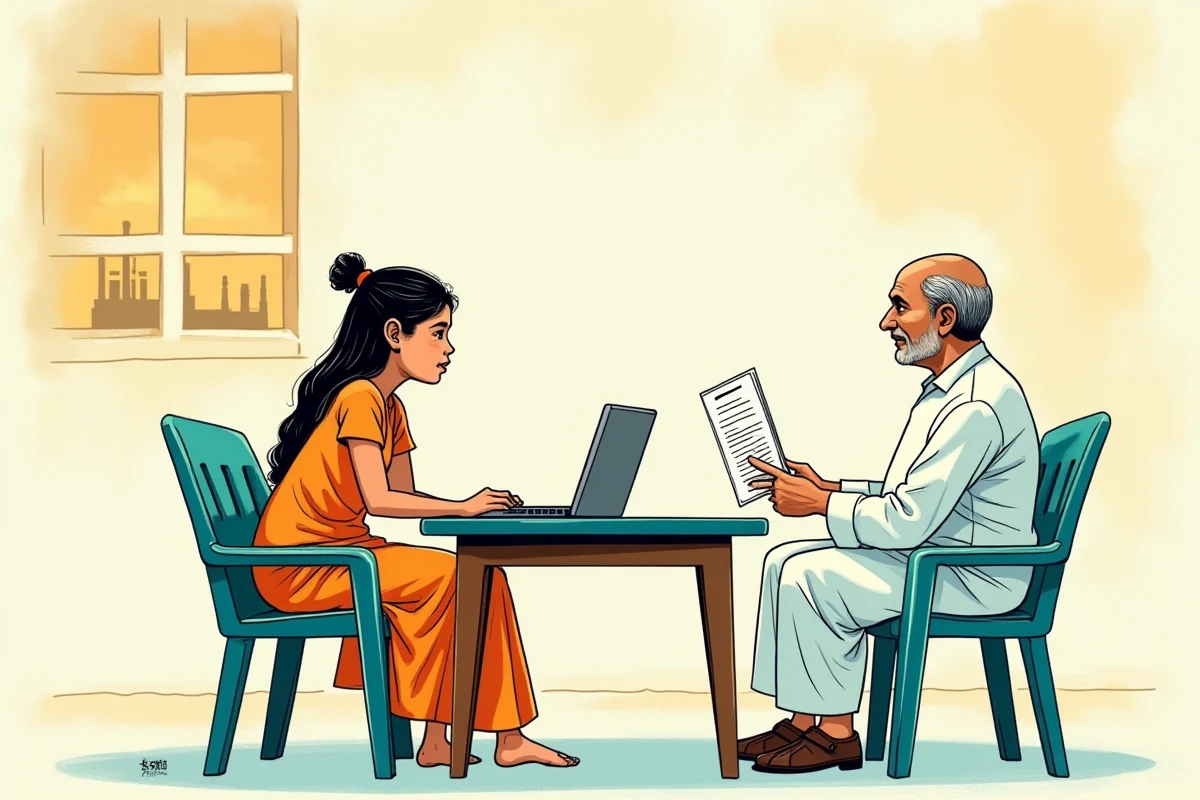
🎓 Sunita Sahu, 19, OBC, from Raipur, was the first in her family to attend engineering college. She scored admission to Rungta College Bhilai for Information Technology and applied for the Chhattisgarh state scholarship: ₹10,000/year for OBC engineering students with family income below ₹6 lakh. Her family income was ₹4.8 lakh. Everything aligned — except the certificate. The portal rejected it twice. First time: "Invalid issuing authority — patwari issued, not Tehsildar." Second time: "Missing mandatory compliance language — need 'OBC (Non-Creamy Layer)', not just 'OBC'." Four extra words and one bureaucratic rank were the difference between ₹0 and ₹15,000/year.
🚨 The problem
The Chhattisgarh scholarship portal didn't just want an OBC certificate — it wanted proof that Sunita was non-creamy layer (not economically well-off within the OBC community), and it wanted that proof signed by a Tehsildar (block-level authority), not a patwari (village-level authority). The patwari's certificate was legitimate for local purposes but insufficient for state portals. And "OBC (Non-Creamy Layer)" is not a detail most village-level revenue offices include automatically. The gap between what a local office produces and what a centralized portal demands is where legitimate students get stuck.
🚀 How GabFORGE helped
Sunita used GabFORGE to:
- 🔍 Verified the issuing authority hierarchy. Patwari handles village-level; Tehsildar handles block-level and above. For inter-district scholarship applicants (Sunita was leaving Raipur district for Bhilai), only Tehsildar authority is recognized by state portals.
- 💬 Explained the "Non-Creamy Layer" requirement. The phrase is not fraud-prevention; it's constitutional compliance. Without "NCL" explicitly stated, the portal cannot assume creamy-layer exemption. The words matter because the system validates them.
- 📞 Named the office. Raipur district Tehsildar, Old City branch; ₹150 processing fee; 10 days (verified against revenue records).
Sunita's father visited the Tehsildar with the patwari certificate, admission letter, and voter IDs. The clerk recognized the issue immediately — many students came through during admissions season. Ten days later, the Tehsildar issued a new certificate explicitly stating: "Teli community, recognized as OBC (Non-Creamy Layer) in the state of Chhattisgarh." Sunita uploaded it to the portal. Instant approval: ₹10,000/year. But the portal's system also flagged her as eligible for the CM Yuva Udyami Scholarship — ₹5,000/year for first-generation engineering students from reserved categories. Total: ₹15,000/year.
✅ Outcome: ₹15,000/year from dual scholarships (₹1,250/month), covering one-third of annual fees and living costs for a family earning ₹4.8 lakh annually.
🇮🇳 Why this matters
The four missing words — "Non-Creamy Layer" — and the signature of one officer (Tehsildar instead of patwari) expose how India's education systems are fragmented across levels of bureaucracy. Local offices do their job correctly, but centralized portals demand standardized formats that local offices don't know about. Sunita's story shows that the problem isn't policy or eligibility — it's the translation layer between village administration and state systems. GabFORGE filled that gap in minutes; the alternative was months of rejection loop.
The long version has the distinction between patwari and Tehsildar authority, the creamy-layer concept explained, the Government of India circulars that require "NCL" language, and Sunita's father's realization that bureaucracy rewards specificity — one word missing can reject an application, one correct officer can approve it.