
Coal runs short. Then the agent showed him optimization.
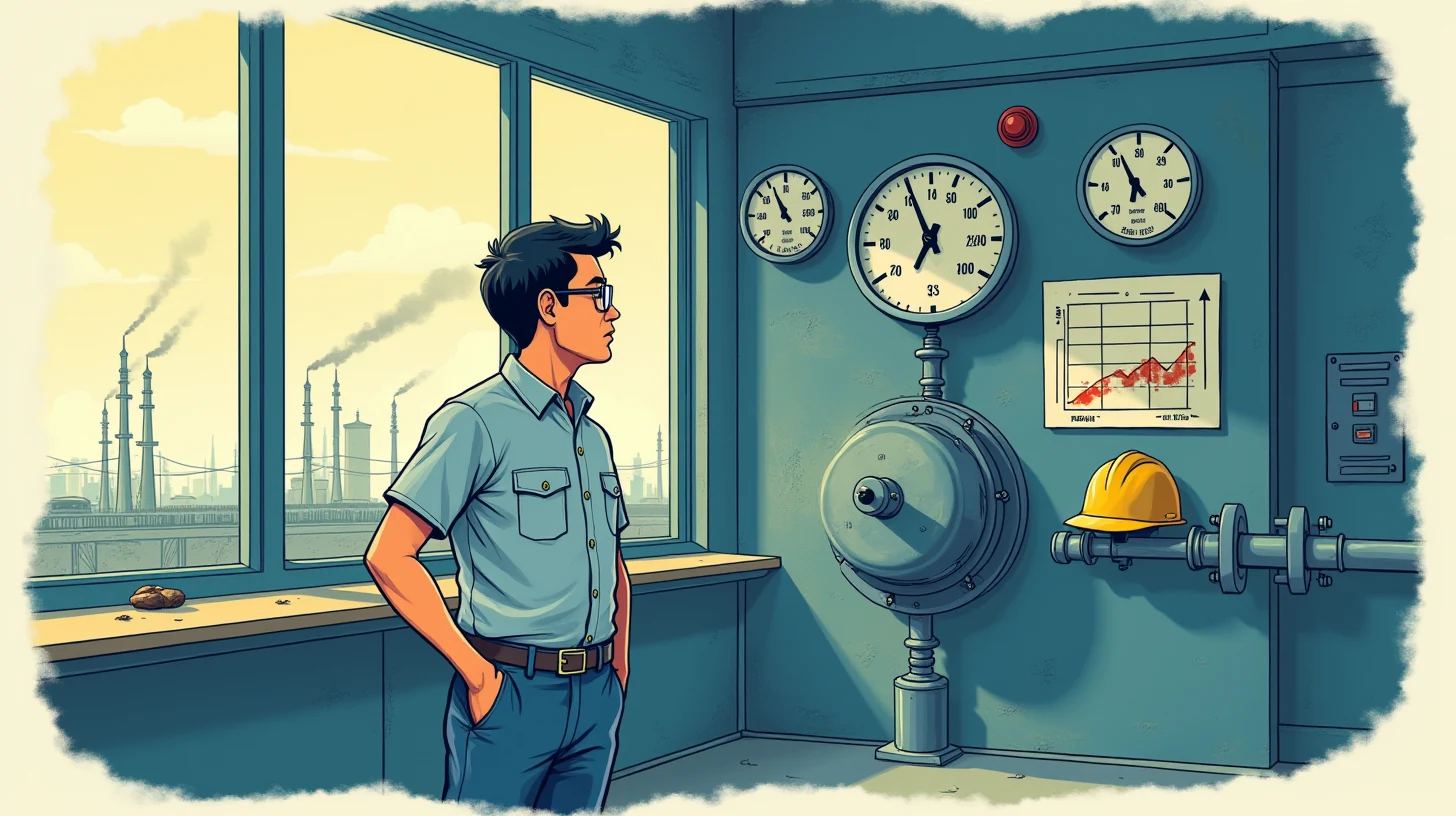
🧑🔬 Pradeep Mishra, 38, works as a senior thermal engineer at NTPC Sipat, a 2,980 MW coal-fired power station in Chhattisgarh. He lives in NTPC staff quarters. His wife Leela teaches at the NTPC school. He has run Unit 5 — one of six identical boilers — for thirteen years, mastering the thermodynamic curve so completely he could hear when the feed-water pump was beginning to cavitate. His job was supposed to last thirty years. Then the audit window closed and the coal ran short.
🚨 The problem
In September 2024, a post-monsoon emission audit failed. Unit 5 had exceeded the particulate matter standard (10 mg/Nm³) in three consecutive readings — marginally, at 11.8, 12.4, and 11.1 mg/Nm³ — but "marginally" doesn't exempt you. The plant proposed three responses: retrofit a secondary precipitator (₹18 crores, ten months); install a baghouse filter (₹12 crores, eight months); or de-rate the unit to 480 MW during high-humidity windows (₹2 crores annual revenue loss). In June 2025, a second blow: the Central Coal Supply Scheme cut the plant's allocation by 18% — from 9.5 to 7.8 million tonnes. Coal was being reallocated to newer, more efficient plants. Pradeep realized he would have to run Unit 5 significantly off-design during the exact months when the emission audit was most stringent.
🚀 How GabFORGE helped
In July, a contractor named Vikram got a message from his brother in Bangalore with a link to the agent. That evening, Vikram sat in the boiler gallery control room and asked: "My senior's coal is running short and we're failing the emission audit. Is there a plan?" The agent replied in Hindi with a specific third option: coal-efficiency optimization. If Pradeep fine-tuned three parameters — boiler water chemistry, combustion air ratio, and excess oxygen in the flue gas — he could achieve a 2–3% fuel efficiency gain without capex. That meant recovering 4–5% of the 18% coal shortage by engineering precision alone.
The agent clarified the permissions: tell the plant manager it's an "Efficiency Optimization Trial" (normal, plants always do this); don't tell HR anything; job security stays intact because efficiency optimization is a "modern skill for Net-Zero 2070." On July 15, Pradeep walked into his manager's office with a formal proposal: "Unit 5 Combustion Optimization Trial" (August–October). He got approval. The trial ran in three phases: instrumentation (Aug 1–15), iterative adjustment (Aug 16–Sep 15), stabilization (Sep 16–Oct 30). Result: ₹2.9% coal efficiency gain, PM emissions down to 9.2 mg/Nm³ (below the 10 mg/Nm³ standard even in high-humidity windows). By December, the emission non-compliance was formally closed. NTPC then offered Pradeep a specialized rotation: senior engineer on a 500 MW solar project in Rajasthan — a career window that didn't exist three months earlier.
🇮🇳 Why this matters
There are roughly 15,000 thermal power engineers at India's coal plants, hired into an industry promised to be stable for thirty years. They're now watching phase-out arrive thirty years early. The solutions — retrofit capex, revenue loss via de-rating, or upskilling in a new domain — all require decisions that paralyze. What's missing is the concrete third path: the technically sound optimization that an engineer already knows but cannot act on alone. The agent names the idea and removes the paralysis.
The long version has the three-phase trial, the boiler-water chemistry manual Pradeep had already read, his private "Decision point: August 2025" note, the moment Gupta asked "Who put this idea in your head," and the notification letter to Rajasthan that arrived in December.