
He ran free meals funded by donations. The government wanted him to be a business.
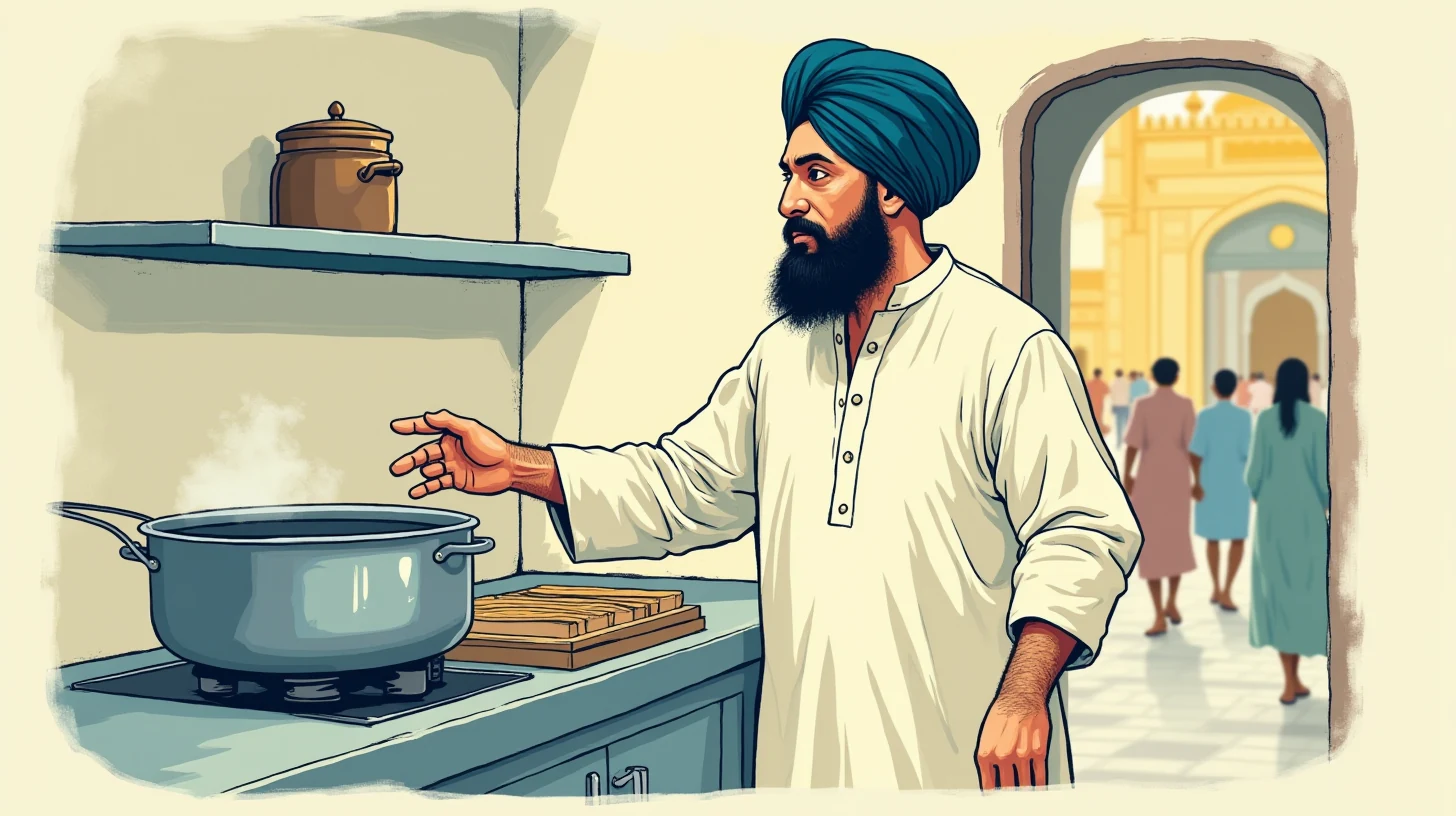
🍢 Harjit, 47, runs a dhaba near Hall Bazaar in Amritsar. His model is hybrid: he serves free meals funded entirely by a contribution box (donations from customers who can afford it), and paid customers ordering paratha and kheer. By day, it's a langar (free meal service). By night, it's a commercial dhaba. Income Tax arrival in February 2025 demanded business registration. The Charity Commissioner arrived days later, suggesting trust status. FSSAI demanded food safety compliance. Three regulatory frameworks, three conflicting classifications—with closure or back-tax threatened at every turn. 📋
🚨 The problem
India's regulatory system has no category for "hybrid models." A business is either commercial (requiring GST, income tax, FSSAI) or charitable (requiring trust registration, 80G exemption, separate accounting). Harjit's model—genuinely both—triggers all three authorities, each demanding exclusive classification. If registered as commercial, every donation becomes taxable income. If registered as charitable, he cannot sell paid meals. Income Tax, Charity Commissioner, and FSSAI each assume the others' requirements don't apply. The operator faces either choosing one identity (losing the other business), or operating in violation of all three systems.
🚀 How GabFORGE helped
Harjit's nephew, a law student, introduced him to GabFORGE's food-business module. The agent mapped the legal pathways:
- 🔍 Identified the charitable exception. Found that langar-style free meal services are explicitly recognized under ITA Section 11 as charitable activity, separate from commercial business income. Donations are not taxable if structurally separate.
- 📋 Structured dual accounting. Showed how to maintain separate ledgers: Free-meal account (donations in, ingredients out, no profit motive) and Commercial account (paid customers, standard P&L). Both can coexist under GST.
- 📞 Mapped the compliance pathway. Harjit registers the dhaba as a business (GST, FSSAI, income tax). The free-meal portion registers separately as a "charitable public dining facility" under Societies Act. Dual registrations, single kitchen.
Harjit filed both registrations, provided separate accounting to all three authorities. ✅ Income Tax accepted the dual structure. FSSAI issued one registration (covers both services). Charity Commissioner granted 80G exemption for the donation portion. Hybrid model now legally recognized.
🇮🇳 Why this matters
India has millions of hybrid-model food operators: langar-style dhabas, religious meal services, community kitchens alongside paid sales. The regulatory system assumes purity (either business or charity), not coexistence. The agent maps the legal framework that already exists (separate charitable and business income, dual registration under GST) but is invisible to small operators. This preserves both models without conflict.
The long version has Harjit's contribution box philosophy, the Income Tax officer's confusion about how to categorize free meals, and the moment Harjit realised he could keep both models legally.