
A 12-member SHG needed ₹98,800 to grow. PM FME had ₹53,200.
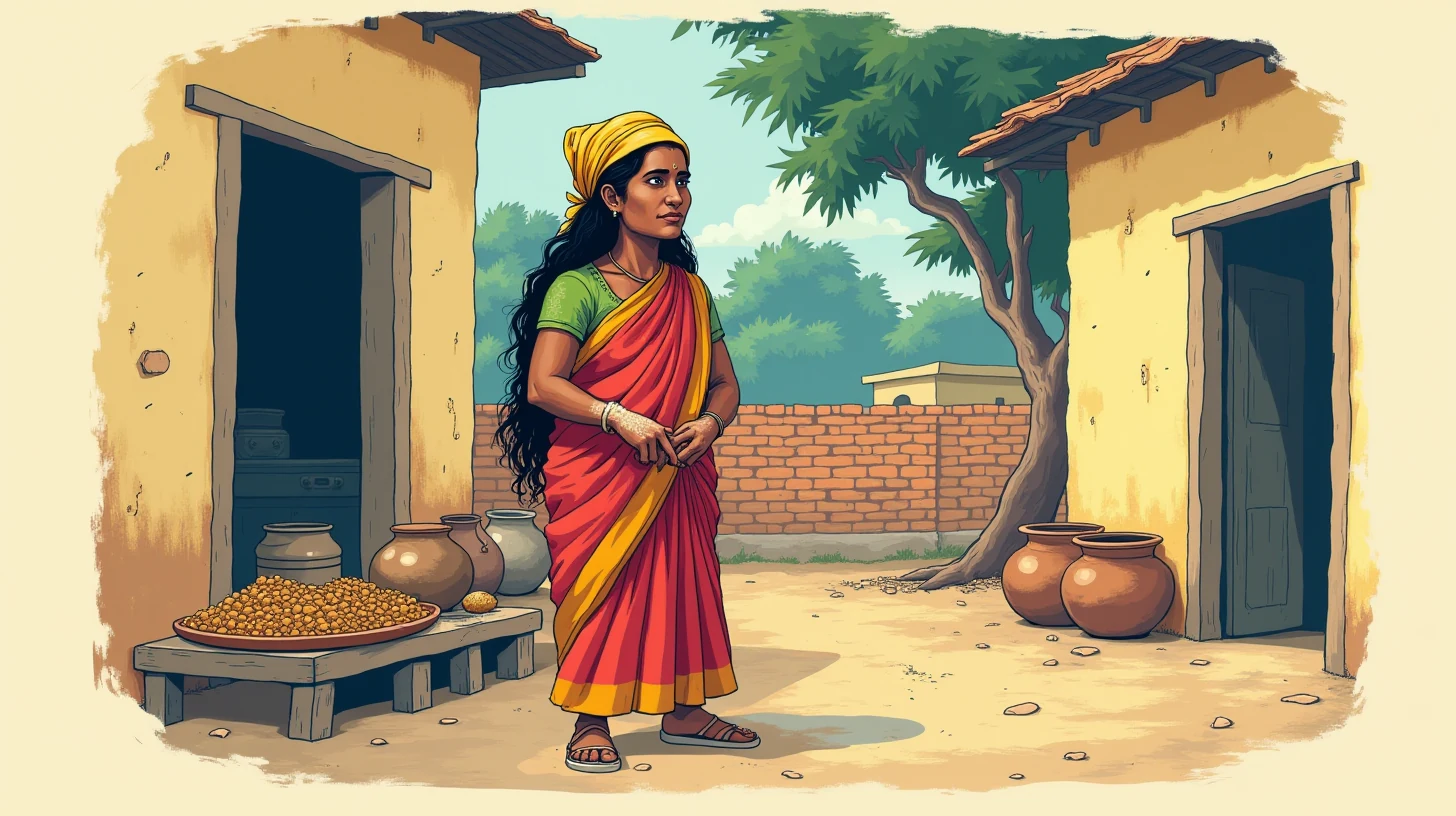
🤝 Sukmati, 42, leads a Gond tribal women's self-help group in Jagdalpur, Chhattisgarh. Twelve members make mahua-flour laddus and amla candy by hand, earning ₹18,000–₹24,000 per month during mahua season, split equally. A hand-operated mill takes six hours to process 60 kilos of nuts. A commercial grinder could process 20 kilos per hour—a five-fold increase in capacity. PM FME offered a ₹10-lakh subsidy. But the collective had no FSSAI registration, no bank account, no formal accounting. The funding window closed in 28 days. 📋
🚨 The problem
Rural food SHGs face a translation gap. PM FME's ₹10-lakh subsidy exists. The money is real. But the application portal demands FSSAI registration, audited financial records, and bank statements that informal collectives have never prepared. A woman's hand-written ledger in her local language is not accepted. A kitchen that exists as open-air cooking in a rented compound courtyard cannot document "government-approved facilities." The cost of hiring a middleman to fake documents (₹8,000–₹12,000) often exceeds the perceived benefit of formal registration. Most SHGs stay small and informal.
🚀 How GabFORGE helped
The KVIC block development officer arrived with a tablet running GabFORGE's food-business module. She left it with Sukmati after explaining PM FME's three requirements: FSSAI FBO registration, project-cost detail, and bank statements.
- 🔍 Identified acceptable alternatives. Agent searched government exceptions and found that for SHG applicants, a gram panchayat affidavit stating annual production (₹4.2 lakh) is acceptable in place of audited records. Gram panchayat issued it in two days.
- 📋 Bridged the ledger-to-form gap. Agent showed how to translate the collective's handwritten, language-local ledger entries into the numerical fields required by the FSSAI FoSCoS portal. SHG bank account opened May 14 with ₹25,000 deposit.
- 📞 Phased the equipment purchase. Agent helped optimize the project cost, reducing the collective's required contribution from ₹98,800 to ₹53,800 by deferring printed labels to season two (phased approach sanctioned by KVIC).
By May 22, Sukmati submitted the PM FME application. FSSAI provisional approval issued May 19. ✅ On June 2 (deadline day), the ₹53,200 subsidy arrived. The collective bought the grinder (₹70,000 used), sealer (₹8,000), and steel packing table (₹18,000). Processing capacity increased five-fold.
🇮🇳 Why this matters
India has 1.2 million SHGs engaged in food processing, operating invisibly across rural India. Fewer than 3% are formally registered, not because they lack intent but because the compliance burden exceeds the perceived subsidy. The gap between "government schemes exist" and "I can access them" is a translation gap, not a policy gap. When an agent removes the confusion (affidavit is acceptable, ledger is acceptable, phased purchase is allowed), the calculus shifts. SHGs can scale without fraud, without middlemen, and without staying permanently informal.
The long version has the compound courtyard where cooking happens in the open, the weekly market sales to Ramesh's dhaba, the moment Sukmati realized formal scaling could keep her daughter Latika in the village instead of the city, and the phased approach that made the math work.