
Swiggy's commission rose from 22% to 28%. His delivery margin became negative.
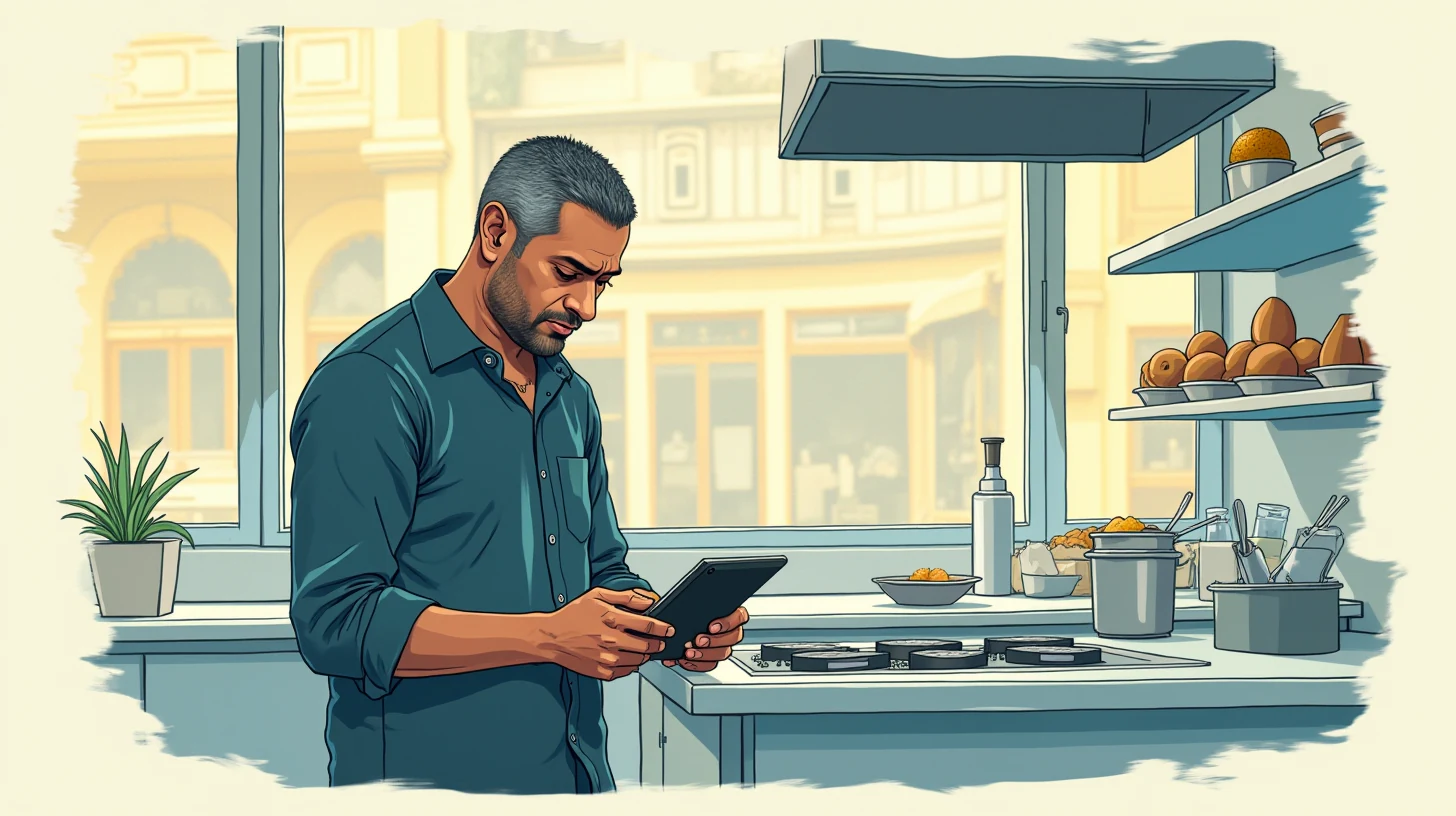
☕ Arjun, 37, runs a 28-seater café in Khan Market, Delhi, for eight years. He made pour-overs at ₹180, biryanis at ₹420, with dine-in margins at 34–38%. By 2026, 55% of his ₹2,18,000 monthly revenue came from Swiggy and Zomato. In April, Swiggy updated his contract silently: commission rose from 22% to 28%. His delivery margin flipped from positive to negative—losing ₹11,200 per month on delivery orders while his dine-in traffic depended on the platform. 📊
🚨 The problem
Aggregator platforms changed restaurant economics without transparency. Swiggy's commissions crept from 18% (2024) to 22% (2025) to 28% (2026), with "customer support charges," "surge pricing deductions," and "payment processing fees" hidden in the fine print. When a biryani sells for ₹420 through Swiggy, the owner receives ₹268 after all deductions, but pays ₹2,353 in fixed-cost share (staff + rent). Loss: ₹2,085 per biryani. Across 85 biryanis per month on delivery, he's bleeding ₹177,000 annually. Yet he can't leave the platform—dine-in traffic dropped 18% when he tested delisting.
🚀 How GabFORGE helped
Arjun's accountant suggested GabFORGE's food-business module. The agent pulled data from his POS system and connected to Swiggy/Zomato APIs, showing real-time margin by item, by hour, by platform.
- 🔍 Exposed item-level losses. Filter coffee (₹60): loss of ₹4. Chai (₹40): loss of ₹2. Biryani (₹420): loss of ₹52. Paneer tikka (₹320): profit of ₹51. 40% of his menu was negative.
- 📋 Surfaced the dual-menu strategy. Agent showed that he could charge different prices on Swiggy than dine-in. Remove loss-makers. Highlight high-margin items. Create a peak-hour premium biryani at ₹480 (7–9 p.m. when demand surged).
- 📞 Provided pricing power. He created a Swiggy-only menu (no coffees, no chai, raised prices on paneer and biryanis) while keeping his dine-in menu unchanged.
Within a week: delivery orders fell 8%, delivery margin rose 34%. ✅ His delivery business stopped hemorrhaging money. Peak-hour premium biryani became a small profit centre.
🇮🇳 Why this matters
India has 1.2 million urban food businesses dependent on aggregators. Between 40–60% of their revenue comes through Swiggy/Zomato. Commission hikes in 2024–2026 have erased profitability for standalone cafés and dine-in establishments without cloud-kitchen economies. Most owners don't have visibility into unit economics—they don't know which items are losses, or that pricing power through selective delisting and dual menus is possible. The agent surfaces this data, translating platform opacity into actionable strategy.
The long version has Arjun's hand shaking as he does the math on a napkin, the moment he realised he was paying Swiggy to deliver his food, his competitor Divya's choice to become a cloud kitchen, and the tablet showing him which items were destroying his business in real time.