
A street-cart operator's turnover crossed ₹12 lakh. The license tier shifted.
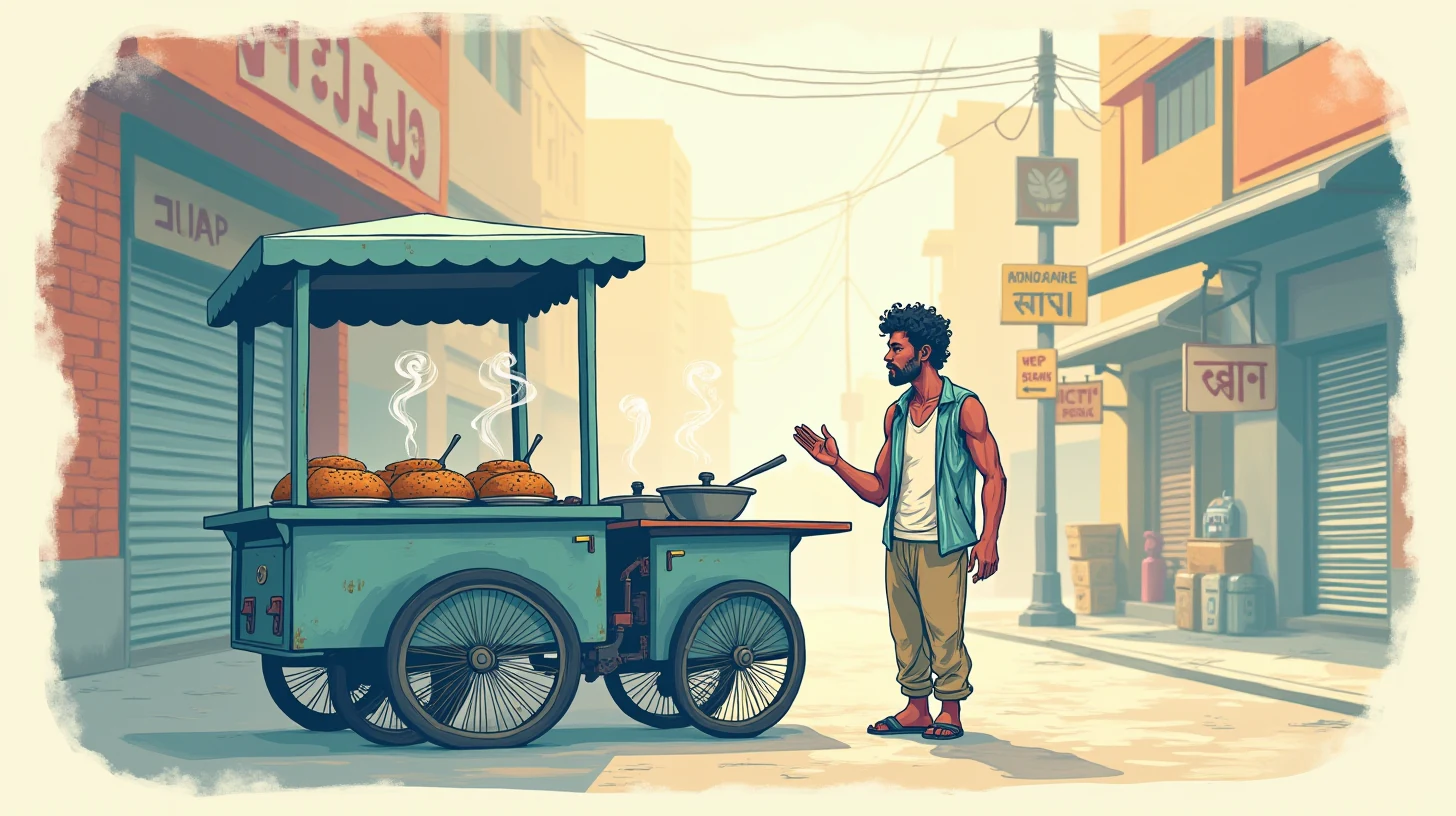
🥘 Mahesh, 38, sells poha (flattened rice) and jalebi (sweet spiral) from a cart in Indore's Rajwada market. For seven years, his annual revenue stayed at ₹8–₹9 lakh (below the ₹12L threshold). He held FSSAI FoSCoS Registration (₹100 fee, 3-year validity). In 2024, he expanded to a second cart and hired additional staff. Revenue jumped to ₹13.2 lakh—crossing the ₹12L threshold. FSSAI automatically required an upgrade to State License (₹2,500, annual renewal, health inspection). He faced ₹8,000 in additional fees and a site inspection. 📋
🚨 The problem
FSSAI's licensing tiers have hard thresholds: under ₹12L = FoSCoS Registration (₹100, automatic, no inspection), ₹12L–₹20Cr = State License (₹2,500–₹5,000, requires inspection). When a street vendor or small operator grows and crosses ₹12L, they face a sudden license category jump. The new license is more expensive, requires official inspection, and must be renewed annually instead of every 3 years. The operator doesn't choose this; it's automatic and mandatory. Missing the upgrade triggers penalties or closure. Yet many small operators are unaware of the threshold and discover it only when growth happens—too late to plan.
🚀 How GabFORGE helped
Mahesh's nephew, who worked in a bank's MSME desk, flagged the threshold issue early (when revenue hit ₹11L). The agent mapped the upgrade pathway:
- 🔍 Identified the turnover threshold crossing. Confirmed that ₹13.2L pushed Mahesh into State License territory. Showed the upgrade was mandatory, not optional. Calculated the cost difference: ₹100 (FoSCoS) → ₹2,500 (State License) + annual renewal.
- 📋 Structured the state license application. For a street cart, obtaining a state license required health inspection approval. Agent helped prepare facility documentation (photos of prep area, water source, waste disposal) and connected Mahesh to the municipal health officer.
- 📞 Secured working capital. Agent connected Mahesh to MUDRA Kishore (₹1.5L loan at 8% for 5 years), covering both the state license upgrade costs and the investment in the second cart. Made growth financially sustainable.
State License issued in 12 days. ✅ Health inspection passed. Mahesh now operates two carts under formal licensing, with working capital secured via MUDRA.
🇮🇳 Why this matters
Millions of street vendors and cart operators in India operate just below the ₹12L threshold to avoid formal licensing. The threshold acts as a barrier to growth. When they naturally exceed it through success, they face sudden formalization costs. Early visibility into the threshold—and access to working capital to fund the transition—turns a cliff into a staircase. The agent removes the surprise and provides the financial bridge.
The long version has Mahesh's seven-year operation just below ₹12L, the decision to expand to two carts, and the surprise license upgrade requirement.