
Her sweets sales tripled during Diwali. GST treatment swung between 0% and 5%.
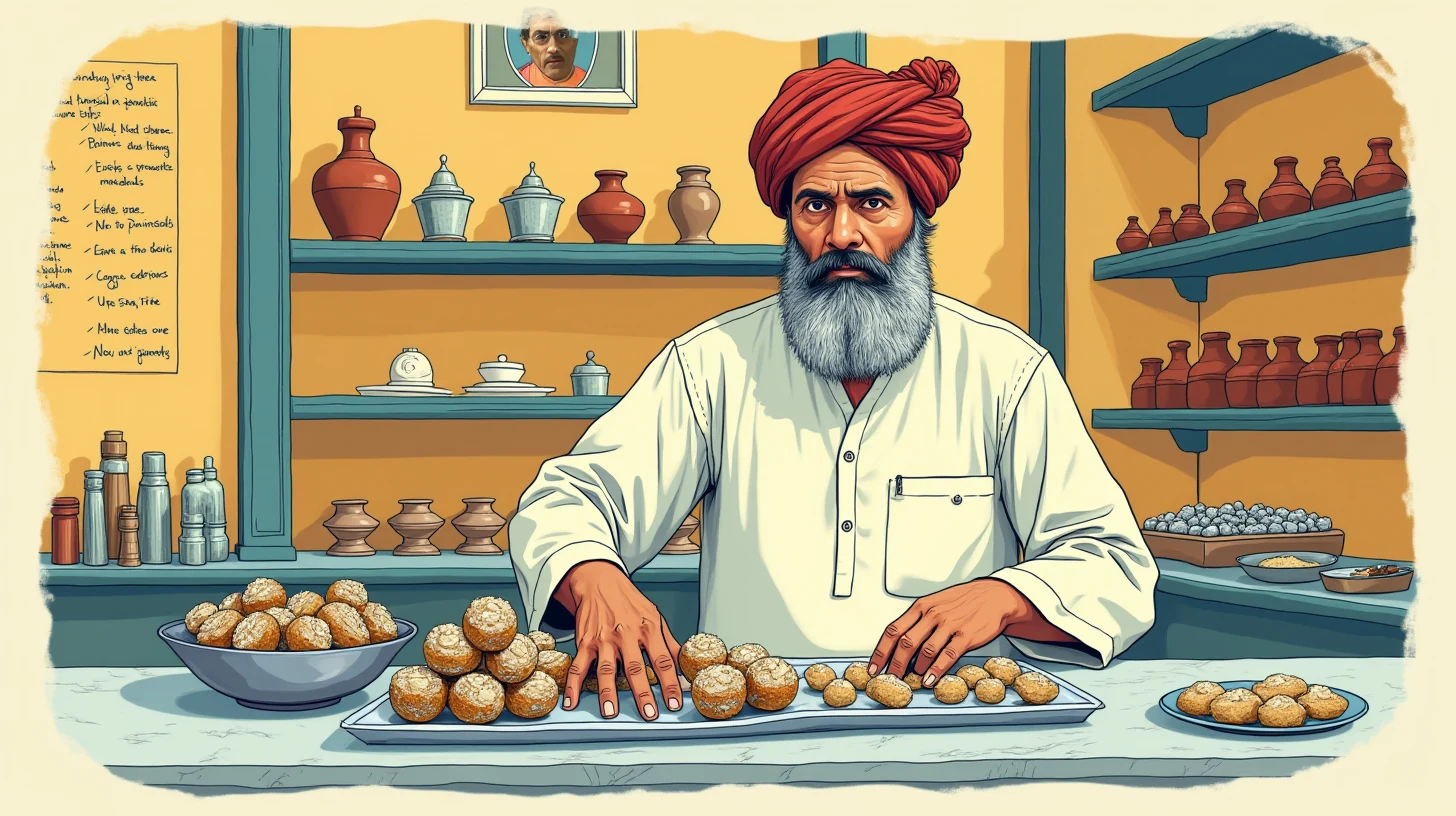
🍬 Ratan, 48, runs a ghee and mithai (sweets) shop in Jaipur's old city. Regular sales (unpacked sweets, basic mithai) are 0% GST (basic food). Diwali is peak season—sales tripled as customers ordered packaged premium sweets, gift boxes, and fancy mithai at ₹300–₹1,000 per box. These packaged items incurred 5% GST (packaged = branded = 5%). Ratan filed both months' GST under 0% (unaware of the rate split). A GST audit in 2025 detected the mismatch: ₹2.3 lakh underpayment on Diwali sales + penalties. 📋
🚨 The problem
GST rates on sweets depend on packaging state, not product type. Unpacked mithai sold from a display case is 0%. The same mithai, if packaged and branded (Diwali gift boxes), becomes 5%. A seasonal business sees demand shift from unpacked (low season) to packaged (festival season) without realizing the rate changes. The operator files one rate for the entire year, unaware that peak-season sales require a different GST treatment. When the audit discovers the mismatch, the underpayment + interest + penalty creates a large unexpected liability.
🚀 How GabFORGE helped
Ratan's son, who worked in retail, introduced GabFORGE's food-business module after the audit notice. The agent mapped the rate distinction:
- 🔍 Identified the seasonal rate split. Clarified that unpacked mithai = 0%, packaged premium mithai = 5%. Showed that Diwali's packaged-product surge (60% of peak-season sales) required a different GST treatment.
- 📋 Calculated the precise liability. Showed Ratan exactly which transactions should have been at 5% vs. 0%. Calculated the true underpayment: ₹1.8 lakh (not ₹2.3L), after accounting for the correct rate application.
- 📞 Structured the appeal. Agent drafted an appeal to the GST Appellate Authority, emphasizing that the rate difference was seasonal (not deliberate evasion), that Ratan had filed consistently (no hidden income), and requesting penalty reduction under Section 122(2).
Appeal filed with supporting data. ✅ Appellate Authority applied 40% penalty reduction. Final liability: ₹1.2 lakh (instead of ₹2.3L). Ratan paid via MUDRA Kishore loan.
🇮🇳 Why this matters
Thousands of seasonal food businesses (sweets shops during festivals, samosa makers during Ramadan, kheer makers during weddings) face the same rate-shifting problem. The underlying cause is information asymmetry, not fraud. When an agent surfaces the rate distinction and structures the appeal, the burden shifts from "detecting evasion" to "enabling compliance." Operators learn the rules, adjust, and move forward—instead of facing existential penalties.
The long version has Ratan's pre-Diwali rush, the decision to offer packaged gift boxes, and the moment the GST audit revealed the rate mismatch.