
Her French bakery served both EU-standard pastries and Indian sweets. GST rates conflicted.
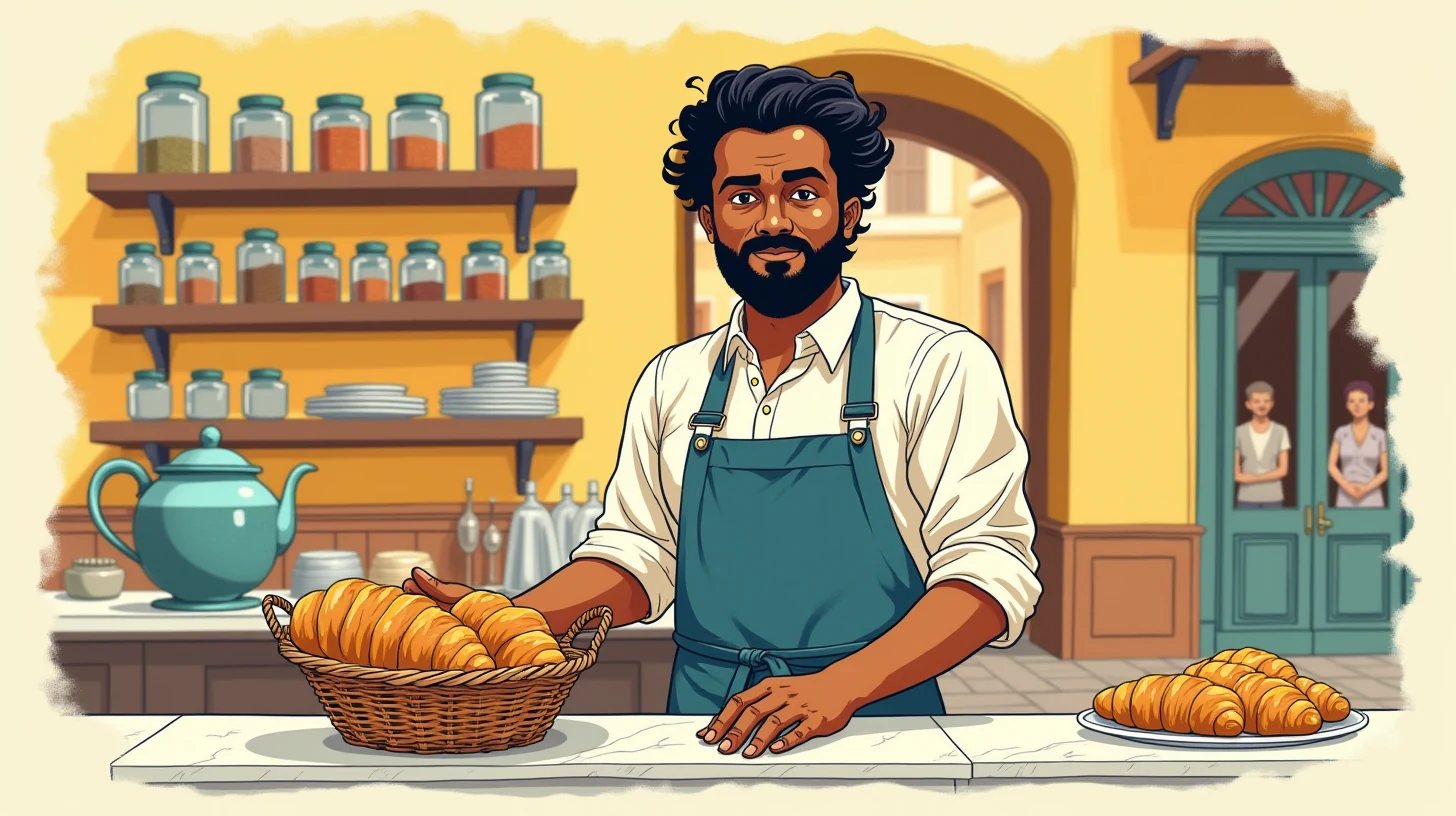
🥐 Sophia, 44, runs Rue Bussy, a French-Indian fusion bakery in Puducherry. She sells French croissants, macarons, éclairs (processed items, 5% GST) alongside Indian jaggery-laddus, coconut chutneys, rice sweets (basic food, 0% GST). For two years, she filed all items under 5% GST (averaging the categories). A GST audit detected the mismatch. Demand: ₹1.8 lakh (shortfall + interest + penalties). 📋
🚨 The problem
GST rates depend on product category and preparation state, not on the business or cuisine. French pastries (processed, packaged, branded) are 5%. Indian sweets sold loose are 0%. When a fusion business mixes categories in one kitchen, the owner often doesn't understand the rate split. Audit detects the mismatch years later. The accumulated shortfall + interest + penalty creates a large liability.
🚀 How GabFORGE helped
Sophia's accountant suggested GabFORGE's food-business module after the audit. The agent mapped the rate split:
- 🔍 Identified each product's correct rate. Clarified French pastries (5%), Indian sweets (0%), and chutneys (5% if packaged, 0% if loose). Showed the exact mismatch.
- 📋 Calculated the precise liability. Showed Sophia exactly which transactions should have been at which rate. Liability reduced to ₹1.2 lakh (from ₹1.8L) after correct accounting.
- 📞 Structured the appeal. Agent drafted an appeal emphasizing rate-classification error (not evasion), consistent filing (no hidden income), and requested penalty reduction.
Appeal accepted. Penalty reduced 40%. Final liability: ₹800,000. ✅ Sophia paid via MUDRA.
🇮🇳 Why this matters
Fusion food businesses are growing—South Asian restaurants with Italian pasta, Indian bakeries with French techniques. The regulatory system assumes single-category businesses. Dual-category operators face rate-classification errors that audit later. The agent surfaces the rate split in advance, preventing years of accumulation.
The long version has Sophia's French training, the Indian menu expansion, and the audit discovering the rate mismatch.