
Quick read: The Raipur folk music creator and the music-label territory clause
165,000 subscribers. A territory clause she hadn't read. A YouTube default setting she didn't know existed.
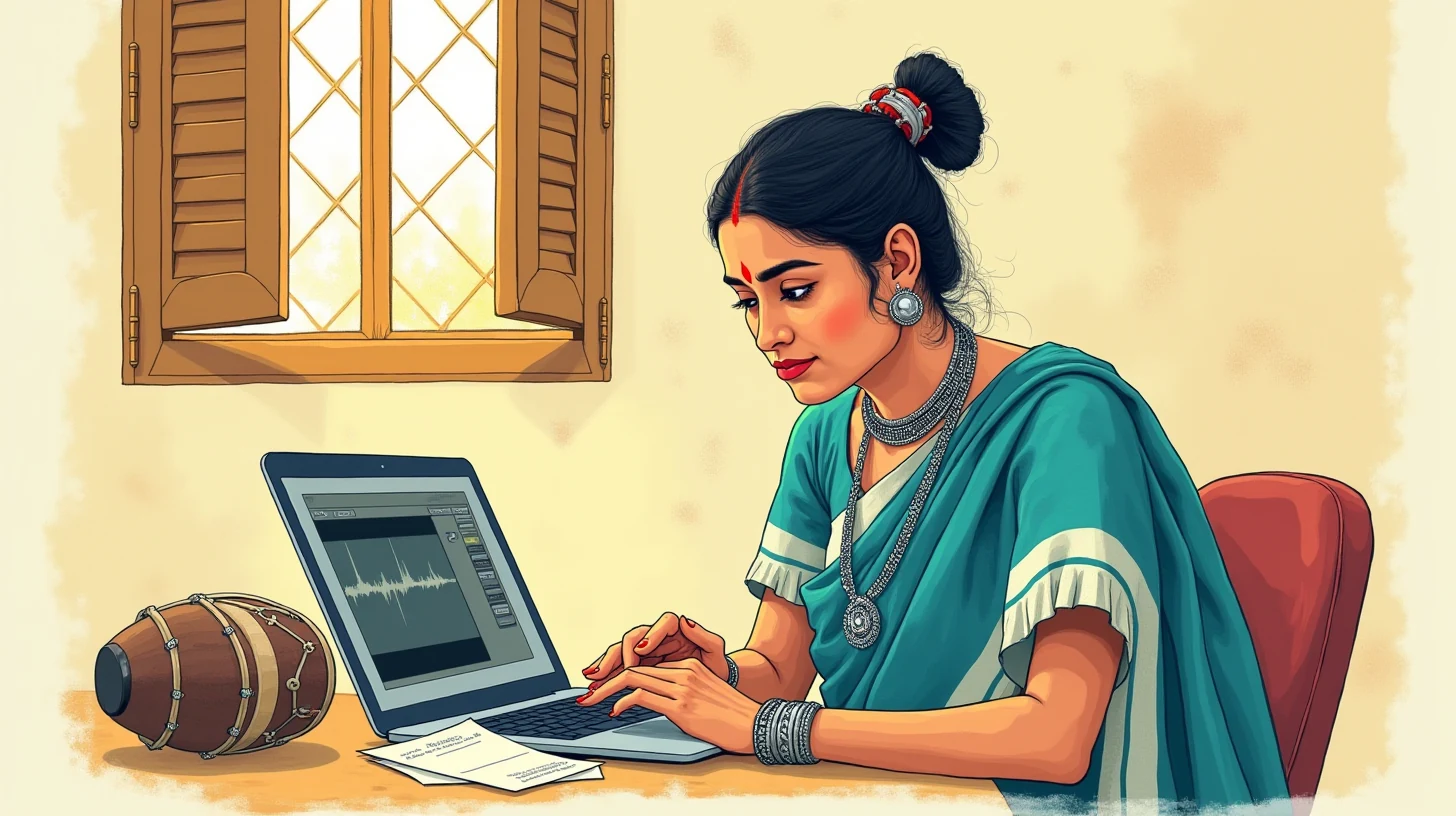
🎙️ Anushka, 28, Pandwani folk-fusion creator in Shankar Nagar, Raipur. 165k YouTube + 70k Instagram, built over four years of Sunday afternoon recording sessions with her percussionist Suresh. Folk ritual music — Karma, Sua Nacha — layered with electronic production. In February 2025 she signed a 36-month distribution deal with a Raipur regional label. Territory: India and SAARC. Production support: ₹1.2 lakh. She read the royalty split. She did not read Clause 6(c).
🚨 The notice. Eleven months later, Anushka uploaded a Karma-festival folk-fusion remix to her own YouTube channel. She did not change any distribution settings. YouTube's default is global — 47 countries, including the US, UK, Singapore, and Australia, all outside SAARC. Three months passed. Then a speed-post envelope arrived from Bhilai Nagar: a four-page breach notice citing Clause 6(c) and Content ID metadata confirming distribution to four non-SAARC territories. Claim: ₹2 lakh per territory, ₹8 lakh total, as liquidated damages under Section 74 of the Indian Contract Act, 1872. Additional threats: channel claim transfer through YouTube's CMS and permanent geo-blocking of her entire channel for all label-associated content. Twenty-one days to respond.
🚀 What the agent found. Through her family, Anushka reached her cousin Reema — a fresh LLB from Hidayatullah National Law University, Raipur, six months into articleship at a Civil Lines commercial litigation firm. Reema used the agent to cross-reference Clause 6(c) and Clause 11(d) against the relevant statutes. Three threads emerged: Section 74 of the Indian Contract Act, 1872 requires liquidated damages to be a genuine pre-estimate of actual loss — the label had to prove ₹2 lakh in actual loss per territory, against a combined royalty of ₹3,840 from three months of non-SAARC distribution; Clause 6(c) itself used the phrase "automated or algorithmic process," meaning the label knew YouTube distributes globally by default, and delayed notice of three months supported a waiver-of-prompt-remedy argument; and applying the geographic restriction within the twenty-one-day window would constitute a cured breach, invoking Section 39 of the Specific Relief Act, 1963, which allows courts to decline preventive injunction where the threatened act has been discontinued. Anushka applied the geo-restriction that same night, with a timestamped screen recording.
✅ Where it stands. Reema's formal reply was filed two days before the deadline — citing the Section 74 quantum challenge, the cured-breach evidence, and the algorithmic-distribution argument. The label did not file the channel claim transfer. Three weeks later, the label's founder called Reema's principal to propose a Clause 6(c) amendment: geo-restriction responsibility shifts to the label's own CMS account, not the creator's upload settings. The ₹8 lakh demand has not been pressed. The video is live, India and SAARC only.
🇮🇳 Why it matters. Every regional label in India — Odia, Assamese, Bhojpuri, Chhattisgarhi — signs creators whose diaspora audiences live outside SAARC. The label's territory is a reflection of its own upstream IPRS licensing limits. The creator's YouTube upload default is global. The gap between them is a breach that happens automatically, invisibly, to every creator who does not know to look for it. The territory clause is standard. Section 74's "genuine pre-estimate" requirement is not something most creators have ever read.