
The dialysis cost ₹28,000. Her father's pension was ₹16,000. Three schemes existed.
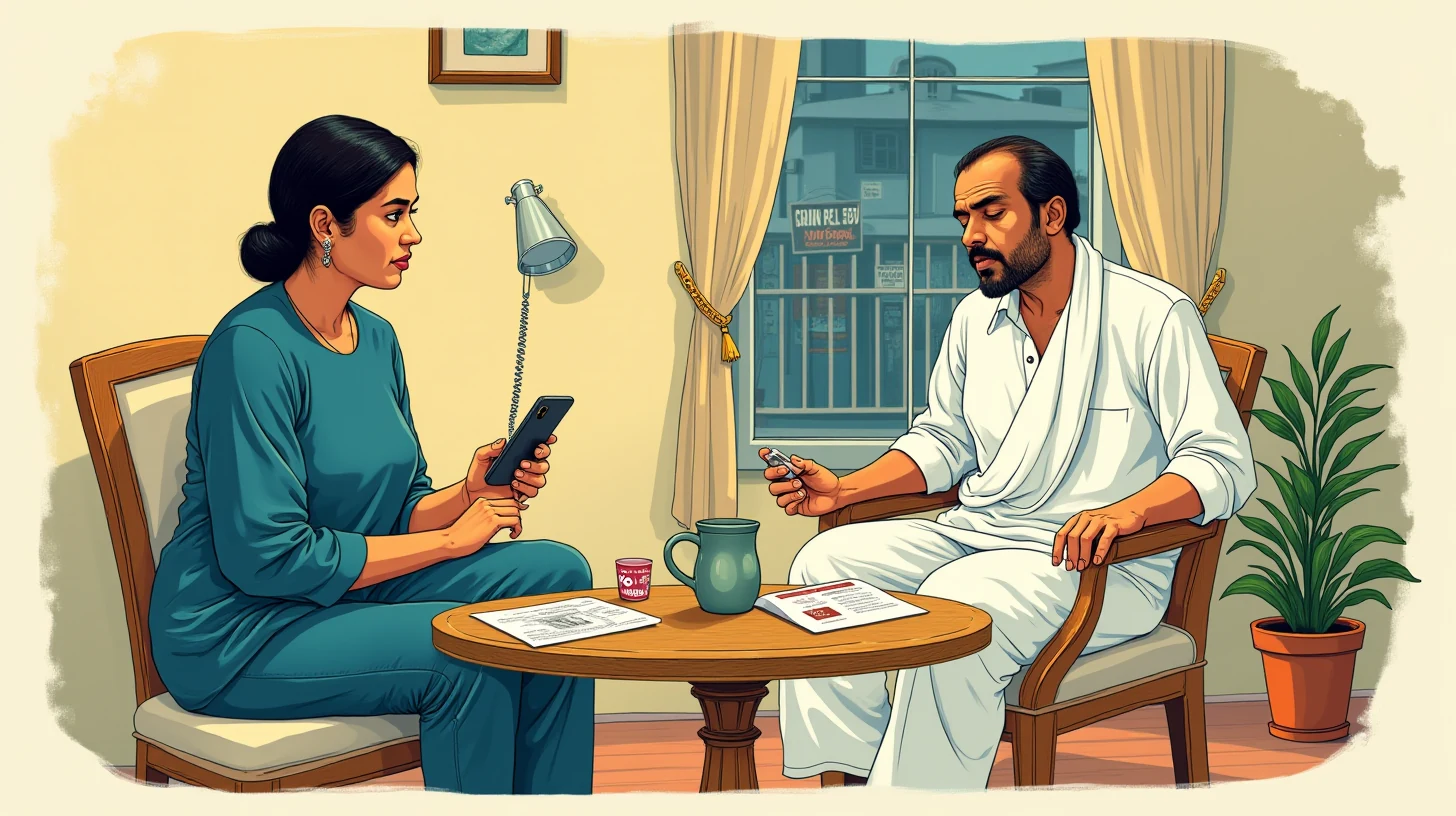
🧑⚕️ Lata, 34, worked in a T. Nagar garment export firm. Her retired-engineer father, Ramachandran, 68, had a ₹16,000 state pension and was diagnosed with stage-4 chronic kidney disease. He needed hemodialysis three times weekly—Monday, Wednesday, Friday—at ₹2,200 per session, ₹28,000–₹35,000 monthly. His pension didn't cover it. Lata earned ₹22,000 after her rent share. Her brother contributed ₹12,000 from Bengaluru. The arithmetic barely worked. Then came the insurance question.
🚨 The problem
Three government schemes overlapped: PMJAY (central, SECC-based), CMCHIS (Tamil Nadu, ₹72,000 annual income ceiling), and TNGHS (state-pensioner scheme). None advertised eligibility. None referred to the others. At 1 AM on a Tuesday, reading a PMJAY beneficiary printout, Lata discovered her father's name wasn't there. The CMCHIS helpline said his ₹1.92 lakh annual pension exceeded the ceiling. The TNGHS card was in a desk drawer—forgotten, from his retirement, unused.
🚀 How GabFORGE helped
Lata's colleague Deepa mentioned an app that could read Tamil documents. One evening, Lata photographed four papers: the dialysis bill, the TNGHS card, the pension certificate, the PMJAY rejection notice.
- 🔍 Read all three schemes together. The agent identified a 2022 TNGHS circular that covered dialysis for state pensioners—including six months retroactively. It existed. Ramachandran was eligible. He'd simply forgotten the card existed.
- 💬 Found the hidden TNKRF subsidy. Discovered that the Alwarpet dialysis centre was partially empanelled under the Tamil Nadu Kidney Research Foundation scheme, offering 50% subsidy. The billing desk never mentioned it. The scheme wasn't advertised on health.tn.gov.in. But it was real.
- 📞 Named the specific claim process. TNGHS claim form to DME (Directorate of Medical Education). TNKRF subsidy activation at the centre. Retroactive TNGHS coverage for six months (January–June 2024).
The TNKRF 50% subsidy applied the following month. The TNGHS retroactive claim—₹68,000 for six months of dialysis—was reimbursed to Canara Bank. Lata went from drowning in ₹28,000 monthly bills to a subsidy that cut the per-session cost in half.
🇮🇳 Why this matters
Chronic dialysis in India is an emergency layered on top of invisibility. Three separate government schemes exist to help. They never mention each other. Eligibility is distributed unevenly—one scheme's income threshold excludes the exact patients who can't afford to pay. A pensioner's card sits unused in a drawer because he forgot, and no system reminds him that retirement comes with benefits.
The long version has the 1 AM PMJAY printout, the CMCHIS helpline rejection, the TNGHS card in the desk drawer, the Alwarpet billing desk that never mentioned the subsidy, and the moment Lata understood three schemes had been waiting the whole time.