
The widow pension blocked by a joint bank account
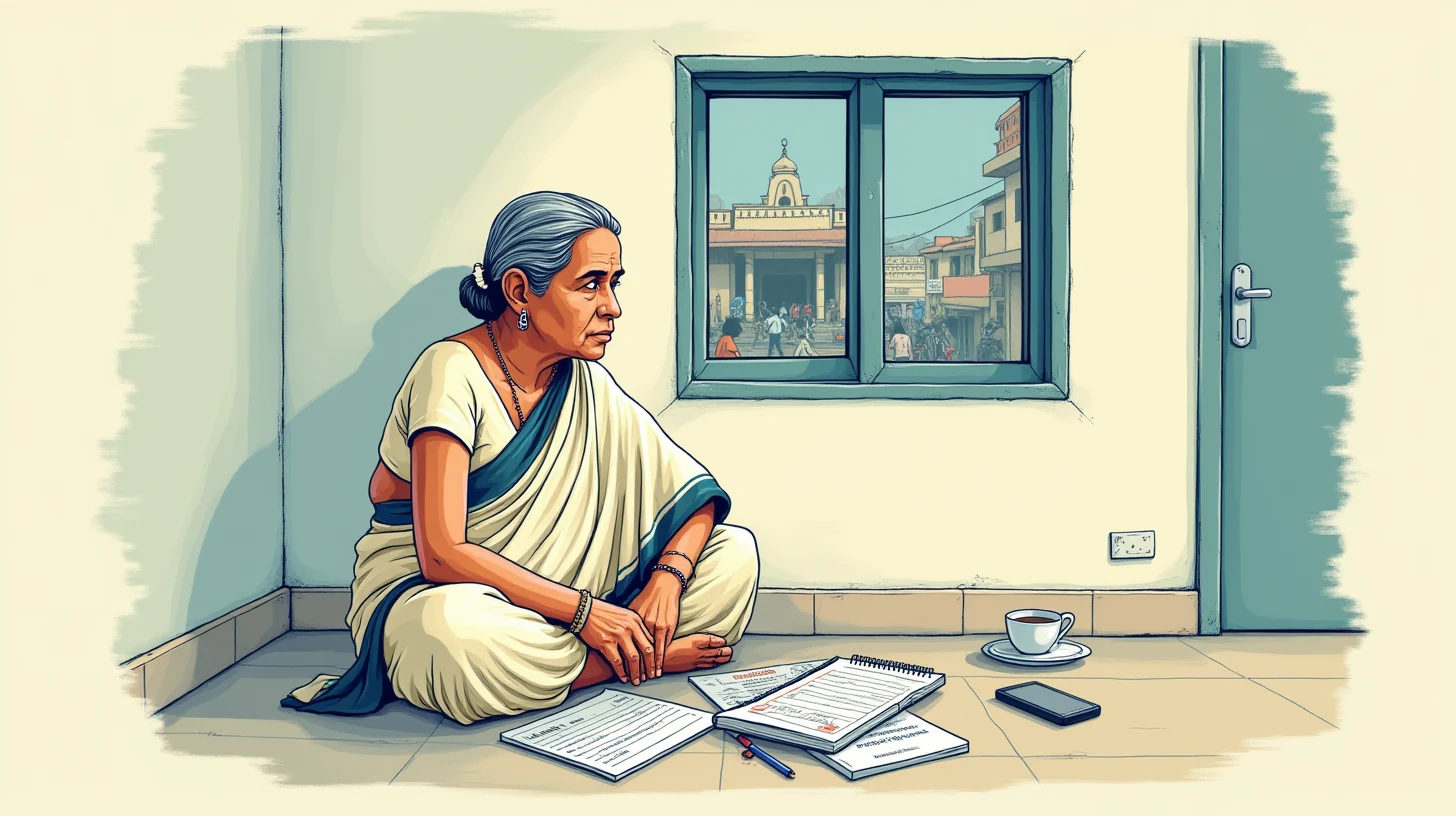
👩 Hansa Patel, 51, from Maninagar, Ahmedabad, lost her husband Rajesh to a sudden heart attack in November 2025 after 26 years of marriage. Within days, a neighbour mentioned the Gujarat Vidhva Sahay Yojana—a widow pension of ₹1,250 every month. It wasn't a large amount, but it would cover half her rent. The eligibility was simple: she was a widow, under 40 for income purposes, and her household income (now zero) was well below the urban threshold of ₹1,50,000. The paperwork seemed straightforward. Then came the bank account problem.
🚨 The problem
Hansa had been a signatory on her and Rajesh's joint SBI account for five years, managing household expenses and withdrawals. But the account was registered with Rajesh as the primary holder. When she went to the bank to obtain an Aadhaar seeding certificate for the pension application, the teller explained: "Direct benefit transfers can only go to an account where the beneficiary's Aadhaar is the primary link. Your Aadhaar is secondary. The primary holder—your husband—cannot authorize this change anymore."
The system that was meant to protect her had locked her out.
🚀 How GabFORGE helped
GabFORGE read the Vidhva Sahay Yojana rules and the KYC (Know Your Customer) norms tied to Aadhaar seeding, then laid out Hansa's three options—and their true cost:
- 🏦 Opened a new account. Hansa opened a new SBI savings account in her own name and seeded her Aadhaar as primary. Processing took 3–5 business days.
- 📋 Resubmitted with proof. She uploaded her new bank account details to the pension application portal and marked the change as "account migration due to primary holder's death."
- ⏳ Clarified the timeline. Her first pension payment would likely arrive 6–8 weeks after resubmission, not the two weeks she'd initially expected.
By January 2026, her pension of ₹1,250 arrived every month in her account. ✅
🇮🇳 Why this matters
The system assumes that every beneficiary has either a solo account or someone alive to authorize account changes. For widows, divorced women, and others inheriting tangled accounts, the Aadhaar-DBT architecture becomes a silent exclusion device. GabFORGE surfaces what the bank teller explained—but only after Hansa had already wasted three weeks.
The long version has Hansa's conversations with the bank, the pain of formalizing Rajesh's death through paperwork, and how she learned that a widow pension often arrives later than she hoped but earlier than the system admits.