
Quick read: Bhubaneswar Odissi creator and the GI-tag foreign-brand collab
A Hamburg wellness brand — Heilkraft Naturals GmbH — emailed Priyamvada Mohanty in March 2026 with a contract: twelve seconds of Odissi performance, product placement for their Ashwagandha supplement, €4,200, distribution across European Instagram and retail channels. Standard influencer boilerplate. No mention of GI law. No mention of cultural NOCs.
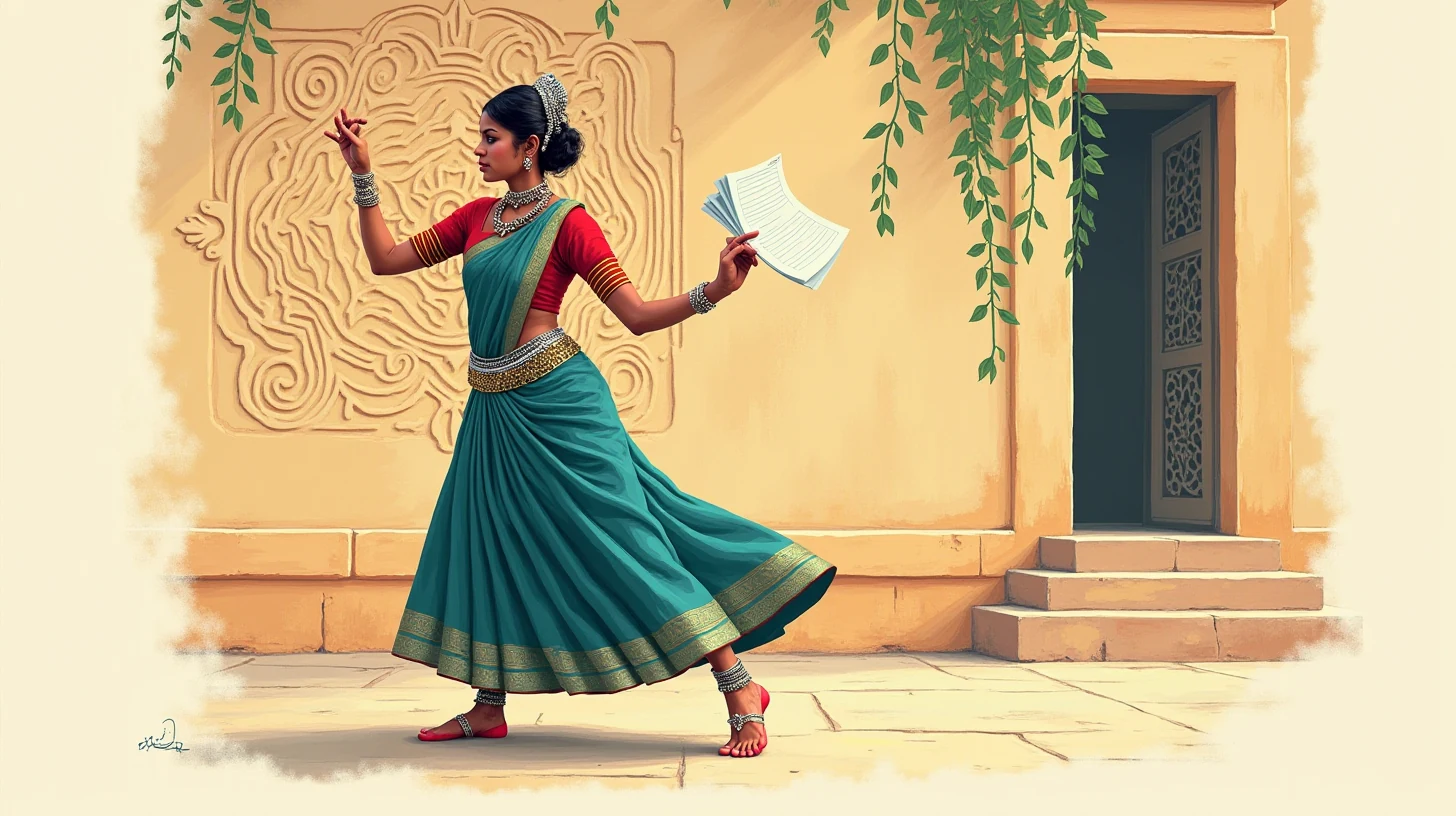
She opened her drafts folder and started typing yes.
Priyamvada, 31, trained at the Odissi Research Centre in Bhubaneswar, teaches at a gurukul in Old Town, and has 180,000 Instagram followers built on mudra explainers and Odissi costume-history reels. She had done domestic brand collabs. She had never done an international product-placement campaign. She did not know that "international" changes everything when your art form is registered under the Geographical Indications of Goods (Registration and Protection) Act, 1999.
🚨 The problem
Odissi classical dance is a registered GI (Application No. 149 at CGPDTM/IPINDIA). Under Section 22 of the GI Act, commercial exploitation of a GI-tagged art form for international distribution — especially product-placed brand campaigns — requires a chain of permissions a solo creator cannot self-authorise:
- Ministry of Culture NOC via indiaculture.gov.in — for international commercial use of a GI-tagged classical art form
- Odisha state cultural board clearance via odisha.gov.in — state-level permission for international commercial performances
- TKDL verification via cdf.gov.in — confirming the repertoire elements are not under active defensive documentation
Heilkraft's contract asked her to assign eighteen months of international commercial rights. She was not legally in a position to grant them alone. If she had signed and the campaign had published, the complaint would have come from within the Odissi community — not from Germany.
🚀 How GabFORGE helped
Her guru's nephew, an IP lawyer visiting from Delhi, installed the agent on her laptop the same evening he saw the draft contract.
- Confirmed the GI status in real time — checked the CGPDTM registry, returned Application No. 149, explained the Section 22 commercial-use restriction in Odia
- Mapped the three-permission chain — Ministry of Culture NOC (6-8 weeks), Odisha state clearance (2-3 weeks), TKDL check — with the exact portal URLs and what each authority needs
- Flagged the contract clause — identified the rights-assignment clause that exceeded what she could unilaterally grant, in plain language, before any reply was sent to Hamburg
She did not sign. Instead, her lawyer drafted a GI-Act briefing for Heilkraft's team. The brand's legal department responded in 48 hours: they had no idea, they were willing to wait, they would hold the fee in escrow.
Outcome: The Ministry of Culture NOC application was filed in April 2026 with the ORC as co-applicant. Odisha state clearance came within three weeks. The campaign is proceeding — correctly, with the ORC acknowledged in the credits and the fee intact.
🇮🇳 Why this matters
Tens of thousands of classical-dance creators in India — Odissi, Bharatanatyam, Kuchipudi, Mohiniyattam, Sattriya — are building digital audiences and receiving international brand enquiries. None of the enquiries mention GI law. None of the contracts ask whether the creator has cultural authority to assign international commercial rights. The Ministry of Culture's NOC process is not well-advertised. The GI registry is not a tab any Hamburg marketing team has open.
The creator learns about the framework exactly once — at the contract-review moment, if someone is there to read it with them.